
Resin composition for laser engraving, relief printing plate precursor for laser engraving and process for producing same, and relief printing plate and process for making same
a technology of laser engraving and resin composition, which is applied in the direction of foil printing, transportation and packaging, nuclear engineering, etc., can solve the problems of difficult production and inability to obtain desired film physical properties such as film toughness
- Summary
- Abstract
- Description
- Claims
- Application Information
AI Technical Summary
Benefits of technology
Problems solved by technology
Method used
Image

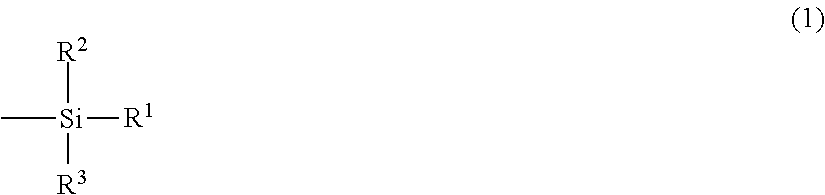
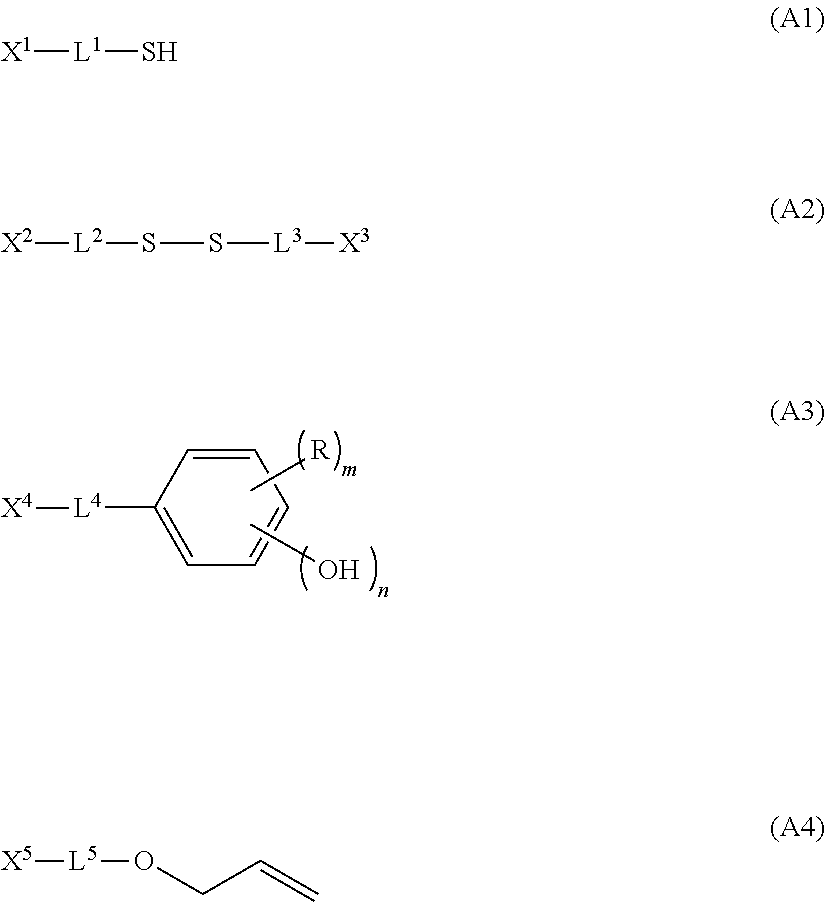
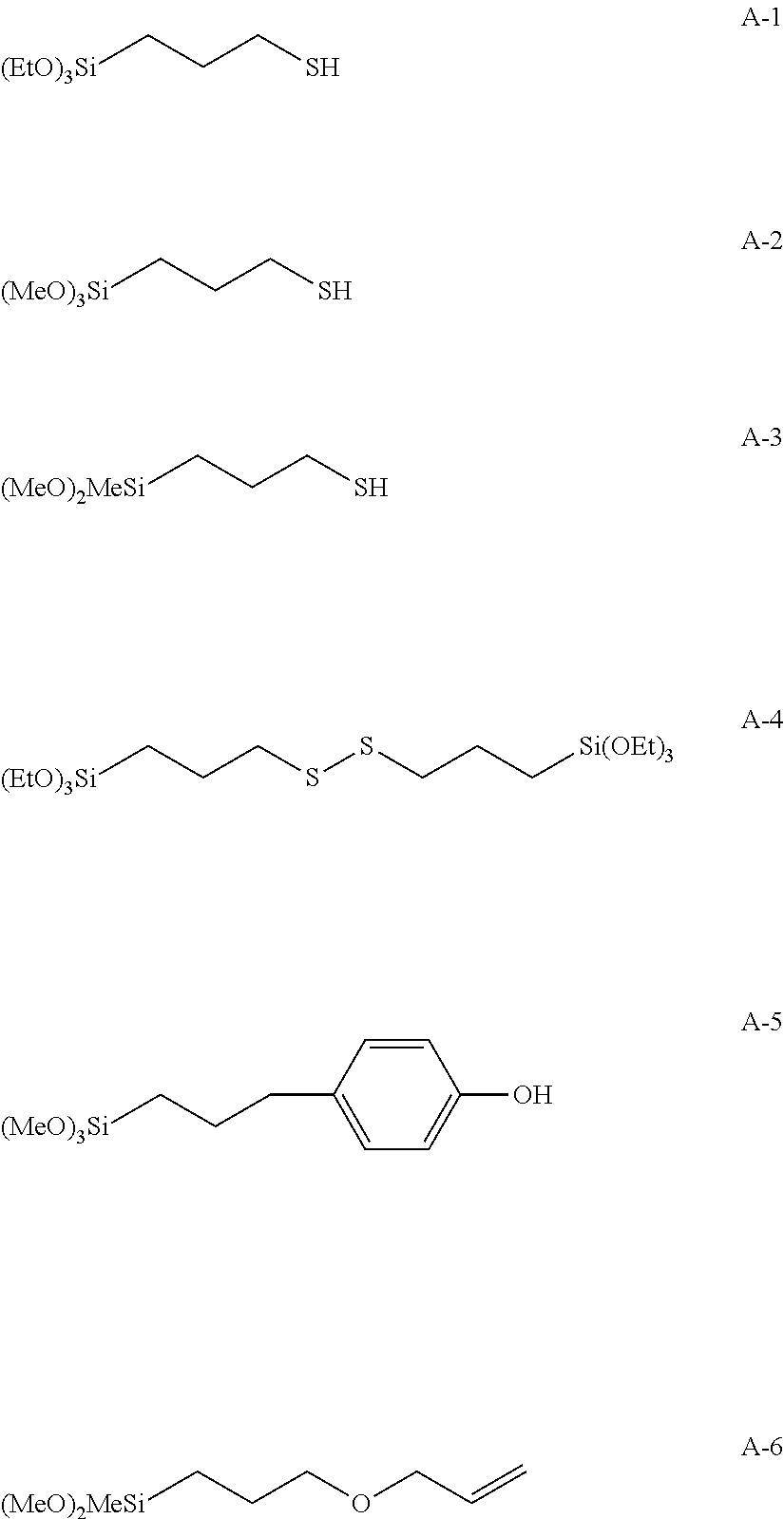
Examples
example 1
Preparation of Relief Printing Plate Precursor for Laser Engraving
[0288](Component A) the compound shown in Table 1, (Component B) the radically polymerizable compound, (Component D) the resin, and the materials shown below were mixed. The solids content concentrations of Component A, Component B, and Component D are shown in Table 1. Materials other than Component A, Component B, and Component D were mixed at the proportions below.
(Component A) compound shown in Table 1: parts by weight shown in Table 1
(Component B) radically polymerizable compound: parts by weight shown in Table 1
(Component D) resin: parts by weight shown in Table 1
Bisbutoxyethyl adipate: 25 parts by weight
Carbon black: 4 parts by weight
DBU (condensation reaction catalyst): 1 part by weight
Propylene glycol monomethyl ether acetate (solvent): 20 parts by weight
[0289]A three-necked flask equipped with a stirring blade and a condenser was charged with the components above, and they were dissolved by heating at 70° C....
PUM
| Property | Measurement | Unit |
|---|---|---|
| thickness | aaaaa | aaaaa |
| thickness | aaaaa | aaaaa |
| temperature | aaaaa | aaaaa |
Abstract
Description
Claims
Application Information
 Login to View More