
Underlayer film-forming composition and pattern forming process
a technology of composition and film, applied in the field of underlayer film-forming composition and a process, can solve the problems of reducing the effect of suppressing substrate reflection, affecting the effect of reducing substrate reflection, etc., to achieve the effect of minimizing substrate reflection
- Summary
- Abstract
- Description
- Claims
- Application Information
AI Technical Summary
Benefits of technology
Problems solved by technology
Method used
Image

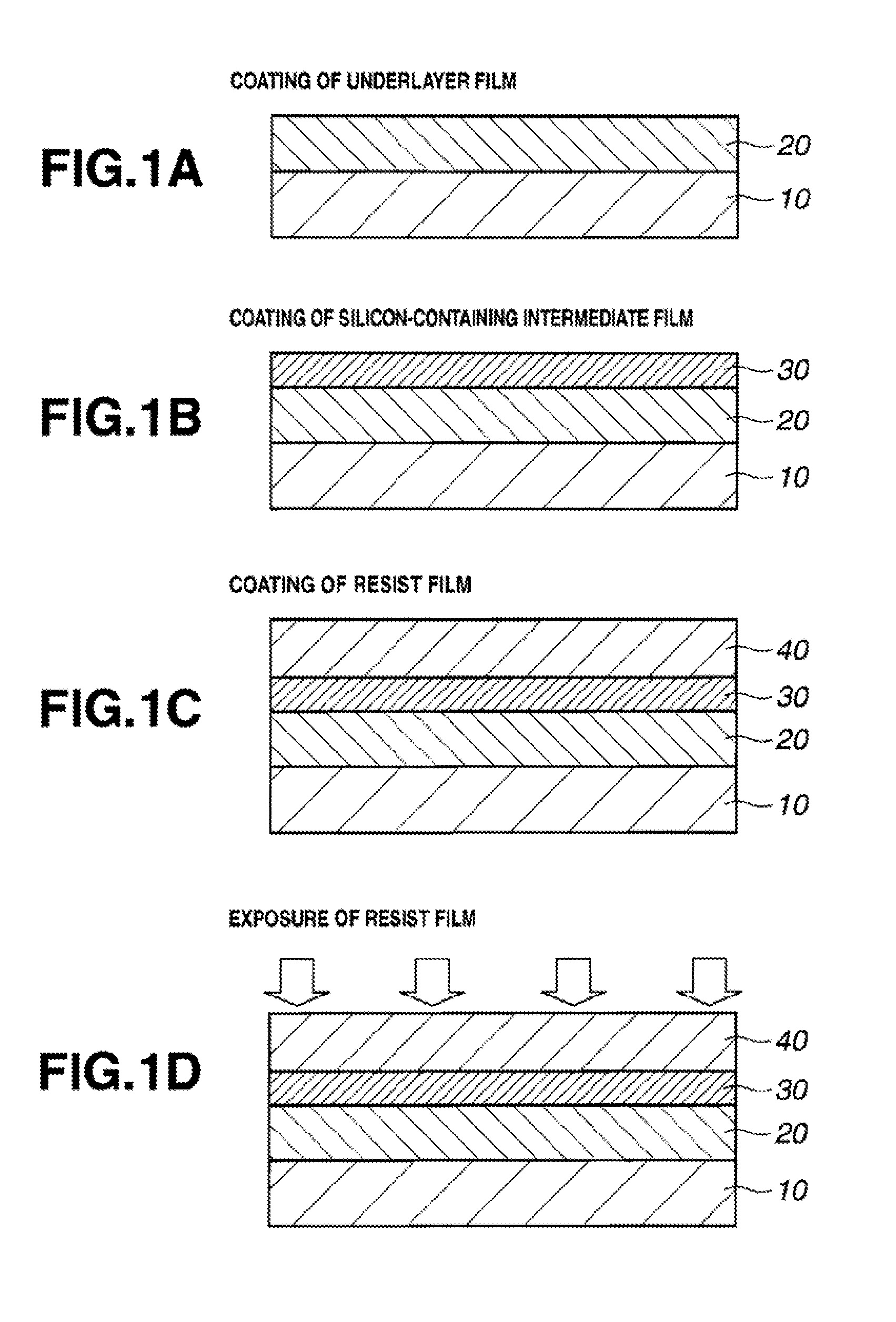
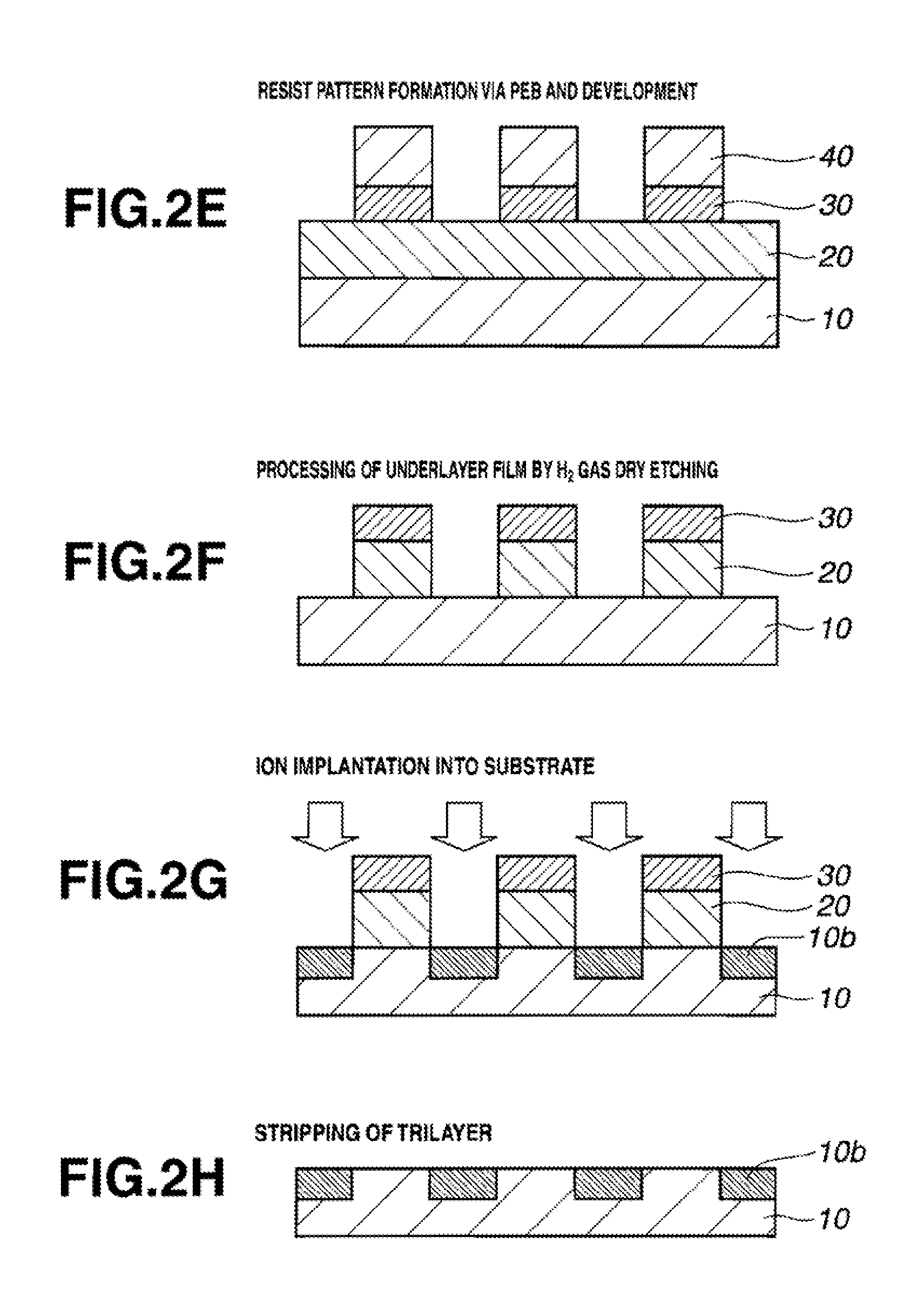
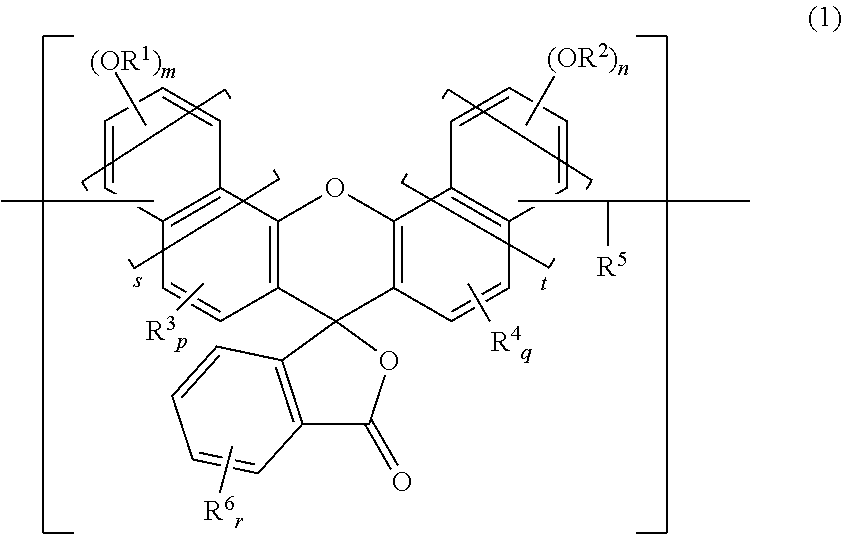
Examples
example
[0130]Examples of the invention are given below by way of illustration and not by way of limitation.
synthesis example
[0131]Synthesis of Novolak Resin
[0132]A substituted or unsubstituted fluorescein was combined with a co-condensable compound, 37 wt % formalin, and oxalic acid, which was stirred at 100° C. for 24 hours. At the end of reaction, the reaction product was poured into 500 ml of methyl isobutyl ketone, which was thoroughly washed with water to remove the catalyst and metal impurities. The solvent was removed under reduced pressure. The system was further evacuated to 2 mmHg at 150° C., for removing water and unreacted monomers. In this way, Novolak Resins 1 to 18 and Comparative Novolak Resins 1 to 3 were similarly prepared except the following changes.
[0133]Novolak Resin 6 was prepared using 6-hydroxy-2-naphthaldehyde instead of 37 wt % formalin. Novolak Resin 7 was prepared using 3-furancarboxyaldehyde instead of 37 wt % formalin. Novolak Resin 8 was prepared using 3-thiophene aldehyde instead of 37 wt % formalin. Novolak Resin 13 was prepared using a 50 wt % dioxane solution of Aldehy...
PUM
| Property | Measurement | Unit |
|---|---|---|
| Percent by mass | aaaaa | aaaaa |
| Acidity | aaaaa | aaaaa |
| Composition | aaaaa | aaaaa |
Abstract
Description
Claims
Application Information
 Login to View More