Check patentability & draft patents in minutes with Patsnap Eureka AI!

Monolithic three dimensional (3D) integrated circuit (IC) (3DIC) cross-tier clock skew management systems, methods and related components

Active Publication Date: 2015-04-30
QUALCOMM INC
View PDF18 Cites 15 Cited by
  • Summary
  • Abstract
  • Description
  • Claims
  • Application Information

AI Technical Summary

Benefits of technology

The patent describes a system for managing clock skew in three-dimensional (3D) integrated circuits (ICs) using programmable delay elements. The system includes a monolithic 3DIC clock tree with multiple clock branches in different tiers. The system detects differences in delay between comparable points in the clock tree and uses automatic delay adjustment to correct for the skew. The system also includes a metal mesh as a signal aggregator that provides clock signals to the clocked elements simultaneously. The technical effects of this system include improved clock synchronization and reduced skew-related issues in 3DICs.

Problems solved by technology

The limited space contributes pressure to continued miniaturization of components.
Likewise, the limited space available for batteries contributes pressure to reduce power consumption by the circuitry.
While miniaturization and power consumption have been of particular concern in the integrated circuits (ICs) of mobile communication devices, other ICs have also been impacted.
While there have been efforts to connect two or more ICs through a separate set of metal layers outside the IC proper, that solution is not properly a three dimensional (3D) approach.
While arguably the flip chip and TSV embodiments represent 3D solutions, the amount of space required to effectuate a flip chip remains large.
Likewise, the space required to implement a TSV relative to the overall size of the chip becomes space prohibitive if many TSVs are required.
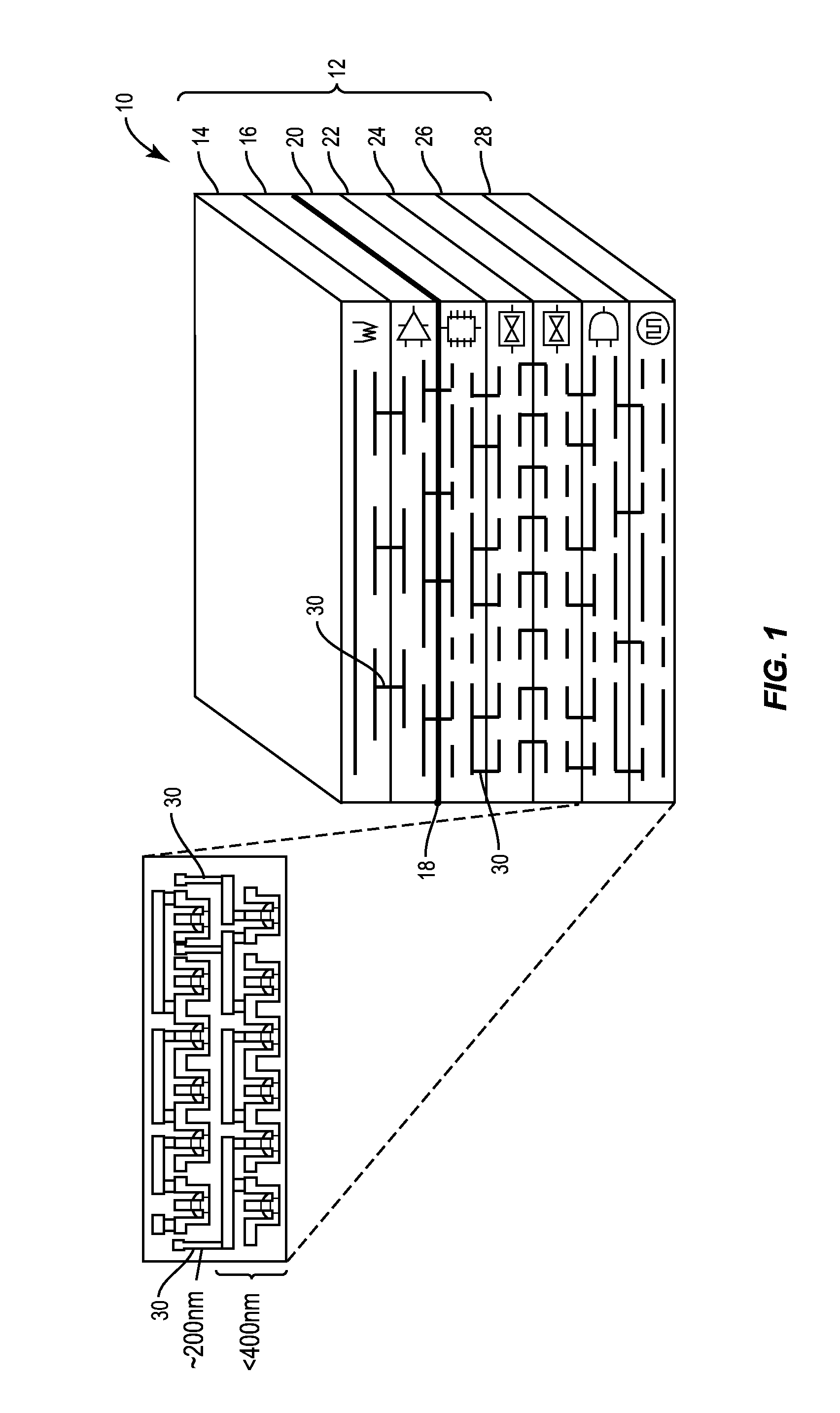
The advent of monolithic 3DICs has provided a number of interesting possibilities in circuit design, but creates its own design issues especially as it relates to clock management.
Clock skew is of concern because it reduces the effective clock period available for computation.
In 2D designs, clock skew arises primarily from delay created by intervening conductive paths of different lengths.
Some clock skew may arise from process variations between elements.
Additional clock skew may result from clock uncertainty.
While an annoyance in a 2D design, such annoyances are exacerbated into legitimate problems in a 3D design.

Method used

the structure of the environmentally friendly knitted fabric provided by the present invention; figure 2 Flow chart of the yarn wrapping machine for environmentally friendly knitted fabrics and storage devices; image 3 Is the parameter map of the yarn covering machine
View more

Image

Smart Image Click on the blue labels to locate them in the text.
Viewing Examples
Smart Image
  • Monolithic three dimensional (3D) integrated circuit (IC) (3DIC) cross-tier clock skew management systems, methods and related components
  • Monolithic three dimensional (3D) integrated circuit (IC) (3DIC) cross-tier clock skew management systems, methods and related components
  • Monolithic three dimensional (3D) integrated circuit (IC) (3DIC) cross-tier clock skew management systems, methods and related components

Examples

Experimental program
Comparison scheme
Effect test

Embodiment Construction

[0021]With reference now to the drawing figures, several exemplary embodiments of the present disclosure are described. The word “exemplary” is used herein to mean “serving as an example, instance, or illustration.” Any embodiment described herein as “exemplary” is not necessarily to be construed as preferred or advantageous over other embodiments.

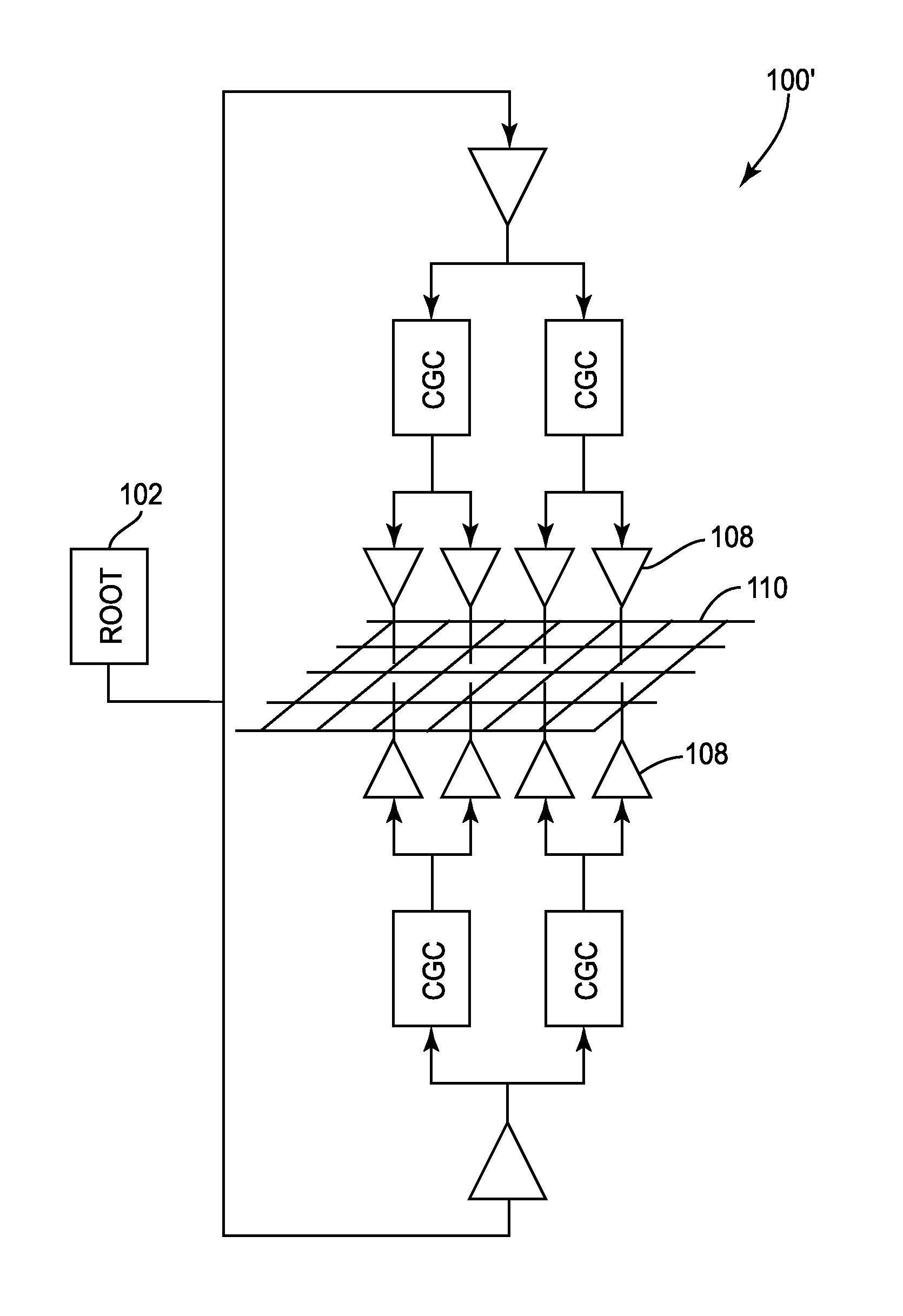
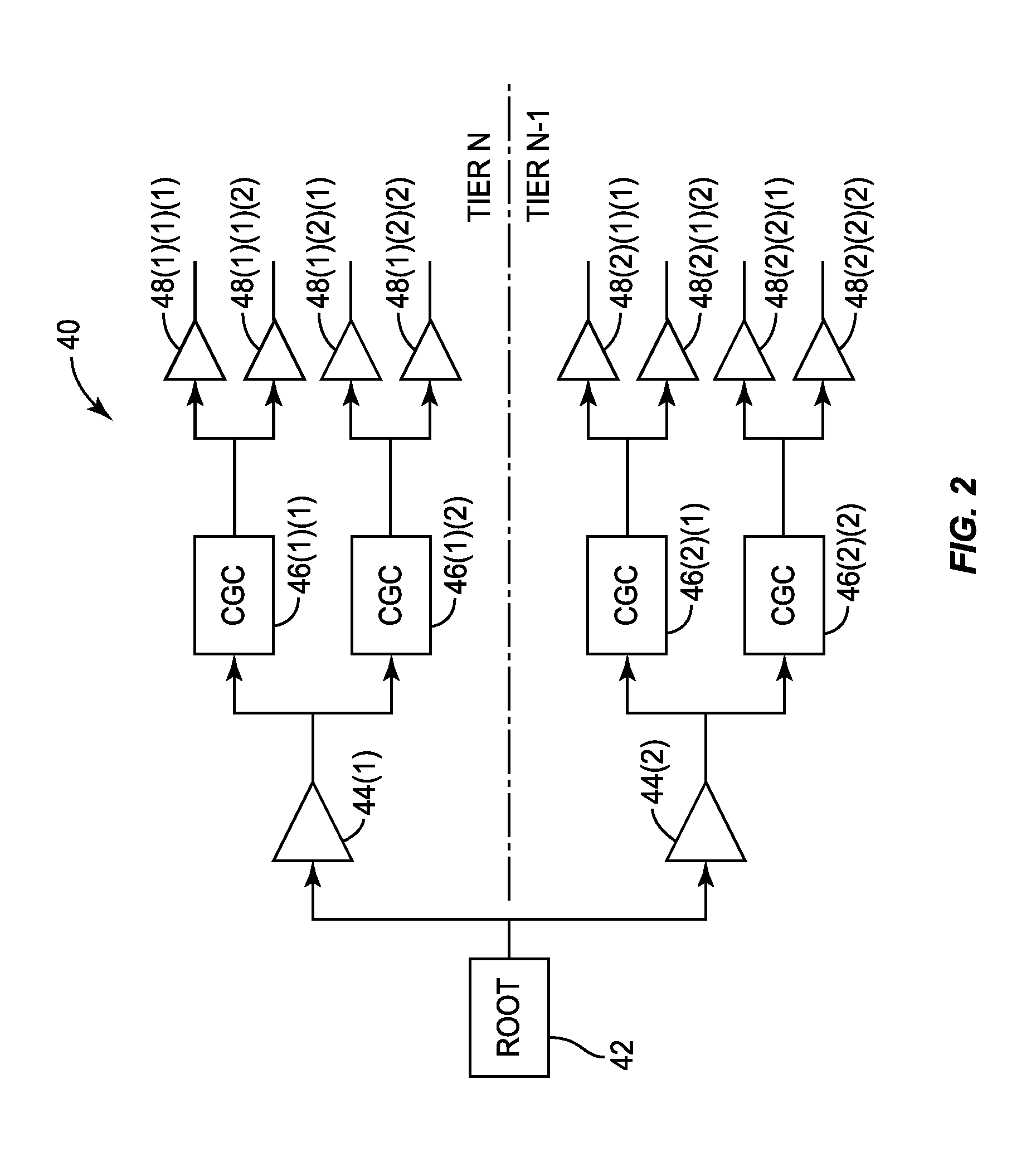
[0022]Embodiments disclosed in the detailed description include monolithic three dimensional (3D) integrated circuit (IC) (3DIC) cross-tier clock skew management systems. Methods and related components are also disclosed. In an exemplary embodiment, to offset the skew that may result across the tiers in the clock tree, a cross-tier clock balancing scheme makes use of automatic delay adjustment. In particular, a delay sensing circuit detects a difference in delay at comparable points in the clock tree between different tiers and instructs a programmable delay element to delay the clock signals on the faster of the two tiers. In a second exe...

the structure of the environmentally friendly knitted fabric provided by the present invention; figure 2 Flow chart of the yarn wrapping machine for environmentally friendly knitted fabrics and storage devices; image 3 Is the parameter map of the yarn covering machine
Login to View More

PUM

No PUM Login to View More

Abstract

Monolithic three dimensional (3D) integrated circuit (IC) (3DIC) cross-tier clock skew management systems are disclosed. Methods and related components are also disclosed. In an exemplary embodiment, to offset the skew that may result across the tiers in the clock tree, a cross-tier clock balancing scheme makes use of automatic delay adjustment. In particular, a delay sensing circuit detects a difference in delay at comparable points in the clock tree between different tiers and instructs a programmable delay element to delay the clock signals on the faster of the two tiers. In a second exemplary embodiment, a metal mesh is provided to all elements within the clock tree and acts as a signal aggregator that provides clock signals to the clocked elements substantially simultaneously.

Description

PRIORITY CLAIM[0001]The present application claims priority to U.S. Patent Application Ser. No. 61 / 898,064 filed on Oct. 31, 2013 and entitled “MONOLITHIC THREE DIMENSIONAL (3D) INTEGRATED CIRCUIT (IC) (3DIC) CROSS-TIER CLOCK SKEW MANAGEMENT SYSTEMS, METHODS AND RELATED COMPONENTS,” which is incorporated herein by reference in its entirety.BACKGROUND[0002]I. Field of the Disclosure[0003]The technology of the disclosure relates generally to clock management in a three dimensional (3D) integrated circuit (IC) (3DIC).[0004]II. Background[0005]Mobile communication devices have become common in current society. The prevalence of these mobile devices is driven in part by the many functions that are now enabled on such devices. Demand for such functions increases processing capability requirements and generates a need for more powerful batteries. Within the limited space of the housing of the mobile communication device, batteries compete with the processing circuitry. The limited space co...

Claims

the structure of the environmentally friendly knitted fabric provided by the present invention; figure 2 Flow chart of the yarn wrapping machine for environmentally friendly knitted fabrics and storage devices; image 3 Is the parameter map of the yarn covering machine
Login to View More

Application Information

Patent Timeline
no application Login to View More
IPC IPC(8): G06F17/50
CPCG06F17/5081H01L27/0688G06F1/10G06F30/396G06F30/398G06F30/39G06F30/392G06F30/394G06F30/3312G06F2119/12G06F2117/04
Inventor KAMAL, PRATYUSHDU, YANG
Owner QUALCOMM INC
Features
  • R&D
  • Intellectual Property
  • Life Sciences
  • Materials
  • Tech Scout
Why Patsnap Eureka
  • Unparalleled Data Quality
  • Higher Quality Content
  • 60% Fewer Hallucinations
Social media
Patsnap Eureka Blog
Learn More