

Fuel deoxygenation and fuel tank inerting system and method
a fuel tank and deoxygenation technology, applied in the field of fuel deoxygenation, can solve the problems of reducing the efficiency of the fuel system, limiting the ability of the fuel to absorb heat beyond, and increasing maintenance, so as to improve the aircraft specific fuel consumption
- Summary
- Abstract
- Description
- Claims
- Application Information
AI Technical Summary
Benefits of technology
Problems solved by technology
Method used
Image

Examples
Embodiment Construction
[0014]The following detailed description is merely exemplary in nature and is not intended to limit the invention or the application and uses of the invention. As used herein, the word “exemplary” means “serving as an example, instance, or illustration.” Thus, any embodiment described herein as “exemplary” is not necessarily to be construed as preferred or advantageous over other embodiments. All of the embodiments described herein are exemplary embodiments provided to enable persons skilled in the art to make or use the invention and not to limit the scope of the invention which is defined by the claims. Furthermore, there is no intention to be bound by any expressed or implied theory presented in the preceding technical field, background, brief summary, or the following detailed description.
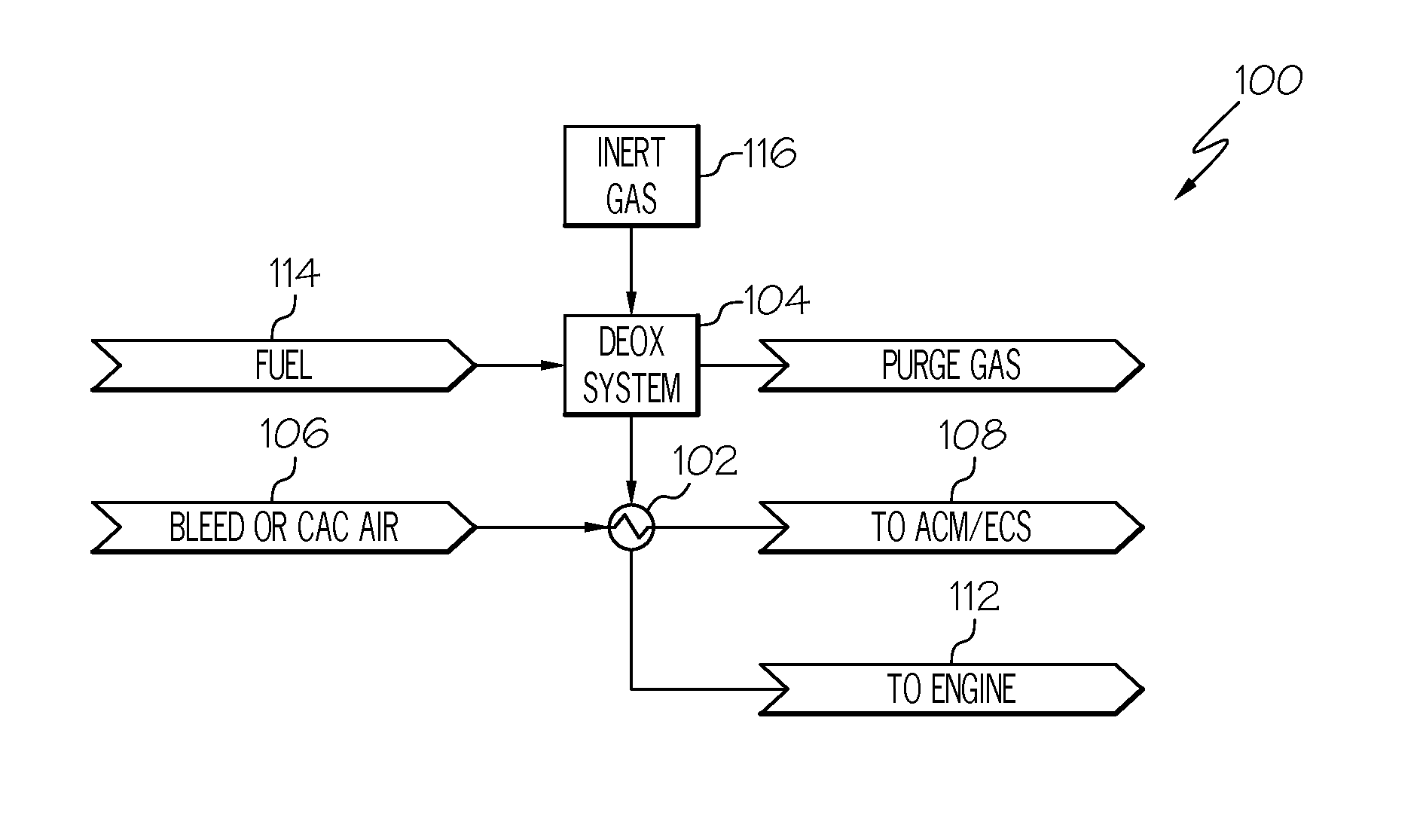
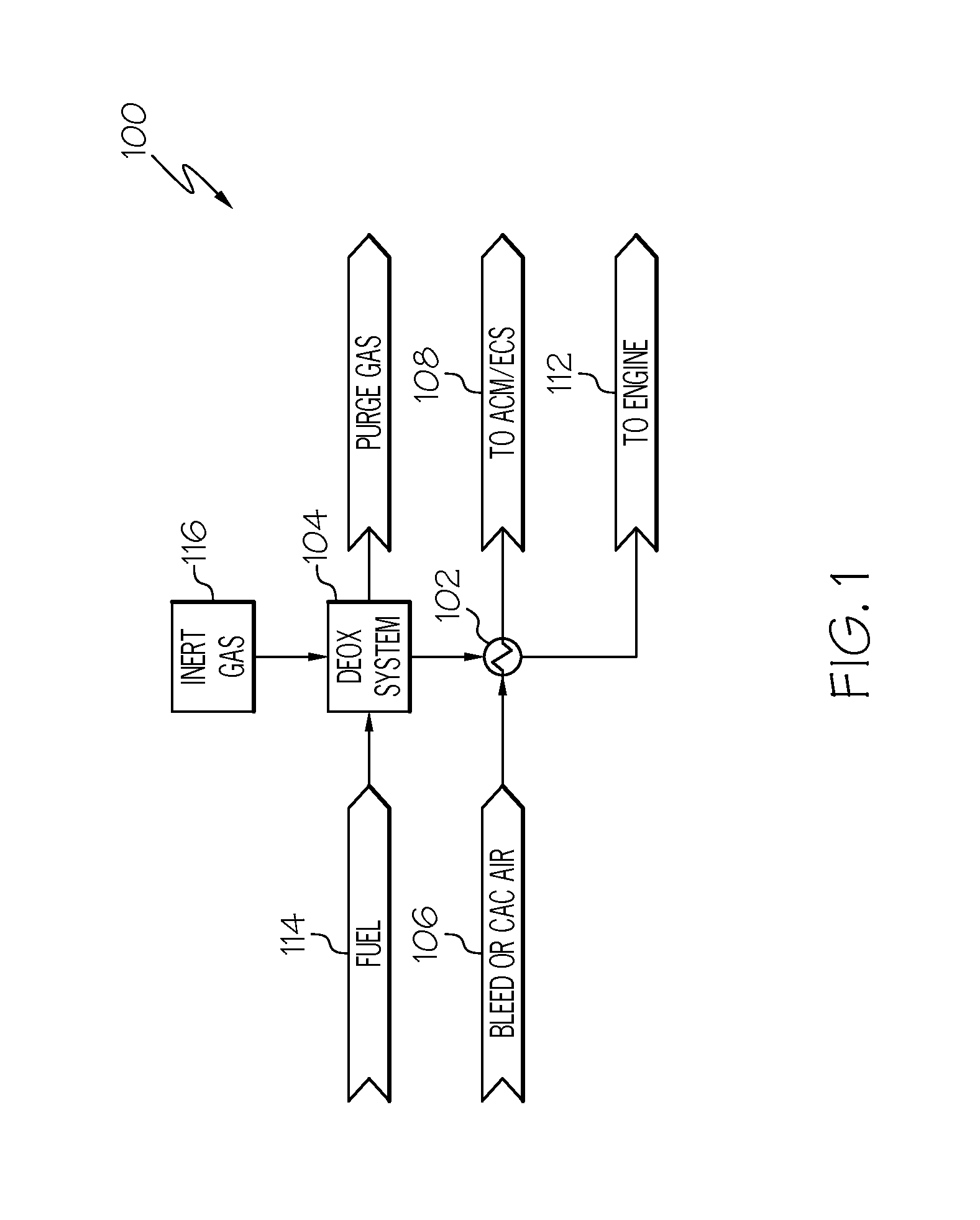
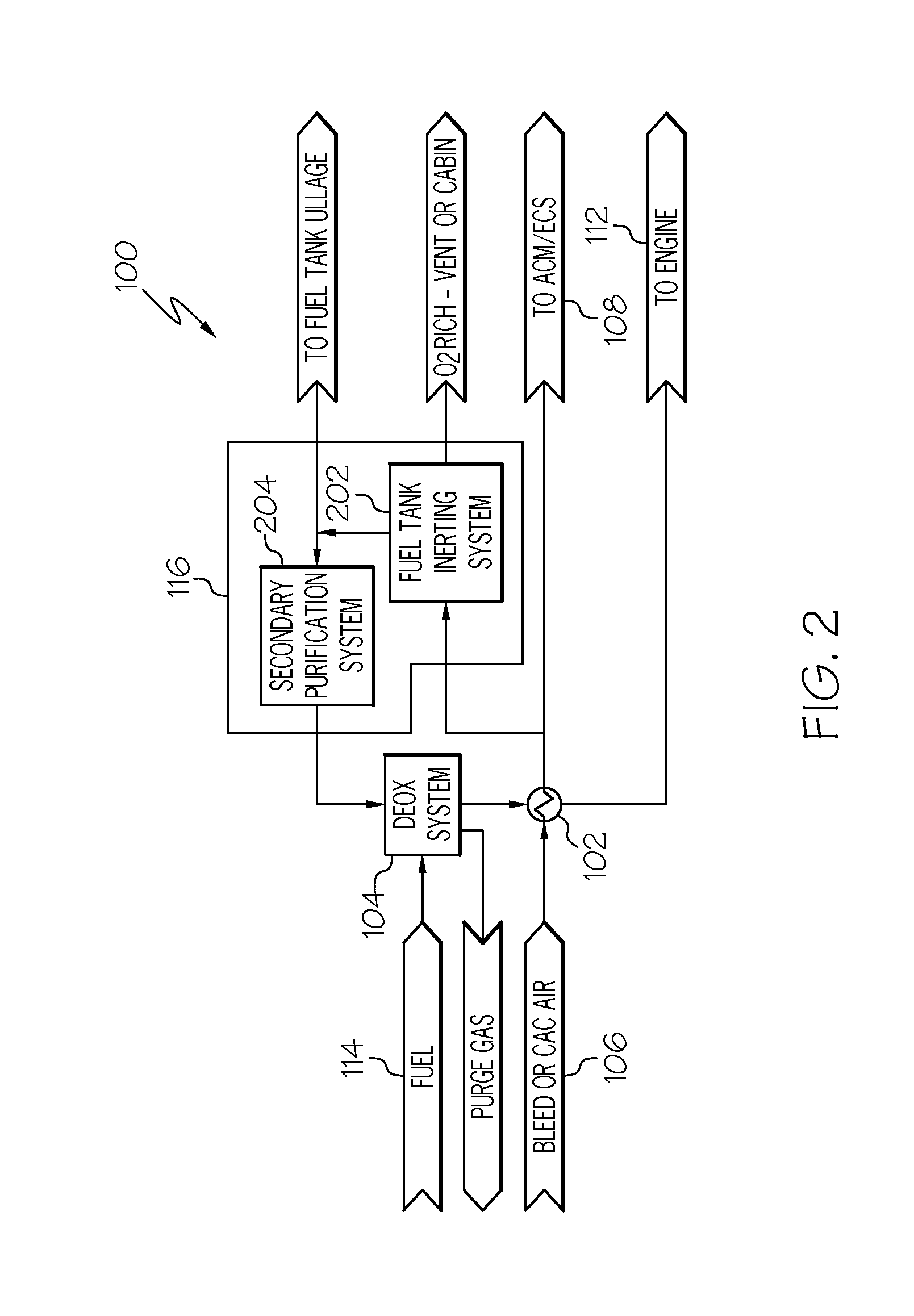
[0015]Referring first to FIGS. 1-3, embodiments of an integrated deoxygenation and fuel inerting system 100 is depicted. Each of the depicted systems 100 includes an air / fuel heat exchanger 102...
PUM
| Property | Measurement | Unit |
|---|---|---|
| Fraction | aaaaa | aaaaa |
| Pressure | aaaaa | aaaaa |
| Concentration | aaaaa | aaaaa |
Abstract
Description
Claims
Application Information
 Login to View More