
Process for the synthesis of nitrogen-doped carbon electro-catalyst
- Summary
- Abstract
- Description
- Claims
- Application Information
AI Technical Summary
Benefits of technology
Problems solved by technology
Method used
Image

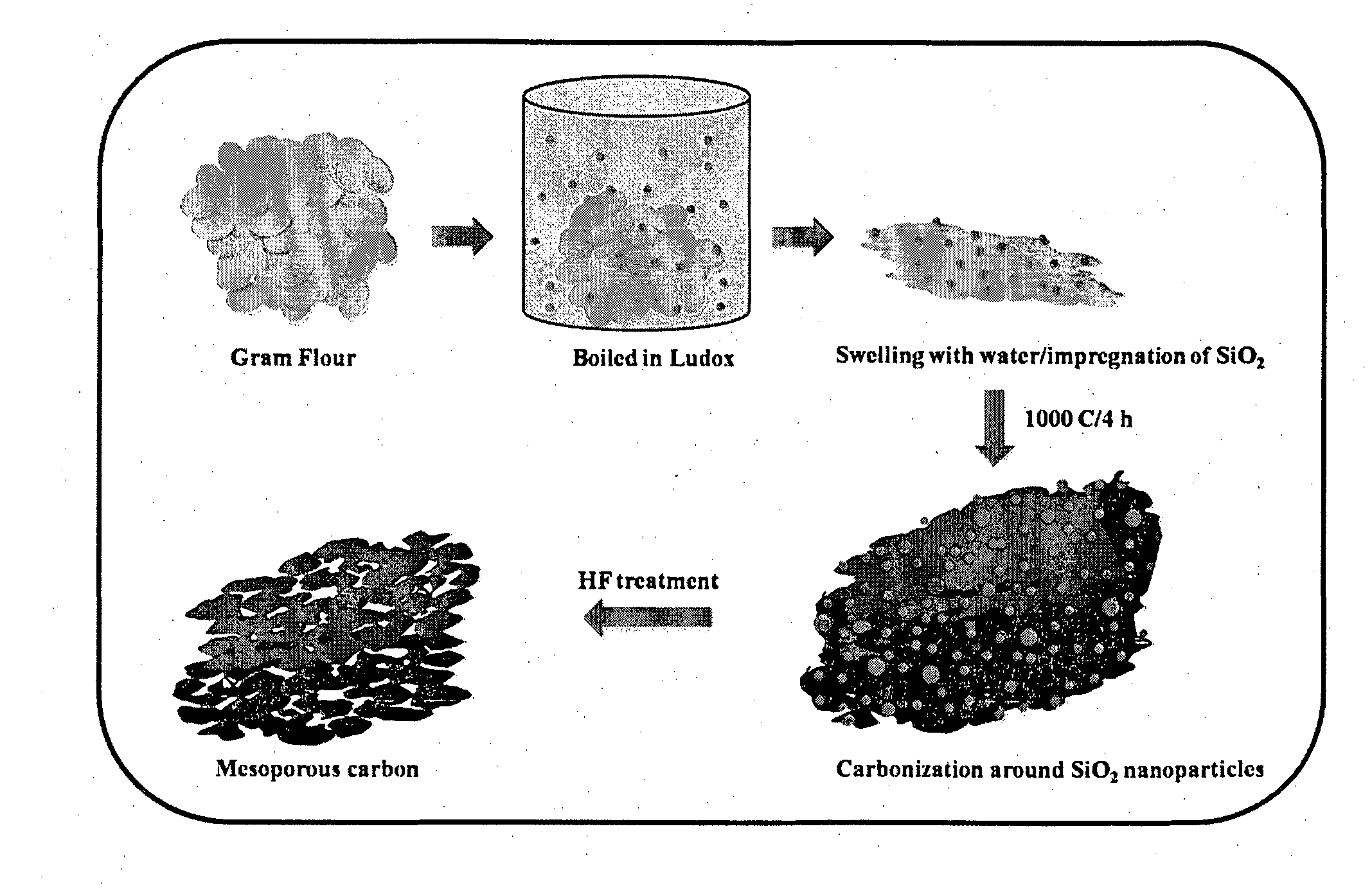
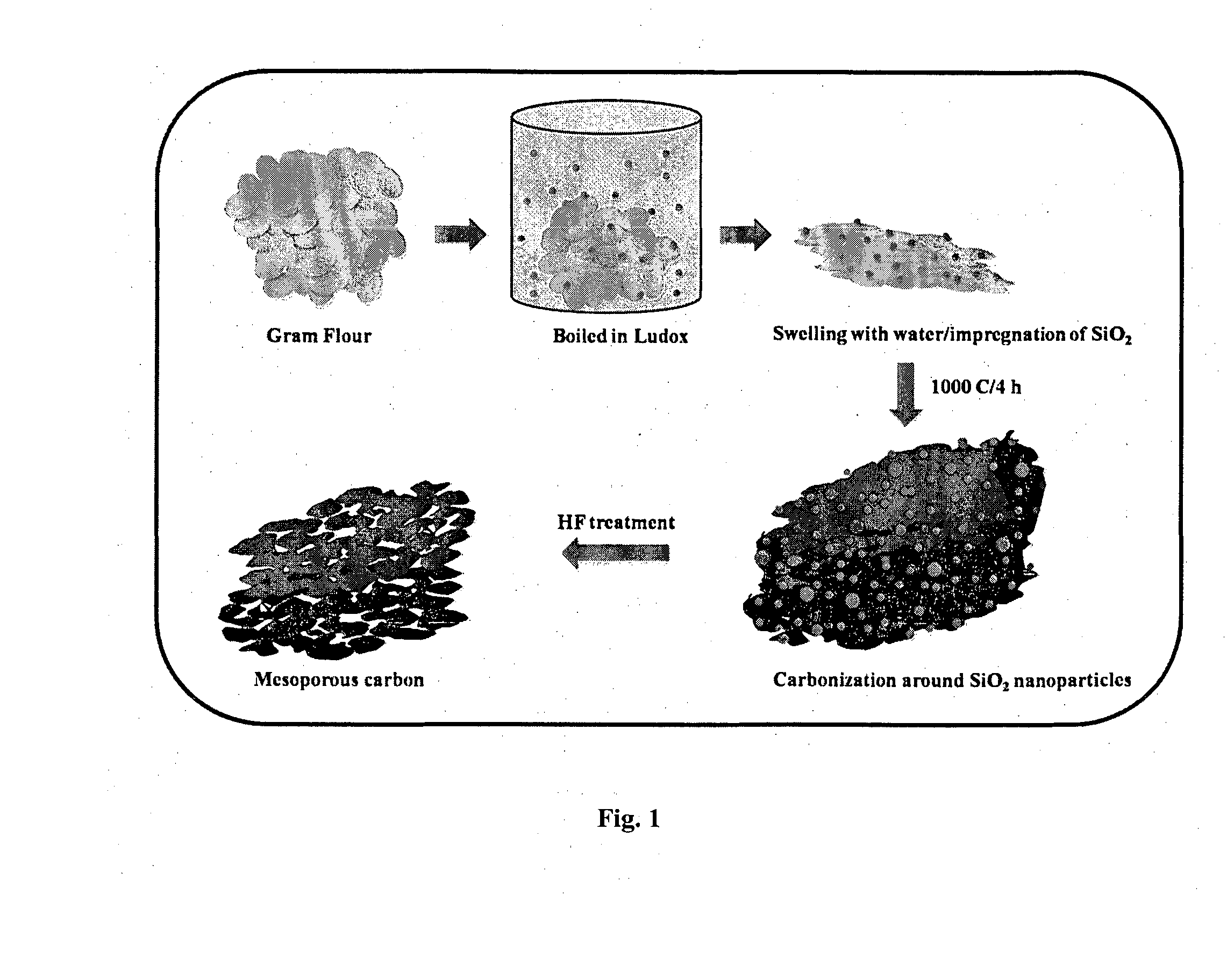
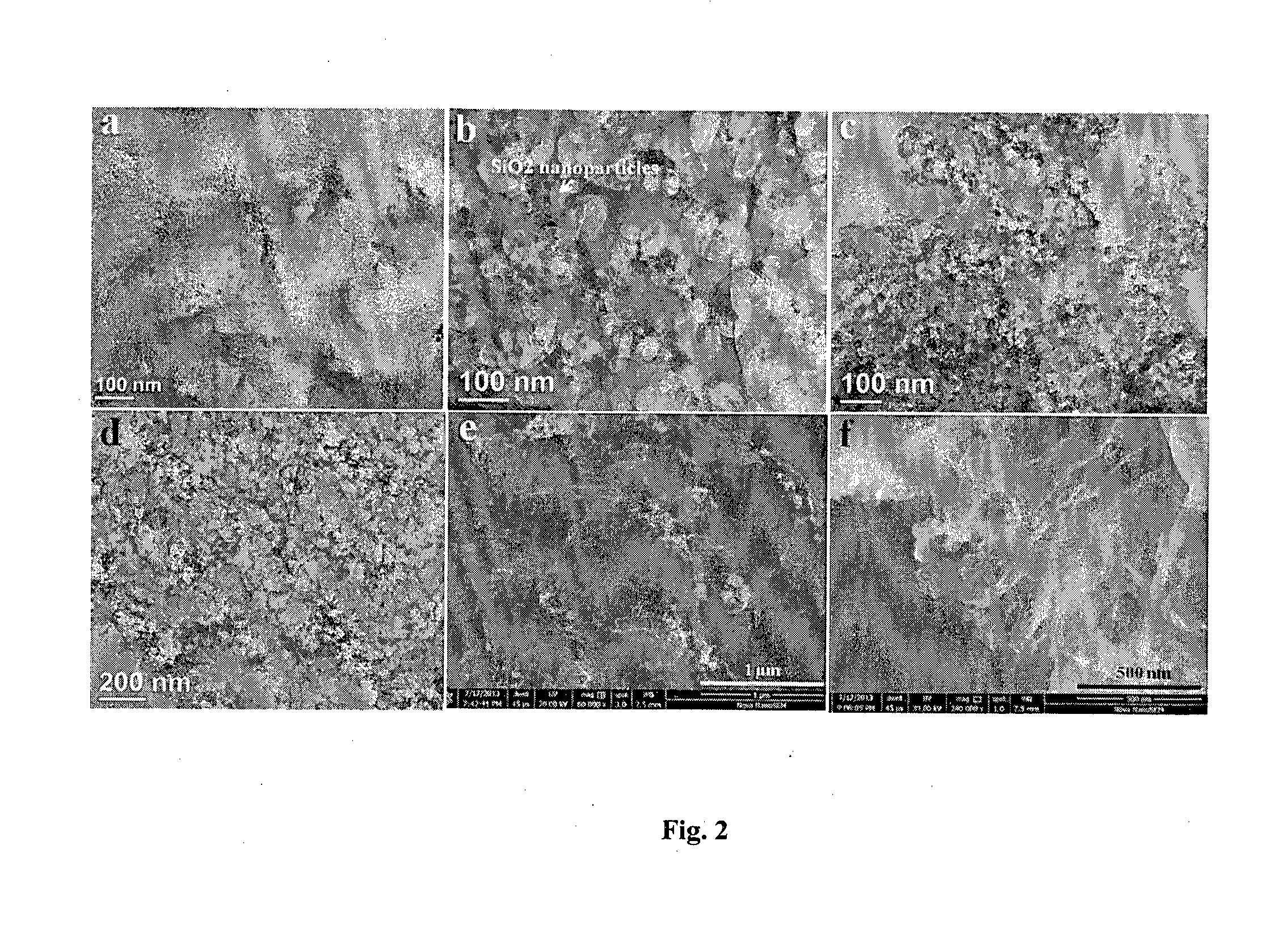
Examples
example 1
Preparation of Gram Flour-Derived Mesoporous Carbon (GFMC1)
[0096]5 gm gram flour was boiled in excess deionized (DI) water for 5 hours. The slurry was filtered through a Whatman filter paper of pore size 0.2 μm. The filtered product was pyrolyzed at 1000° C. / 4 hrs in flowing argon atmosphere. The sample was then treated with conc. HF solution to remove oxide impurities. The product was washed with DI water by centrifugation several times and then dried in oven. The dried sample was again treated at 1000° C. / 4 hrs in argon atmosphere. This sample was then characterized.
example 2
Preparation of Gram Flour-Derived Mesoporous Carbon (GFMC2)
[0097]5 gm gram flour was boiled for 5 hours in 50 ml Ludox solution up to dryness. The SiO2-Gram flour slurry obtained was pyrolyzed in argon atmosphere at 1000° C. in a split tube for 4 hours. The obtained product was treated with conc. HF to remove silica nanoparticles and generate porous carbon. The carbon was recovered and washed with DI water by centrifugation several times. It was dried overnight in an oven and then re-heated at 1000° C. for 4 hrs in argon atmosphere. The final material was used for characterization.
example 3
Preparation of Gram Flour-Derived Mesoporous Carbon (GFMC3)
[0098]5 gm gram flour was boiled for 5 hours in 200 ml Ludox solution up to dryness. The SiO2-Gram flour slurry obtained was pyrolyzed in argon atmosphere at 1000° C. in a split tube for 4 hours. The obtained product was treated with conc. HF to remove silica nanoparticles and generate porous carbon. The carbon was recovered and washed with DI water by centrifugation several times. It was dried overnight in an oven and then re-heated at 1000° C. for 4 hrs in argon atmosphere. The final material was used for characterization.
PUM
 Login to View More
 Abstract
Description
Claims
Application Information
 Login to View More