
Piperidine derivative and preparation method and pharmaceutical use thereof
a piperidine and derivative technology, applied in the field of medicine, can solve the problems of serious side effects of commercially available serms, polyps and endometrial cancer, research and development of new compounds, and urgent problems to be solved, and achieve outstanding efficacy, fewer side effects, and outstanding
- Summary
- Abstract
- Description
- Claims
- Application Information
AI Technical Summary
Benefits of technology
Problems solved by technology
Method used
Image

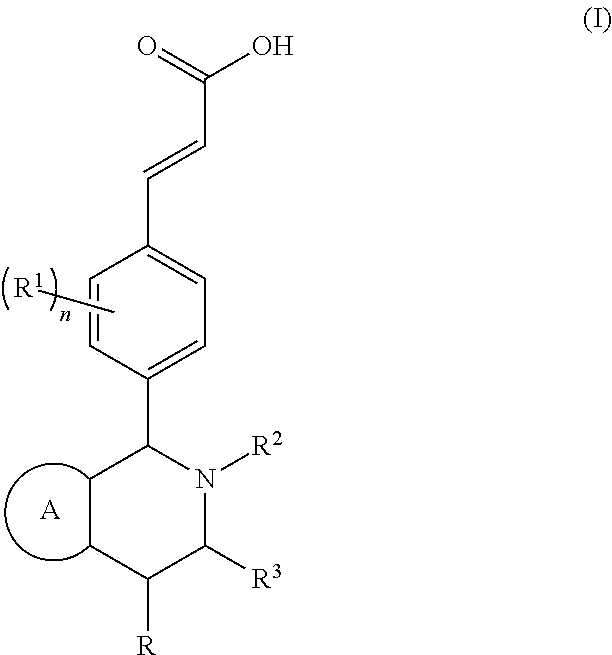
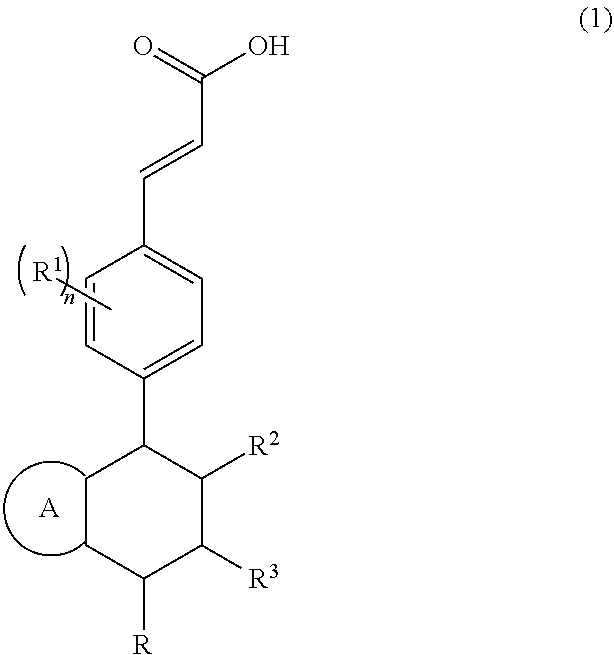
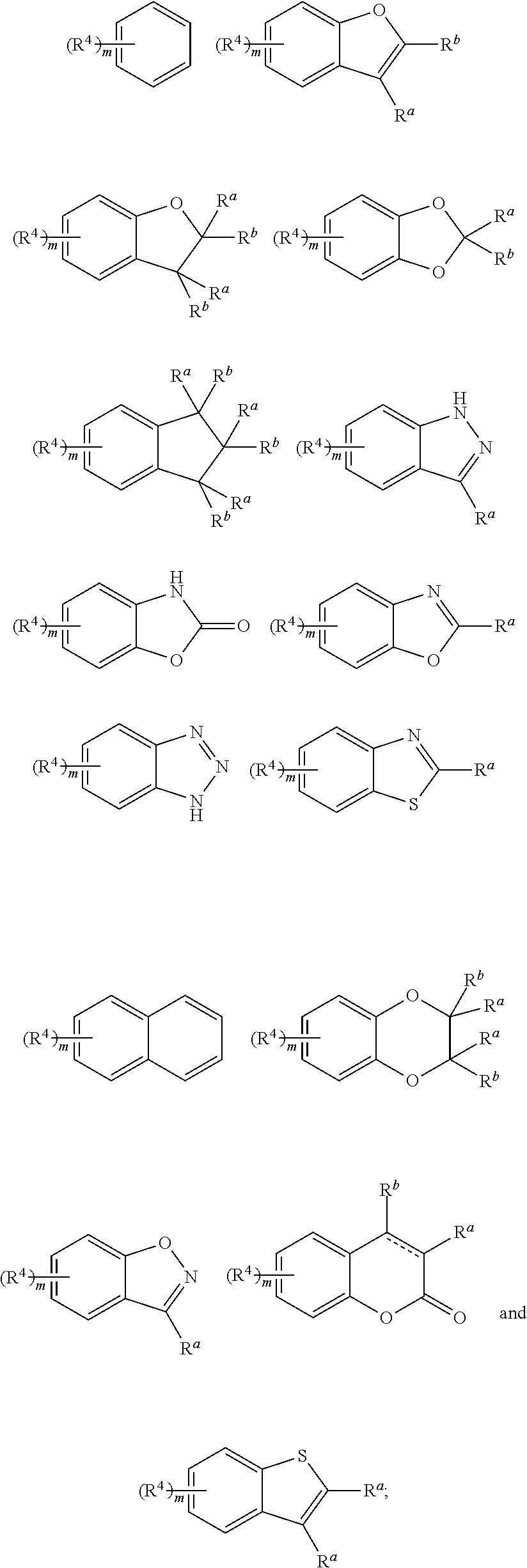
Examples
example 1
(E)-3-(3,5-difluoro-4-((5S,7R / 5R,7S)-6-(2-fluoro-2-methylpropyl)-7-methyl-5,6,7,8-tetrahydro-[1,3]dioxolo[4,5-g]isoquinolin-5-yl)phenyl)acrylic acid
[0146]
Step 1
N-(1-(3,4-bis(benzyloxy)phenyl)propan-2-yl)-2-fluoro-2-methylpropan-1-amine
[0147]1-(3,4-bis(benzyloxy)phenyl)propan-2-amine 1a (0.8 g, 2.3 mmol, prepared by a well-known method disclosed in “Bioorganic &Medicinal Chemistry, 2002, 10(4), 1085-1092”), 2-fluoro-2-methylpropyltrifluoromethanesulfonate 1b (671 mg, 3 mmol, prepared by a well-known method disclosed in “Journal of Organic Chemistry, 2005, 70(6), 2372-2375”) and N,N-diisopropylethylamine (595 mg, 4.6 mmol) were dissolved in 8 mL of 1,4-dioxane. The resulting mixture was stirred for 12 hours at 90° C. The reaction was stopped, and the reaction solution was concentrated under reduced pressure. The residue was purified by silica gel column chromatography with elution system A to obtain the title compound N-(1-(3,4-bis(benzyloxy)phenyl)propan-2-yl)-2-fluoro-2-methylpropan...
example 2
(E)-3-(3,5-difluoro-4-((6S,8R / 6R,8S)-7-(2-fluoro-2-methylpropyl)-8-methyl-2,3,6,7,8,9-hexahydro-[1,4]dioxino[2,3-g]isoquinolin-6-yl)phenyl)acrylic acid
[0154]
Step 1
(E)-methyl 3-(3,5-difluoro-4-((6S,8R / 6R,8S)-7-(2-fluoro-2-methylpropyl)-8-methyl-2,3,6,7,8,9-hexahydro-[1,4]dioxino[2,3-g]isoquinolin-6-yl)phenyl)acrylate
[0155](E)-methyl 3-(3,5-difluoro-4-((1S,3R / 1R,3S)-2-(2-fluoro-2-methylpropyl)-6,7-dihydroxy-3-methyl-1,2,3,4-tetrahydroisoquinolin-1-yl)phenyl)acrylate 1f (58 mg, 0.129 mmol) was dissolved in 1.5 mL of N,N-dimethylformamide, then 1,2-dibromomethane (36.4 mg, 0.194 mmol) and cesium carbonate (63 mg, 0.194 mmol) were added. The resulting mixture was heated to 70° C. and stirred for 16 hours. The reaction was stopped. The reaction solution was concentrated under reduced pressure. Ethyl acetate (10 mL) was added, and the mixture was washed with water (10 mL) and saturated sodium chloride solution (10 mL), dried over anhydrous sodium sulfate and filtered. The filtrate was conc...
example 3
(E)-3-(3,5-difluoro-4-((1S,3R / 1R,3S)-2-(2-fluoro-2-methylpropyl)-6-hydroxy-3-methyl-1,2,3,4-tetrahydroisoquinolin-1-yl)phenyl)acrylic acid
[0159]
Step 1
3-(2-((2-fluoro-2-methylpropyl)amino)propyl)phenol
[0160]3-(2-aminopropyl)phenol 3a (220 mg, 2.3 mmol, prepared by a method disclosed in the patent application “WO2009068177”), 2-fluoro-2-methylpropyl trifluoromethanesulfonate 1b (651 mg, 2.9 mmol) and N,N-diisopropylethylamine (559 mg, 4.365 mmol) were dissolved in 5 mL of 1,4-dioxane. The resulting mixture was heated to 90° C. and stirred for 12 hours under an argon atmosphere. The reaction was stopped, and the reaction solution was concentrated under reduced pressure. The residue was purified by silica gel column chromatography with elution system A to obtain the title compound 3-(2-((2-fluoro-2-methylpropyl)amino)propyl)phenol 3b (113 mg, yield 35%) as a brown liquid.
Step 2
(E)-methyl 3-(3,5-difluoro-4-((1S,3R / 1R,3S)-2-(2-fluoro-2-methylpropyl)-6-hydroxy-3-methyl-1,2,3,4-tetrahydrois...
PUM
| Property | Measurement | Unit |
|---|---|---|
| temperature | aaaaa | aaaaa |
| temperature | aaaaa | aaaaa |
| temperature | aaaaa | aaaaa |
Abstract
Description
Claims
Application Information
 Login to View More