
Process for Producing Fluorocytosine and Fluorocytosine Derivatives
a technology of which is applied in the field of process for producing fluorocytosine and fluorocytosine derivatives, can solve the problems of compromising the yield of fluocytosine, difficult to remove, and high yield
- Summary
- Abstract
- Description
- Claims
- Application Information
AI Technical Summary
Benefits of technology
Problems solved by technology
Method used
Image

Examples
specific embodiment
[0358]In a particular embodiment, the compound of Formula I is flucytosine or a salt or solvate thereof, the compound of Formula II is cytosine (suitably provided as a first input load comprising a solution of cytosine, suitably an organic acid solution thereof), the electrophilic fluorinating agent is fluorine (suitably provided as a second input load comprising fluorine and nitrogen); wherein the cytosine and fluorine are provided to the reaction mixture so that the initial molar ratio of fluorine to cytosine is between 1.2:1 and 1.6:1 (suitably a relative molar flow rate of cytosine to fluorine between 0.625 and 0.833330); wherein the residence time of the reaction mixture is suitably between 1 second and 10 seconds.
[0359]In a particular embodiment, flucytosine (or salt or solvate thereof) formed by the method of the invention may be or otherwise be transformed into a pharmaceutical drug substance (or pharmaceutically acceptable salt or solvate thereof). The pharmaceutical drug s...
example 1
uorination of Cytosine Using a Batch Process
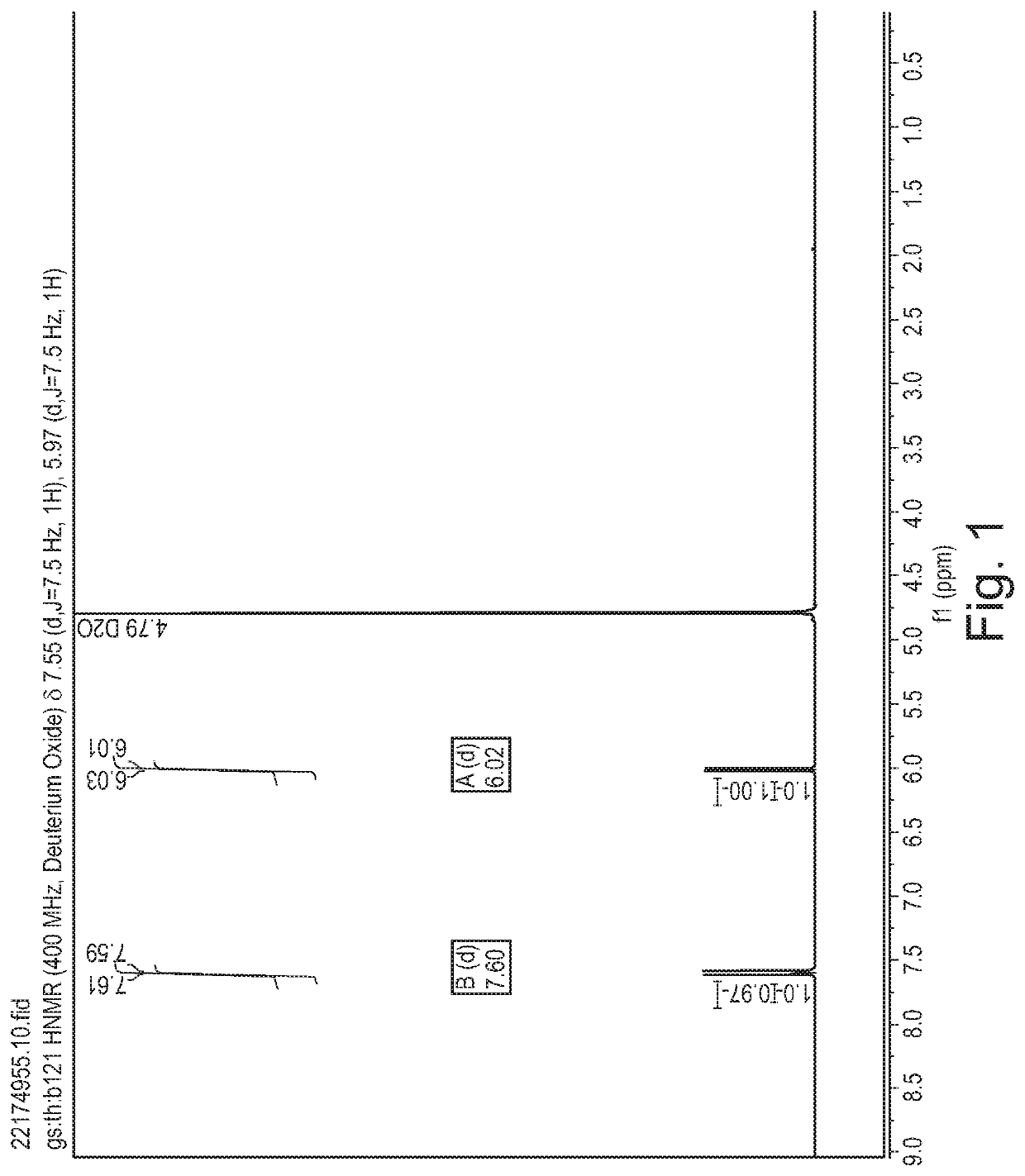
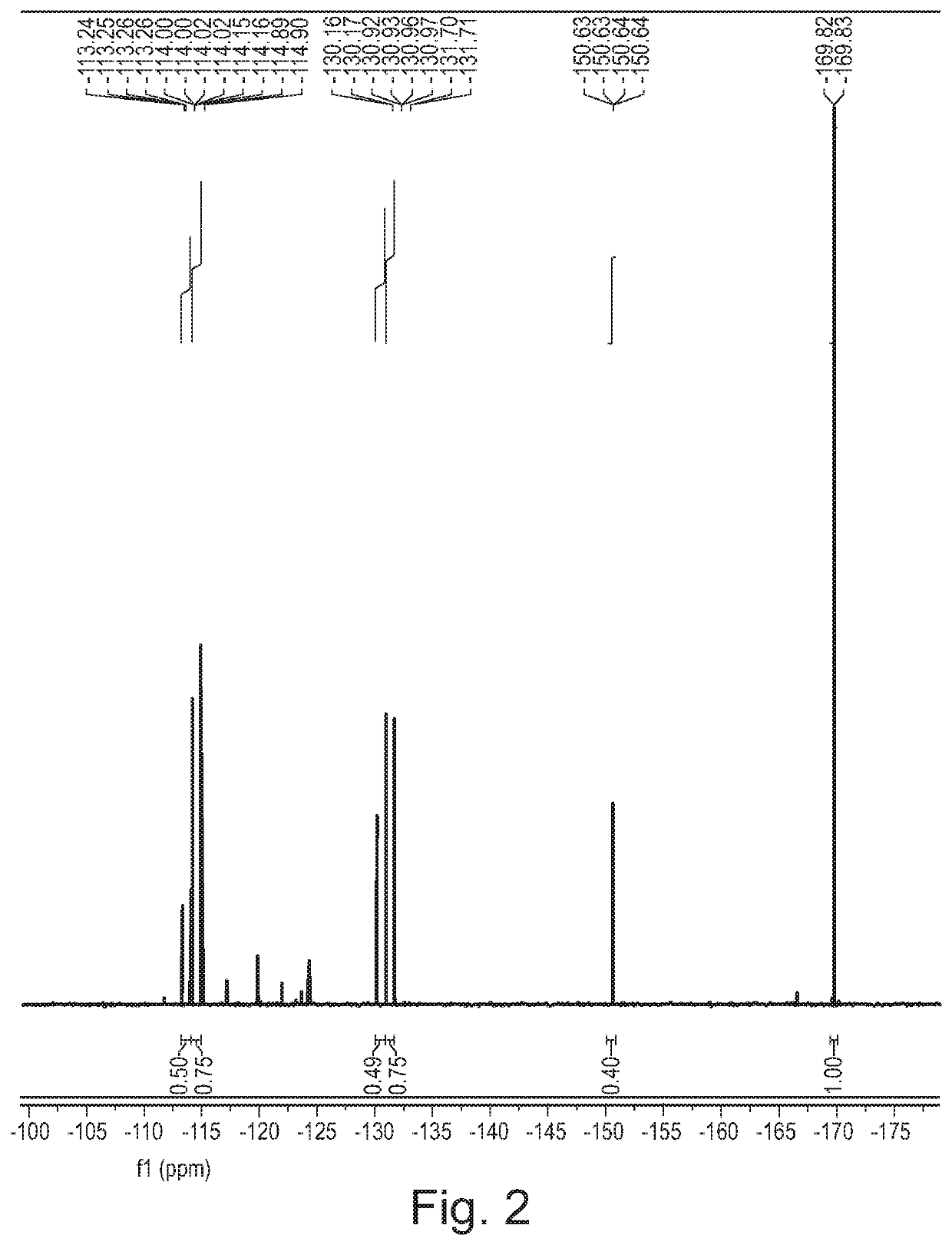
[0381]Cytosine (1.11 g, 10 mmol) was dissolved in formic acid and was kept at 20° C. in a water bath. Fluorine (10% in N2) was introduced to the vigorously stirred solution at 25 mL / min (7.5 mmol / h). After introducing the desired quantity of fluorine, the solvent was removed in vacuo and the residue was recrystallized from water (10 mL). The formed crystalline product was filtered and analysed using 1H and 19F NMR spectroscopy.
example 2
irect Fluorination Experiments on Cytosine Using a Continuous Flow Reactor (Microreactor)
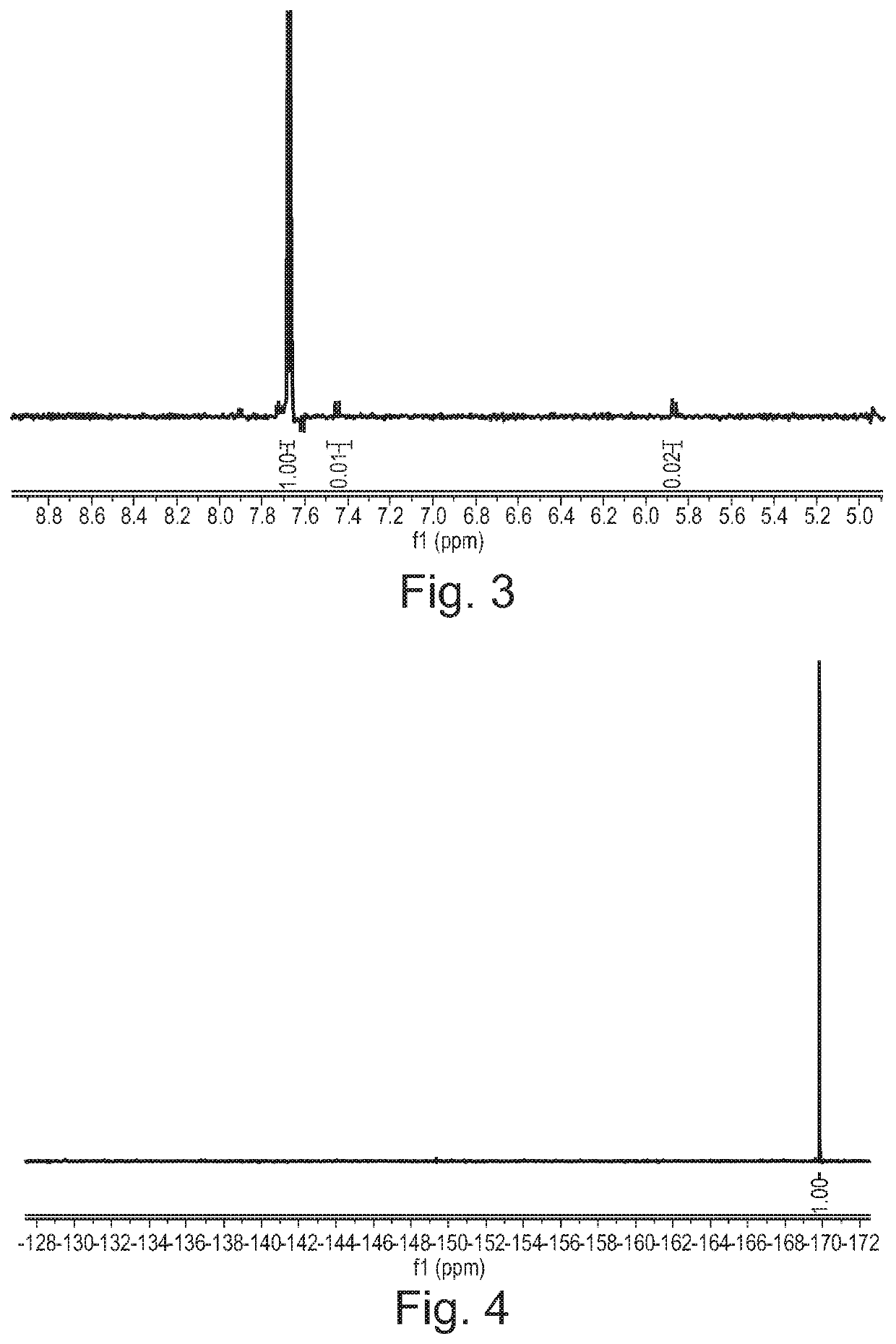
[0382]A 1 M stock solution of cytosine in formic acid was prepared and used for fluorinations. The solution was introduced to the microreactor at 2 mL / h (2 mmol / h) while the flow of fluorine was set according to Table 3. Fractions were collected for 120 minutes, the solvent was evaporated and the product was recrystallized from water (5 mL). The product was filtered, dried in vacuo and analysed using 1H and 19F NMR spectroscopy.
PUM
| Property | Measurement | Unit |
|---|---|---|
| pKa | aaaaa | aaaaa |
| residence time | aaaaa | aaaaa |
| residence time | aaaaa | aaaaa |
Abstract
Description
Claims
Application Information
 Login to View More