
Method for producing polyamide with controlled activator addition, and polyamide produced thereby
a technology of activator addition and polyamide, which is applied in the field of polyamide production with controlled activator addition, and polyamide produced thereby, can solve the problems of not fundamentally solving, not transparently revealing the solution to non-uniform branching structure, and inefficient, etc., and achieves short polymerization reaction time, high conversion rate, and enhanced polymerization conversion rate and pdi.
- Summary
- Abstract
- Description
- Claims
- Application Information
AI Technical Summary
Benefits of technology
Problems solved by technology
Method used
Image

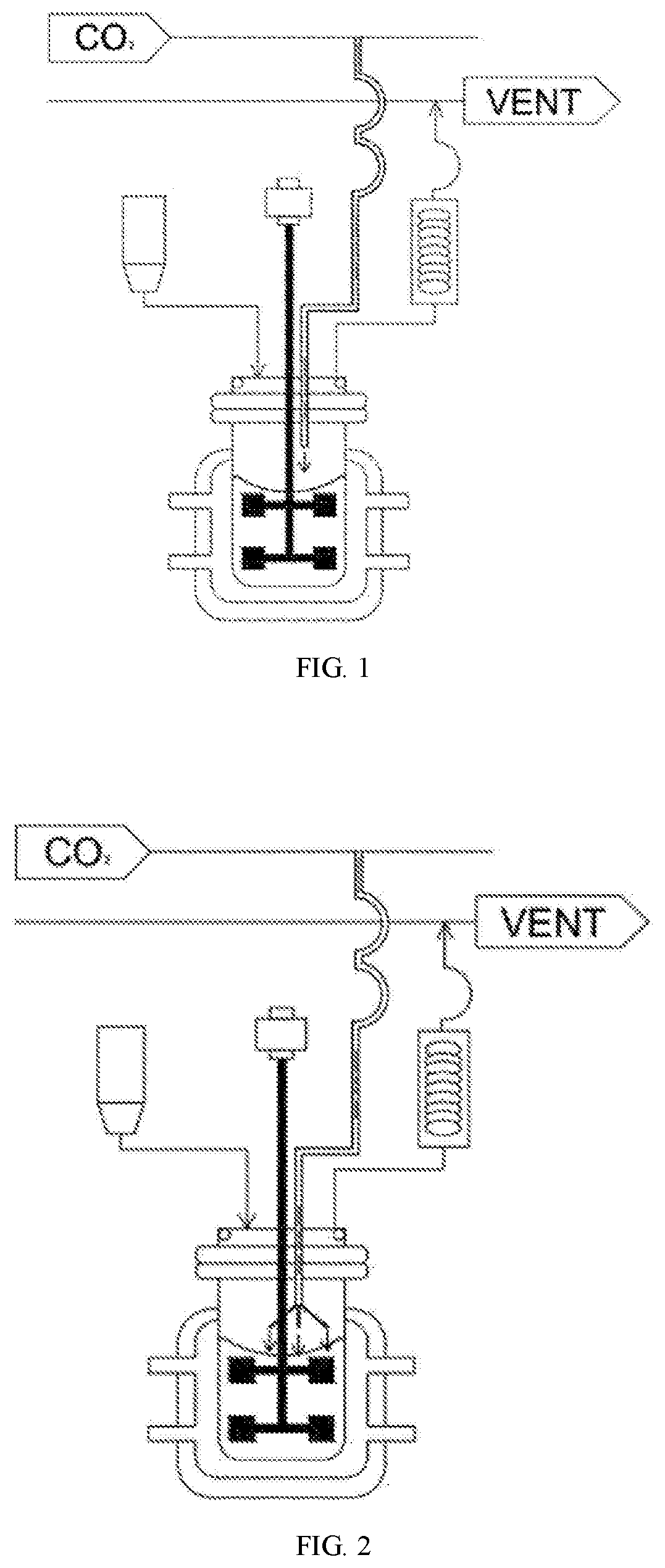
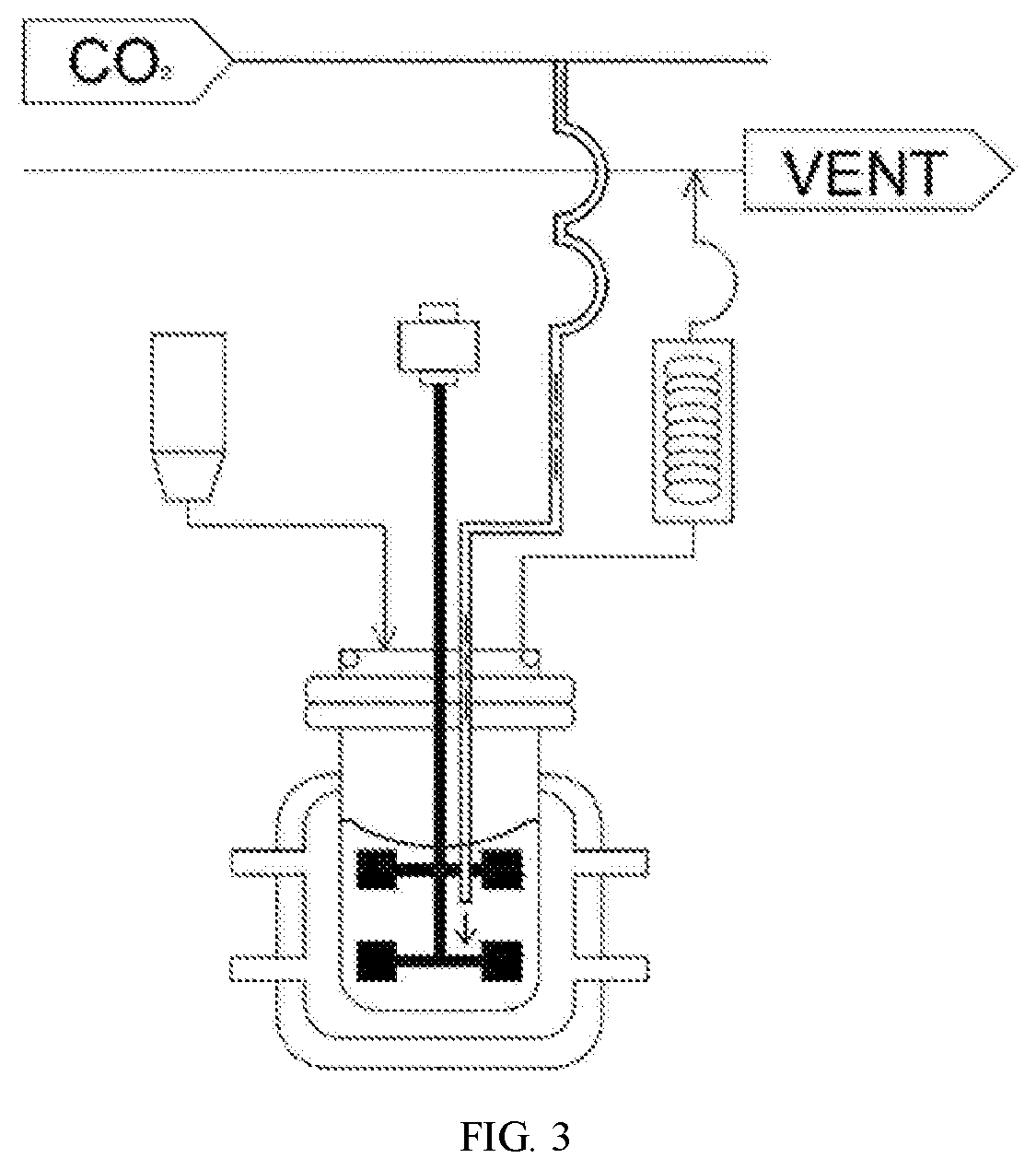
Examples
example 1
[0075]Production of Polyamide 12 Through Addition of Carbon Dioxide
[0076]In order to remove moisture from a flask, a vacuum was released from the flask that was maintained at 80° C. in a vacuum state. 15 g of laurolactam, 0.12 g of EBS, and 0.03 g of NaH were added to the flask and molten at 165° C. in a nitrogen atmosphere. Thereafter, after the temperature was raised to 230° C. and 1 ml of carbon dioxide was injected into the upper end of the solution and reacted.
[0077]After 5 minutes, 1 ml of carbon dioxide was additionally injected. After 10 minutes, an aqueous formic acid solution (formic acid:distilled water=1:1) was added to the flask to terminate the reaction. The polyamide 12 samples having contents shown in Table 1 were collected. Using this, a molecular weight and a polydispersity index (PDI) were confirmed and the results thereof are shown in Table 3 below.
TABLE 1MolecularweightContent ofLactamAlkali metalcontrollerCO2Addition(g)(g)(g)(ml)methodExample 1150.030.122(1 + 1...
example 2
[0078]A polyamide 12 sample was produced in the same manner as in Example 1, except that 10 ml of carbon dioxide was injected twice at intervals of 5 minutes.
example 3
[0079]A polyamide 12 sample was produced in the same manner as in Example 1, except that 1 ml of carbon dioxide was injected three times at intervals of 5 minutes.
PUM
| Property | Measurement | Unit |
|---|---|---|
| PDI | aaaaa | aaaaa |
| temperature | aaaaa | aaaaa |
| internal pressure | aaaaa | aaaaa |
Abstract
Description
Claims
Application Information
 Login to View More