

Gas phase alkylation method and catalyst
a technology of which is applied in the field of aromatic alkylation process and catalyst, can solve the problems of improper disposal and negative effect of byproducts on the purification of desired products, and achieve the effect of reducing the content of polyalkylated aromatic components and enhancing ethylbenzene conten
- Summary
- Abstract
- Description
- Claims
- Application Information
AI Technical Summary
Benefits of technology
Problems solved by technology
Method used
Image

Examples
Embodiment Construction
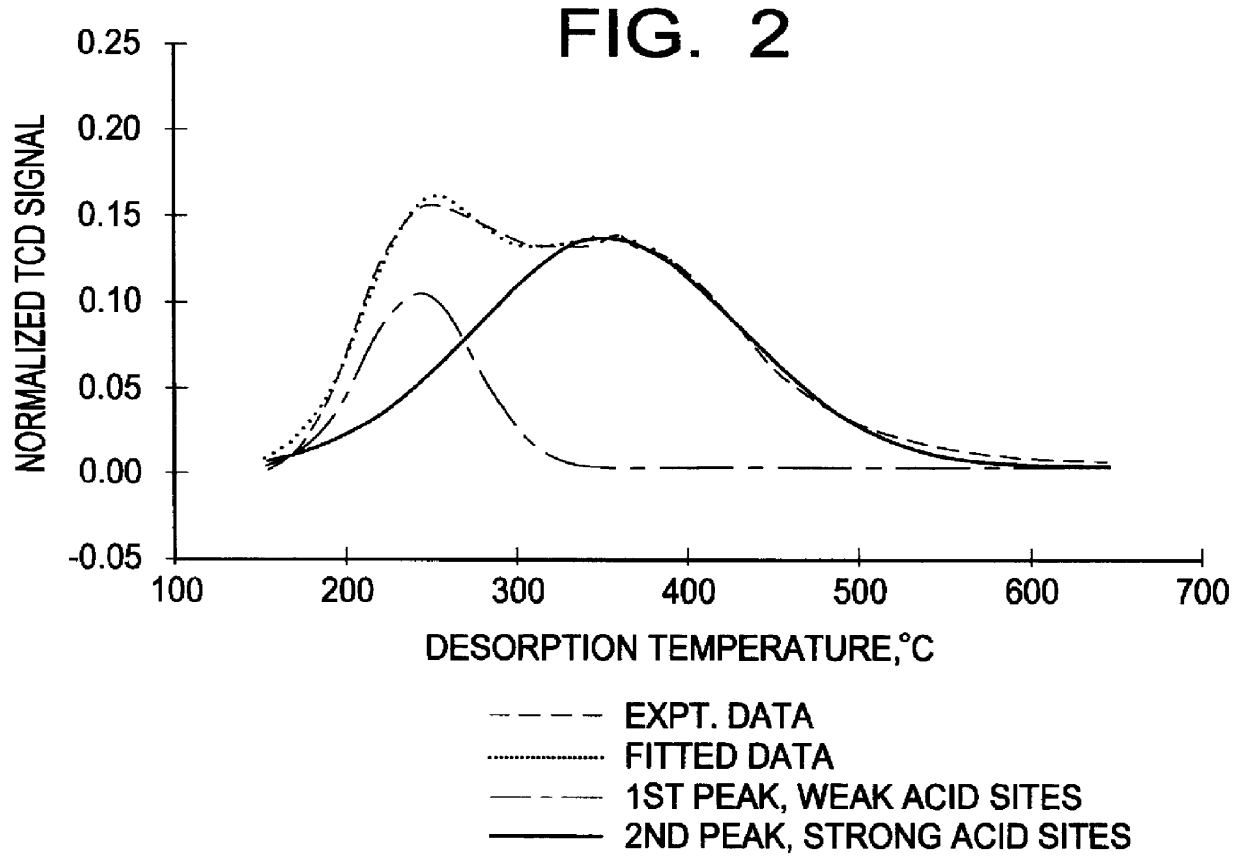
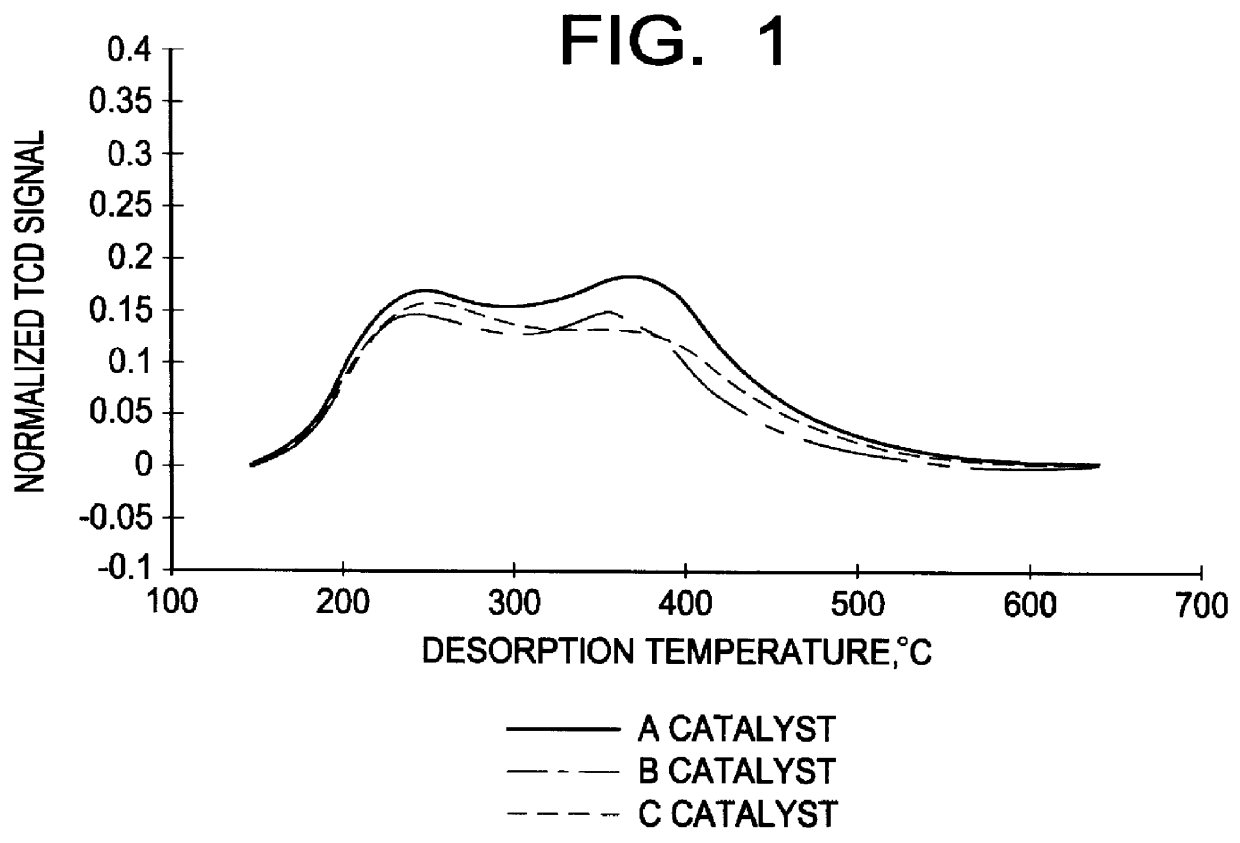
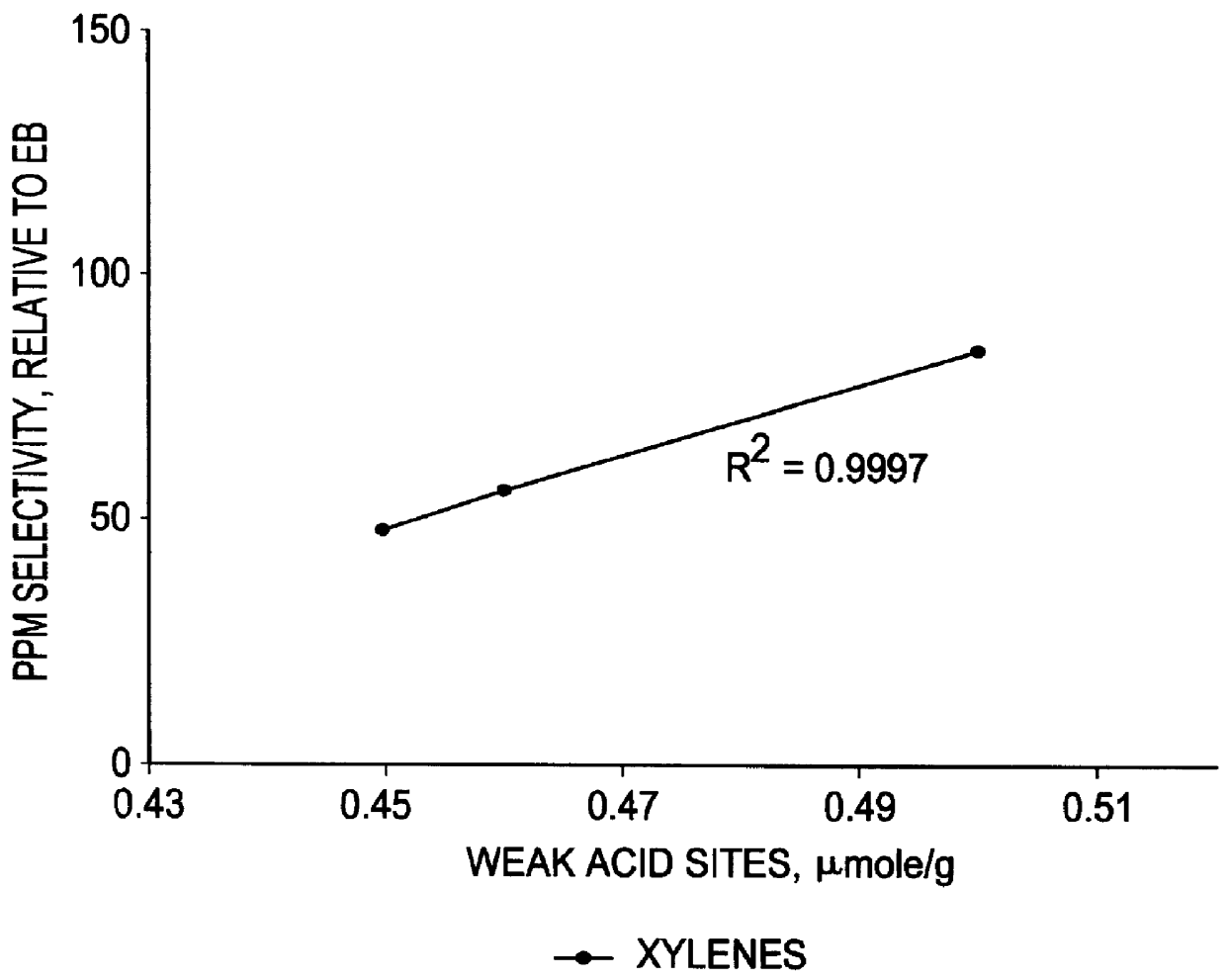
The present invention relates to the vapor-phase alkylation of benzene over compatible silicalite alkylation catalysts having a weak acid sites concentration of less than 50 micromoles per gram of catalyst. The process results in improved product quality and reaction efficiency. In the formation of ethylbenzene in vapor-phase alkylation from a feedstock of ethylene and benzene, other impurities and undesirable side products may be formed in addition to the desired ethylbenzene. These undesirable products include such compounds as xylene, cumene, n-propylbenzene and butylbenzene, as well as polyethylbenzenes, and high boiling point alkyl aromatic components, sometimes referred to as "heavies," having a boiling point at or above 185.degree. C. As can be well understood, reduction of these impurities and side products is important. This is especially true in the case of xylenes. The orthoxylene (o-xylene) is a styrene contaminant that cannot be removed by distillation. The meta and par...
PUM
| Property | Measurement | Unit |
|---|---|---|
| Molality | aaaaa | aaaaa |
| Molality | aaaaa | aaaaa |
| Temperature | aaaaa | aaaaa |
Abstract
Description
Claims
Application Information
 Login to View More