
Efficient color display using low-absorption in-pixel color filters
a color filter and low-absorption technology, applied in the field of color display, can solve the problems of reducing affecting and losing about one-half of an unpolarized input beam in polarizing input beam, so as to achieve the effect of increasing the efficiency of utilizing input ligh
- Summary
- Abstract
- Description
- Claims
- Application Information
AI Technical Summary
Benefits of technology
Problems solved by technology
Method used
Image

Examples
Embodiment Construction
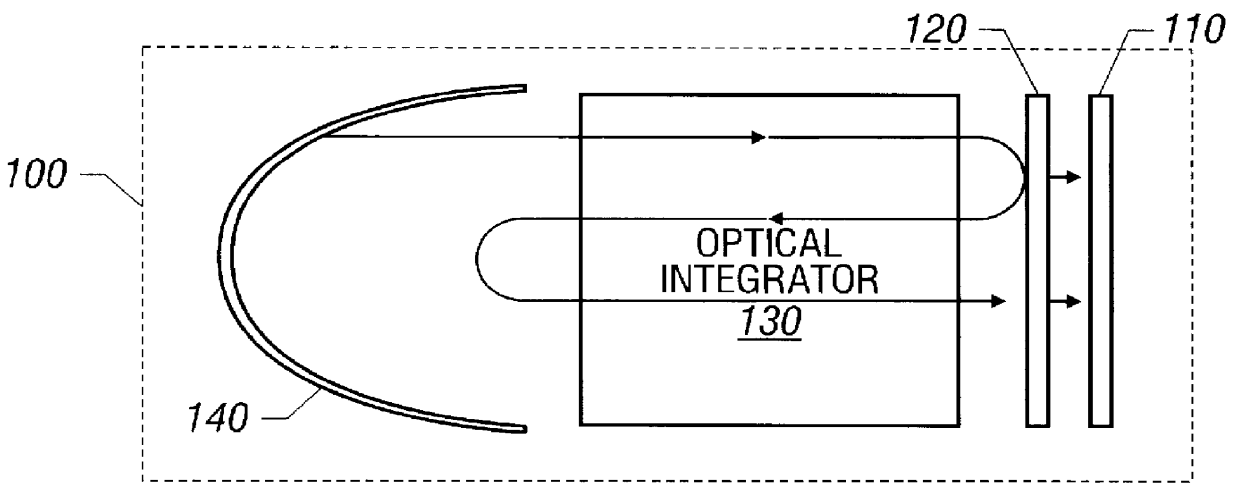
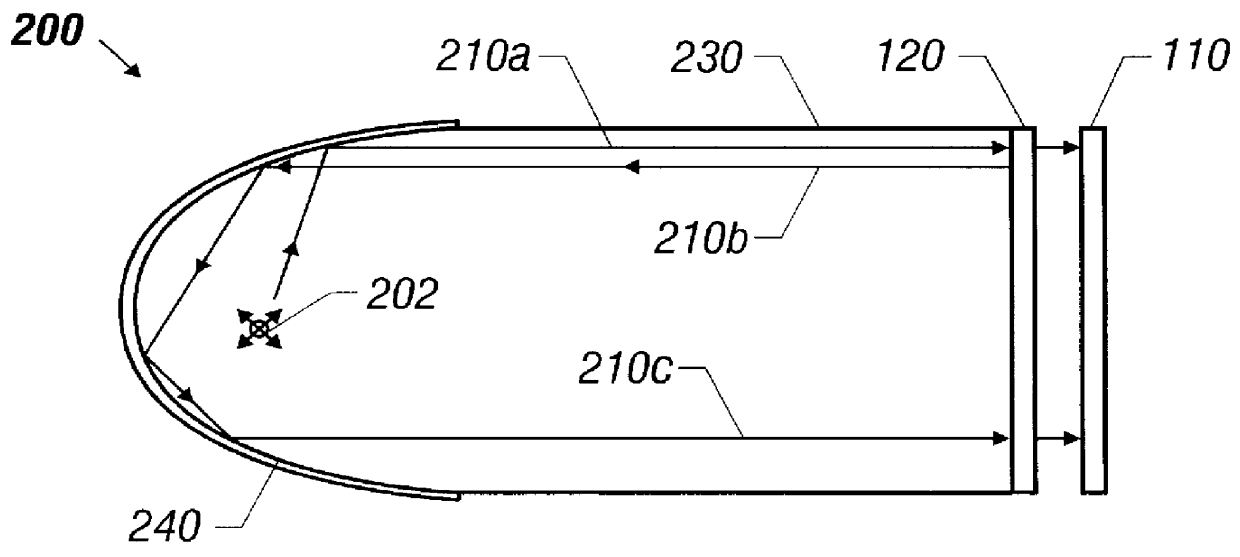
Color LCDs with non-absorbing color filters are provided to improve the light utilization efficiency. This enhances the display brightness and reduces power consumption. A preferred non-absorbing color filter transmits light of a desired color (i.e., at a desired wavelength or within a certain wavelength range) and reflects other colors. A color filtering array having a plurality of different non-absorbing color filters for different colors is formed over a LCD array to produce desired color effects. The reflected light from one color filter is then directed back to the color filtering array and is filtered by other color filters. This process of filtering and reflecting repeats so that essentially all photons that contribute to the colors for the color display transmit through the color filter array to illuminate the LCD array if other losses are neglected.
FIG. 1 is a diagram illustrating one embodiment 100 of a color LCD with non-absorbing color filters. A LCD array 110 is formed ...
PUM
| Property | Measurement | Unit |
|---|---|---|
| thick | aaaaa | aaaaa |
| size | aaaaa | aaaaa |
| size | aaaaa | aaaaa |
Abstract
Description
Claims
Application Information
 Login to View More