Air conditioning and heating environmental control sensing system

a sensing system and air conditioner technology, applied in the field of air conditioning and heating environmental control sensing system, can solve the problems of high electricity, repair and maintenance costs, high electricity consumption and maintenance costs, etc., and achieve the effect of reducing maintenance and preventing wear and tear of the compressor

US6196468B1Inactive Publication Date: 2001-03-06YOUNG DENNIS GUY
6 Cites 84 Cited by

Patent Information

Authority / Receiving Office
US · United States
Patent Type
Patents(United States)
Current Assignee / Owner
Publication Date
2001-03-06
Estimated Expiration
Not applicable · inactive patent

Smart Images

  • Figure 1
    Figure 1
  • Figure 2
    Figure 2
  • Figure 3
    Figure 3
Patent Text Reader

Abstract

A device for controlling an HVAC system in which opening a door or window for more than a shutdown delay period causes the fan and compressor to be deactivated, but opening and closing the door or window for less than the shutdown delay period does not affect the fan and compressor. Reactivation of the compressor is delayed for a startup delay, in order to avoid overcycling of the compressor and the additional wear and tear and maintenance that would be caused thereby. Preferably, the door / window sensors are wireless for ease of installation and maintenance. Optionally, an occupancy sensor and occupancy timer are provided to turn off the system if the room is unoccupied for an unoccupied delay time. Optionally, a secondary thermostat with energy saving settings is provided so that if the room is unoccupied for the occupancy delay, then instead of being shut off, the HVAC system will be operated at energy saving settings.
Need to check novelty before this filing date? Find Prior Art

Description

This invention relates to an apparatus and process for controlling heating, air conditioning, and ventilation (HVAC) and other environmental control systems to prevent excessive and wasteful electricity consumption and premature maintenance and replacement costs.Air conditioning and heating systems are commonly used in both residential and commercial buildings, and are commonly controlled by thermostats. However, people using these systems may leave doors or windows open for fresh air or other reasons, therefore causing the air conditioning or heating system to operate at a nearly continuous level. This continuous operation of the air conditioning or heating system creates high electricity consumption and maintenance costs because leaving the door or window open will prevent the environment from reaching the temperature setting for the thermostat. This problem is especially acute in hotels and resort vacation rental facilities in which occupants are not responsible for, and probably...

Examples

Embodiment Construction

The presently preferred best modes for carrying out the present invention are those illustrated by way of example in FIGS. 1 to 5.

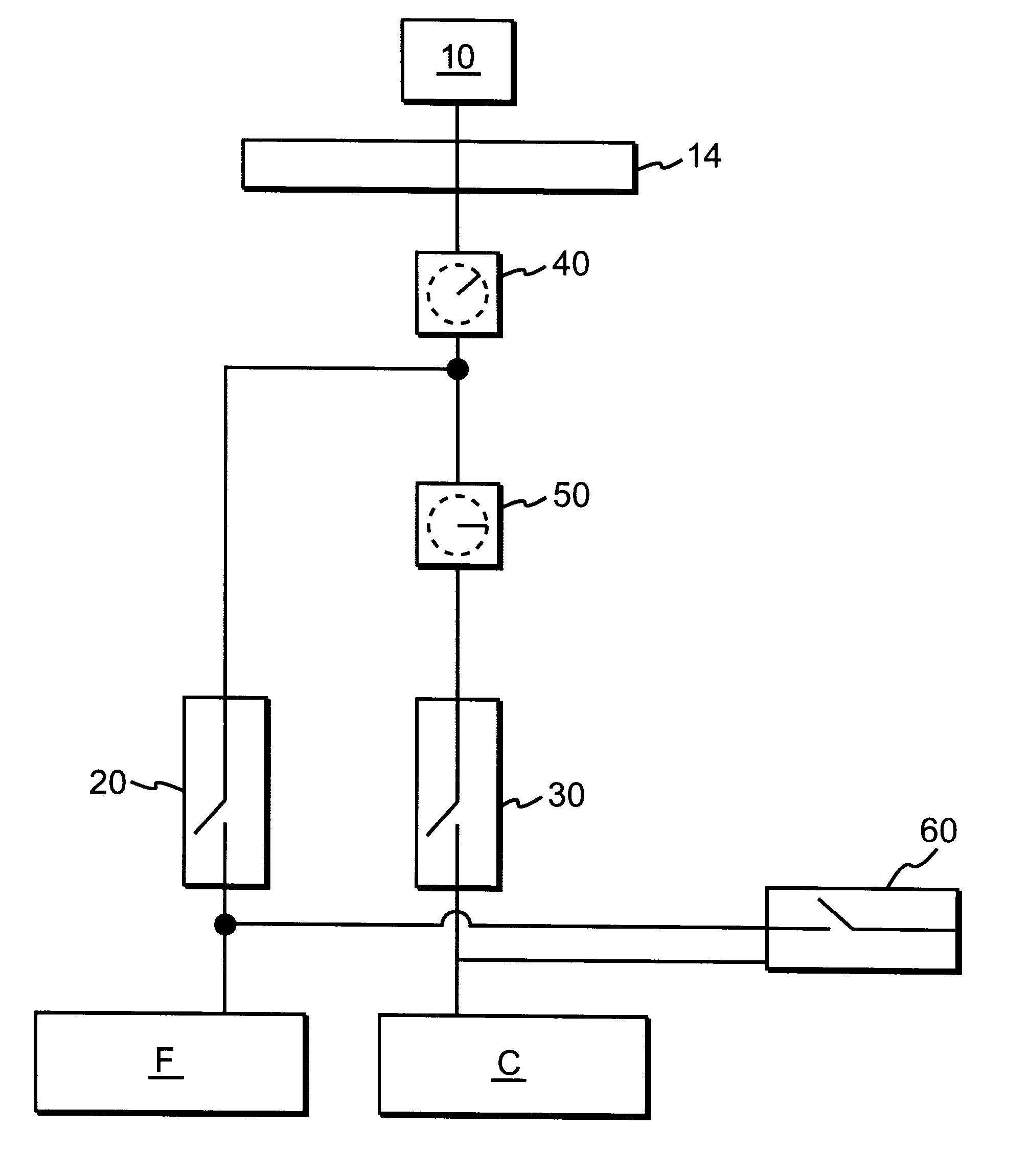
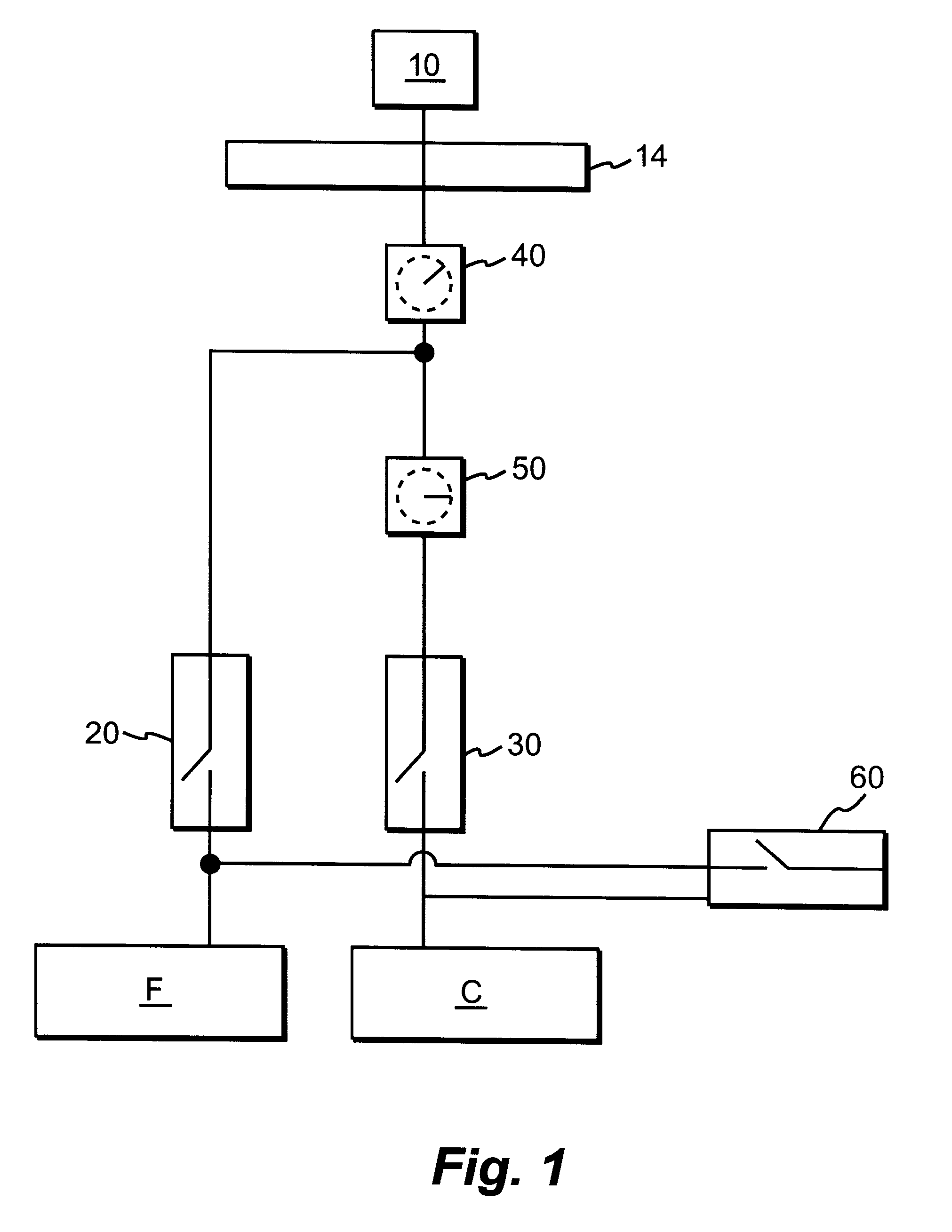
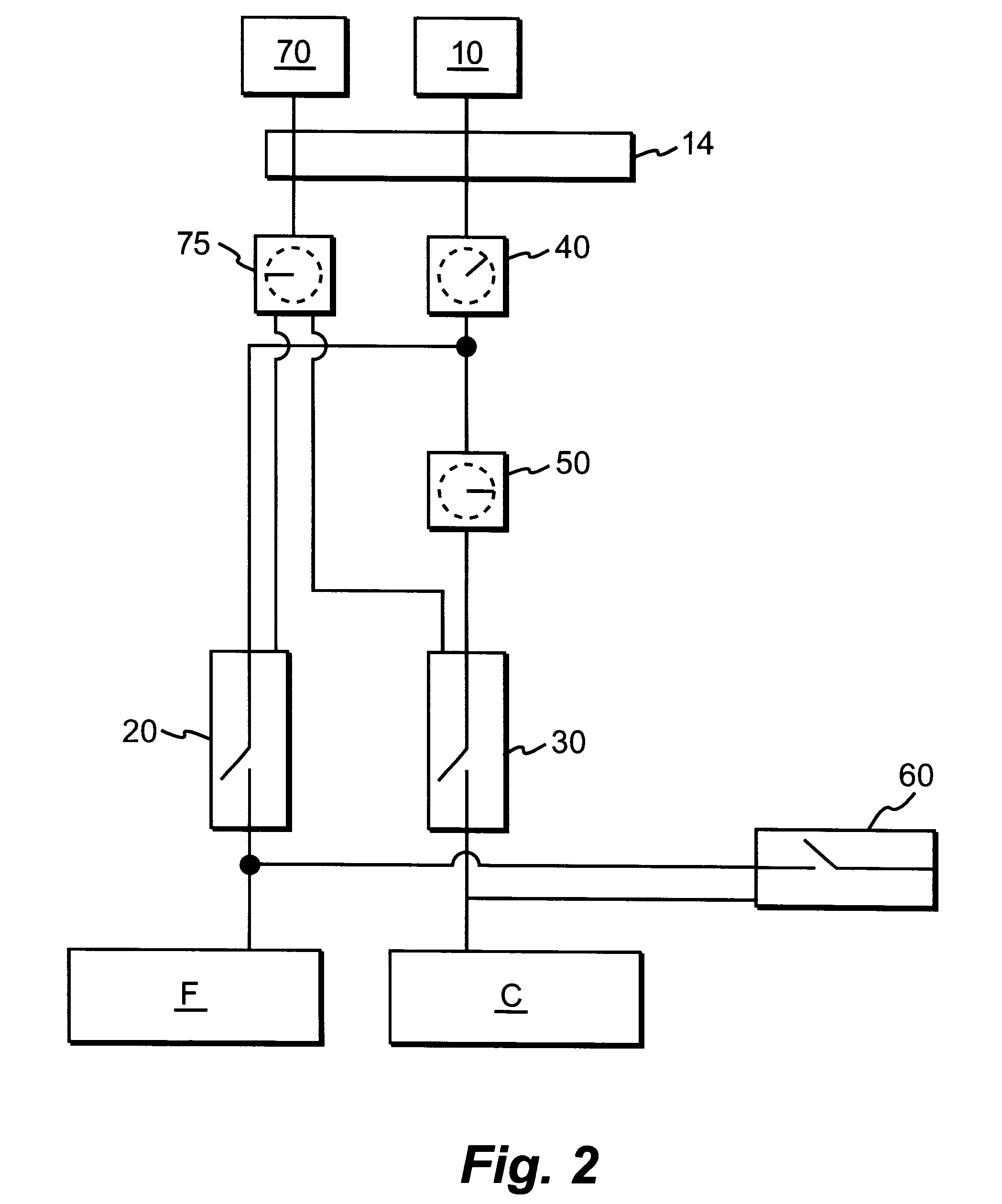
Referring to FIG. 1, shown is a presently preferred embodiment of the present invention. Preferably a door / window sensor 10 is attached to each of the doors and windows in a room, to sense whether the doors and windows are opened or closed. Preferably the door / window sensors (only one of which is shown for simplicity) are wireless so as to avoid the time, costs and inconveniences of installing wires around the doors and windows. Being wireless also makes the system much easier to retrofit. Preferably the door / window sensors 10 transmit signals to a receiver 14 when a door or window is opened. Of course, the door / window sensors can also be wired, in which case the receiver 14 may be omitted.

The room is preferably provided with a HVAC (heating ventilation air conditioning) system comprising an evaporator fan (for air conditioning) or blower (for heating) F ...