If heat treatment such as thermal setting is carried out after the fastener
stringer is manufactured, likewise the knit-in slide fastener which the present invention aims at,
hardness and tension of the yarn itself are heightened. Therefore, the yarns tend to be
cut off easily due to interference with the aforementioned sewing needle. Particularly, if a small-
diameter yarn which is very flexible is used, the yarn is more likely to be
cut off.
The present invention has been achieved to solve the above described problems, and a concrete object of the invention is to provide a knit-in slide fastener in which when end portions of a fastener element row are mounted directly to clothes by sewing, any of the yarns that compose the fastener element mounting portion of the fastener tape is never cut off due to an interference with a sewing needle, so that the yarns of the fastener element mounting portion are prevented from being frayed, thereby ensuring an excellent durability.
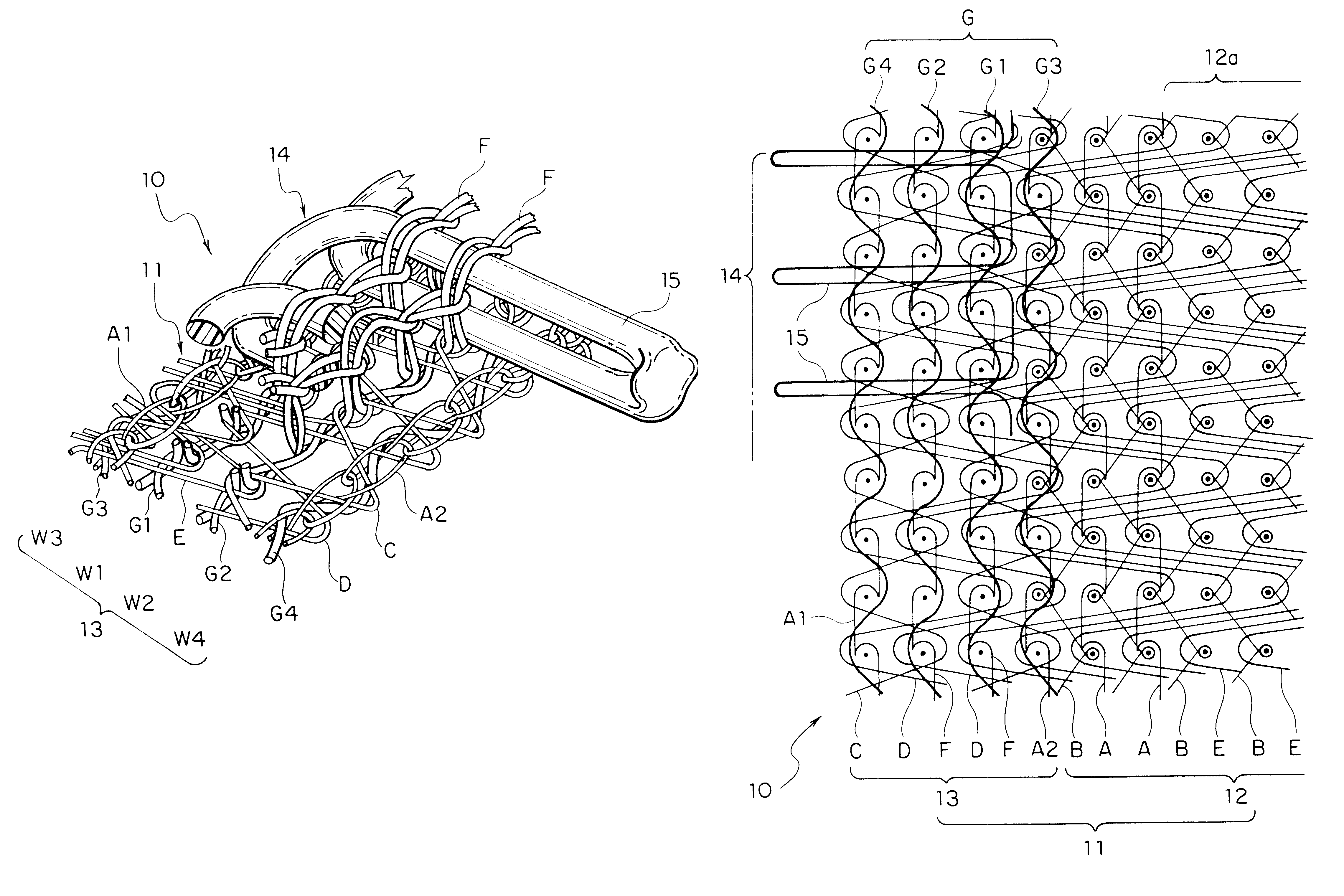
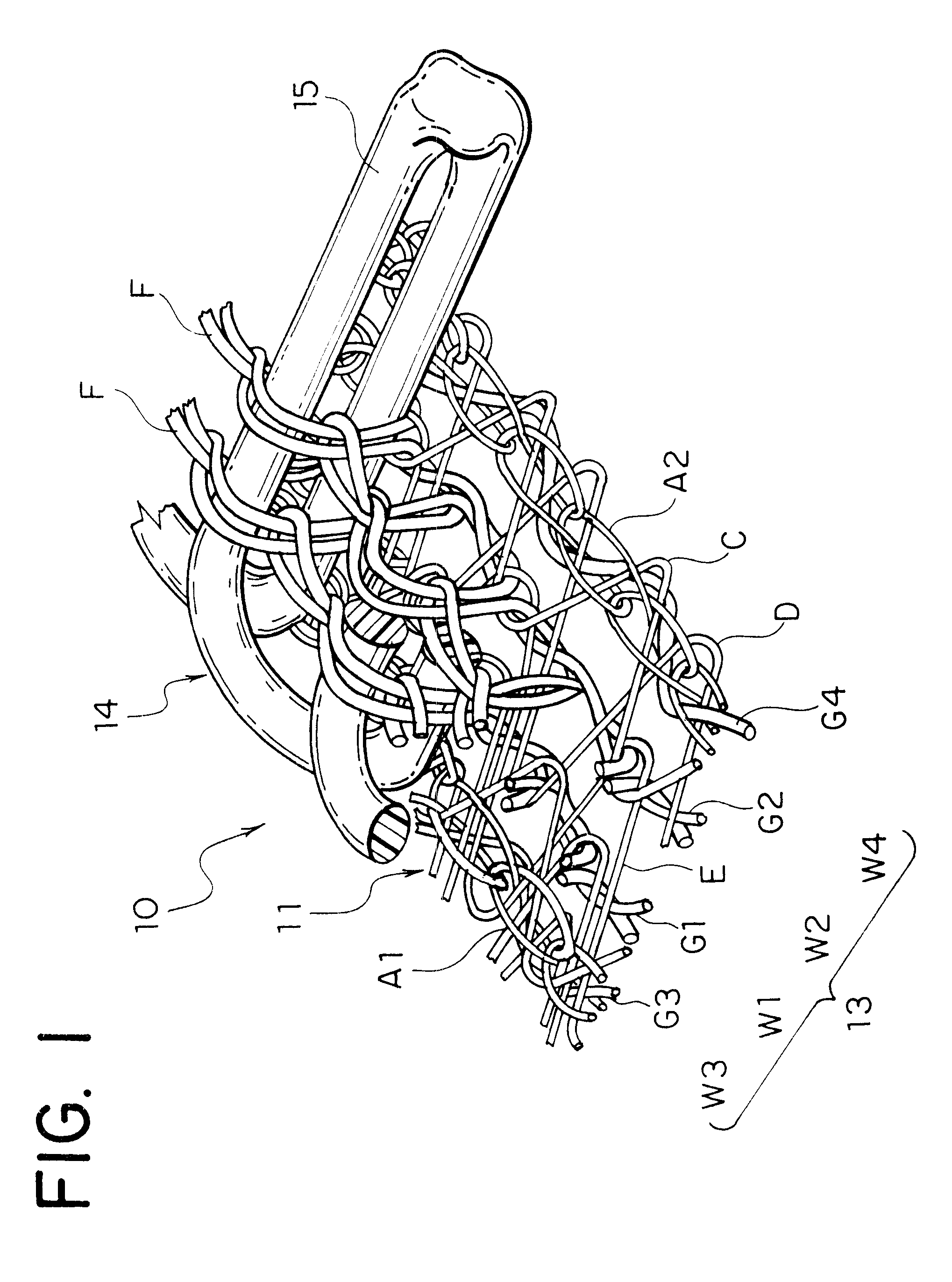
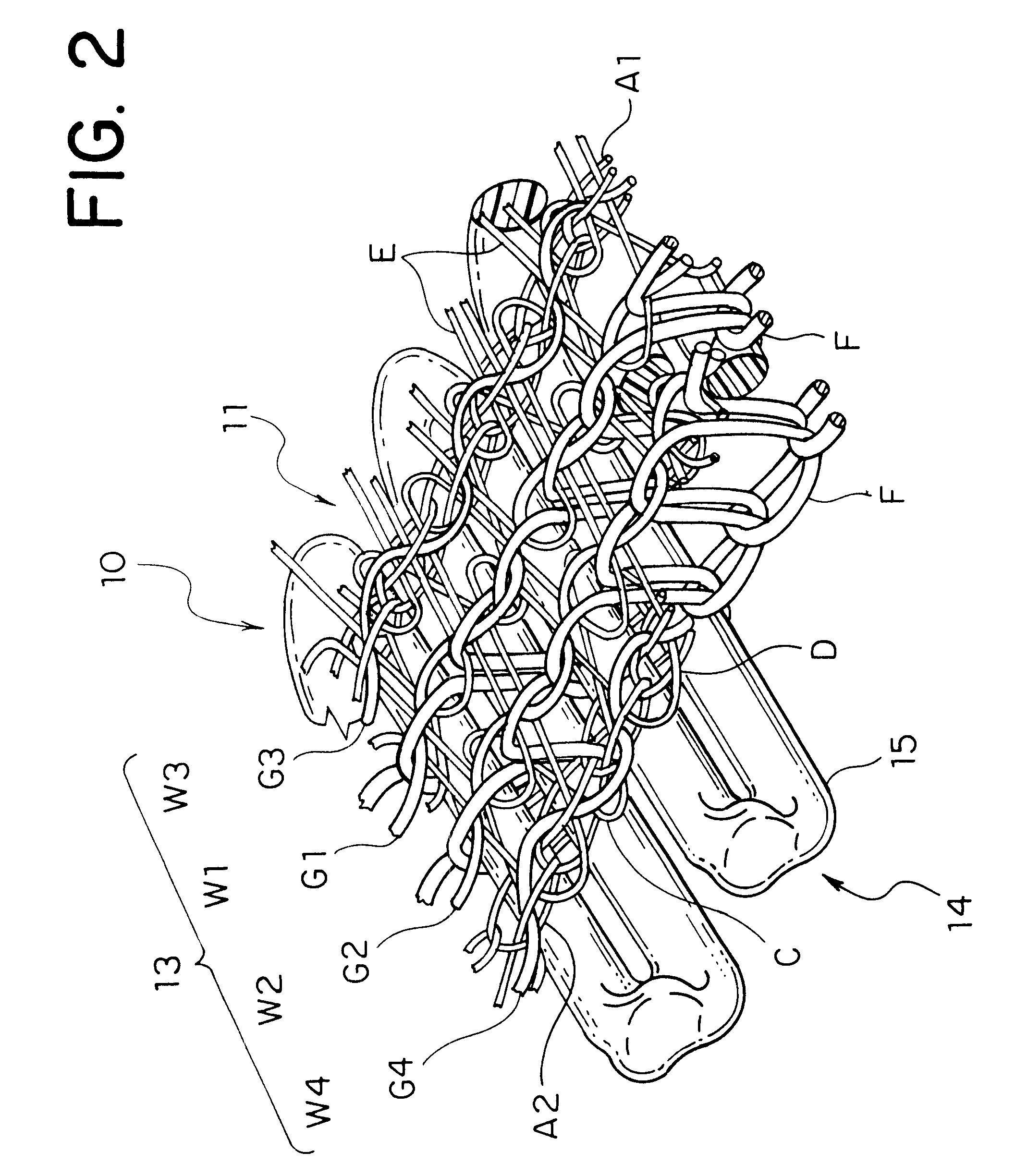
According to the present invention, the textured yarn having the above described structure as this fixing knitting yarn is used. Thus, when an end portion of the fastener element row of the fastener
stringer with no end stop is attached to clothes by sewing, even if the sewing needle interferes with the strongly stretched fastener element fixing knitting yarn so that a tip of the sewing needle is pierced into that knitting yarn, a number of crimped fibers which compose each fixing knitting yarn are warped laterally and stretched only locally. As a result, the sewing needle can pass through between a number of the fibers, so that it never cuts off an entire part of the yarn. Further, even if the sewing needle is pierced into one of the composition fibers of the fixing knitting yarn and then cut off the
fiber, no fraying occurs in the fibers because the cut off
fiber is entangled with the other composition fibers in a complicated style at every predetermined interval.
Generally, in this kind of the slide fastener, as disclosed in Japanese
Patent Application Laid-Open No. 11-187909, it is preferable to provide all the yarns which compose the fastener element mounting portion with the same
dry heat shrinkage ratio because a strong tension is increased in the fixing knitting yarn coupled with the foundation structure, which strides over the upper leg portion of the fastener element, by heat treatment after having been knitted. On the other hand, in order to secure a dimensional stability of the fastener
stringer and a predetermined mounting strength of the fastener element, it is preferable to set the
dry heat shrinkage of all the composition yarns in the fastener element mounting portion to be higher than the
dry heat shrinkage ratio of the composition yarns in the fastener tape main portion of the fastener tape.
The reason is that the strength of each
fiber is lower and likely to be cut off because the aforementioned fixing knitting yarn is a bundle of a number of fine fibers so that no unreasonable tension force is to be given. Further, the fixing knitting yarn having such a
low shrinkage ratio can secure a
total strength required for the fixing knitting yarn because the strength can be increased when each composition fiber is stretched.
Further, a dimensional stability of the fastener stringer and a fixing strength necessary for the fastener element row can be obtained by setting the dry heat shrinkage ratio of the composition yarns other than the fixing knitting yarn in the fastener element mounting portion to be high and by setting the dry heat shrinkage ratio of the fastener tape main portion of the fastener tape to be substantially as low as the fixing knitting yarn.


 Login to View More
  Login to View More