Semiconductor material and method for enhancing solubility of a dopant therein

US6872455B2Inactive Publication Date: 2005-03-29LAWRENCE LIVERMORE NAT SECURITY LLC
8 Cites 0 Cited by

Patent Information

Authority / Receiving Office
US · United States
Current Assignee / Owner
Publication Date
2005-03-29
Estimated Expiration
Not applicable · inactive patent

Smart Images

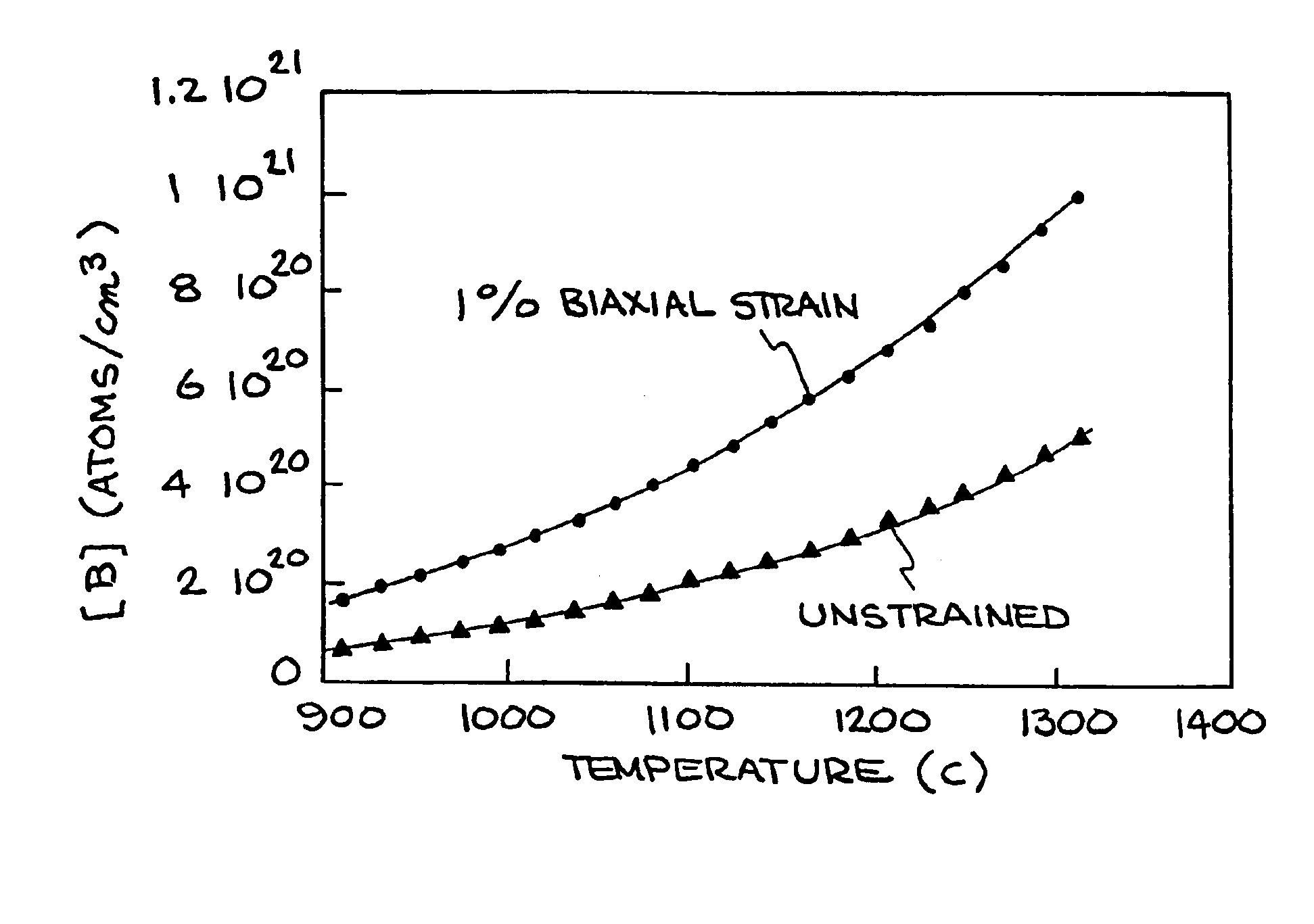
  • Figure 1
    Figure 1
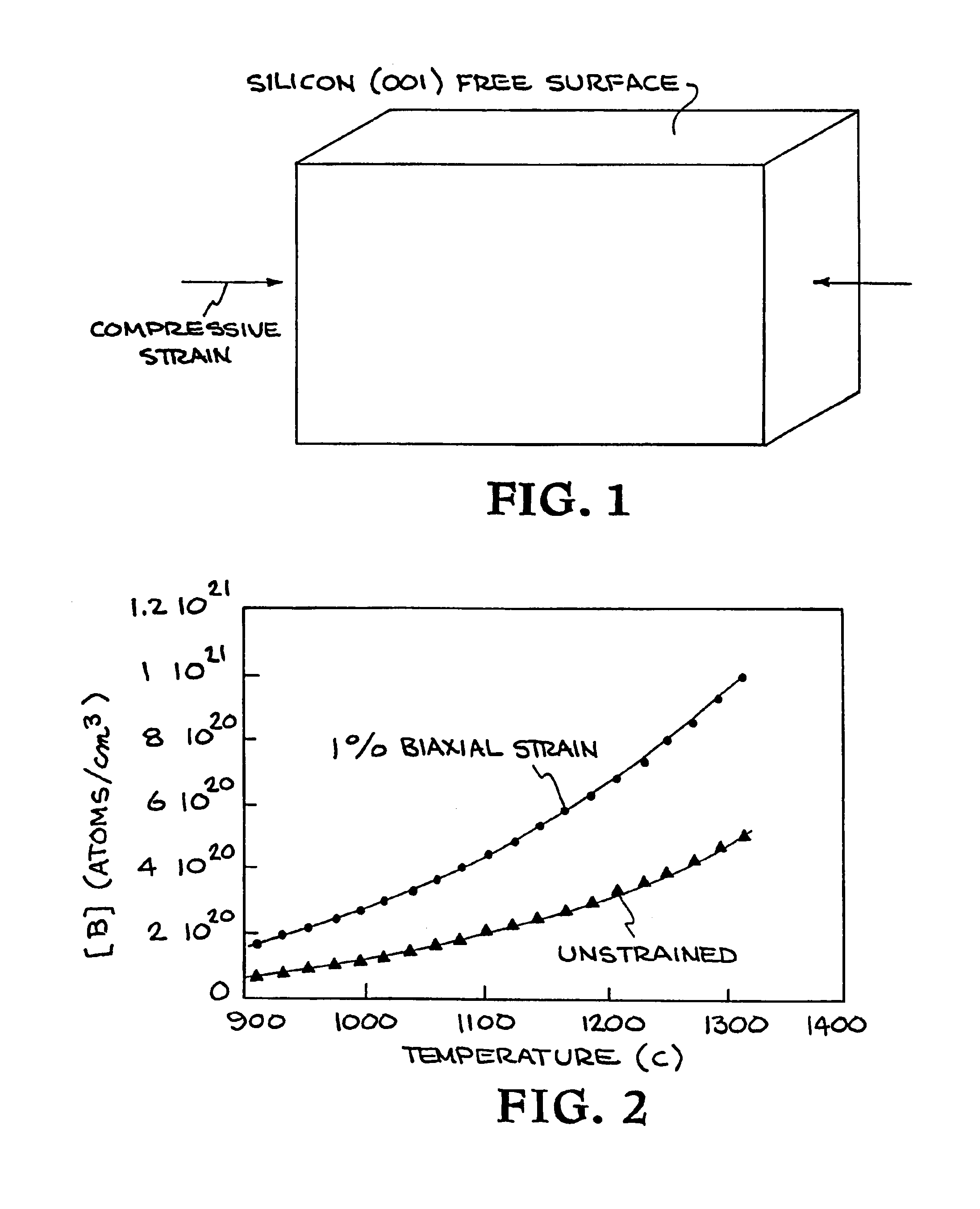
  • Figure 2
    Figure 2
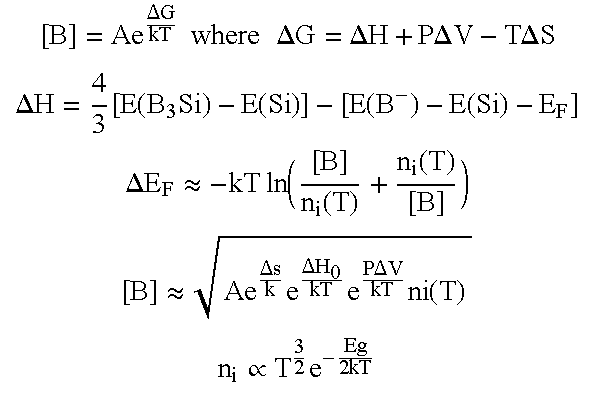
  • Figure 3
    Figure 3
Patent Text Reader

Abstract

A method for enhancing the equilibrium solubility of boron ad indium in silicon. The method involves first-principles quantum mechanical calculations to determine the temperature dependence of the equilibrium solubility of two important p-type dopants in silicon, namely boron and indium, under various strain conditions. The equilibrium thermodynamic solubility of size-mismatched impurities, such as boron and indium in silicon, can be raised significantly if the silicon substrate is strained appropriately. For example, for boron, a 1% compressive strain raises the equilibrium solubility by 100% at 1100° C.; and for indium, a 1% tensile strain at 1100° C., corresponds to an enhancement of the solubility by 200%.
Need to check novelty before this filing date? Find Prior Art

Description

BACKGROUND OF THE INVENTIONThe present invention relates to solubility of dopants in semiconductor materials, particularly to enhancing the solubility, and more particularly to a method for enhancing solubility of boron and indium in silicon.Ion implantation allows for exceptional control and reproducibility in the introduction of dopants into the near-surface region of semiconductors. As a result, it has been the universal method of choice for doping MOS transistors in silicon-based integrated circuits since the beginning of the semiconductor revolution. However, an undesirable effect of ion-implantation is that it introduces significant damage into the silicon wafer in the form of point defects and their clusters, Fahey et al Rev. Mod. Phys. 61, 289 (1989). For a device to be operational these defects must be removed and the dopants electrically activated through high-temperature annealing. The annealing procedure leads to unwanted dopant diffusion, as well as nucleation and growt...

Examples

Embodiment Construction

The present invention involves increasing the solubility of dopants in semiconductor materials, particularly increasing the solubility of boron and indium in silicon. This is basically accomplished by placing a strain on the silicon at elevated temperatures. For example, it has been demonstrated that a 1% compressive strain raises the equilibrium solubility by 100% at 1100° C. for boron, and for indium a 1% tensile strain at 1100° C. corresponds to an enhancement of solubility by 200%. This method for enhancing the solubility of boron and indium in silicon resulted from the performance of first-principles quantum mechanical calculation relative to the temperature dependence of the equilibrium solubility of two important p-type dopants in silicon, namely boron and indium under various strain conditions. It was found that the equilibrium thermodynamic solubility of size-mismatched impurities, such as boron and indium in silicon, can be raised significantly if the silicon substrate is ...