
Electro-hydraulic engine valve actuation
a technology of electric hydropower and engine valve, which is applied in the direction of valve arrangement, non-mechanical valve, machines/engines, etc., can solve the problems of not being able to provide variable lift control over the full range of valve lift, and not being able to provide a fully flexible valve control system, so as to improve system controllability and energy consumption
- Summary
- Abstract
- Description
- Claims
- Application Information
AI Technical Summary
Benefits of technology
Problems solved by technology
Method used
Image

Examples
Embodiment Construction
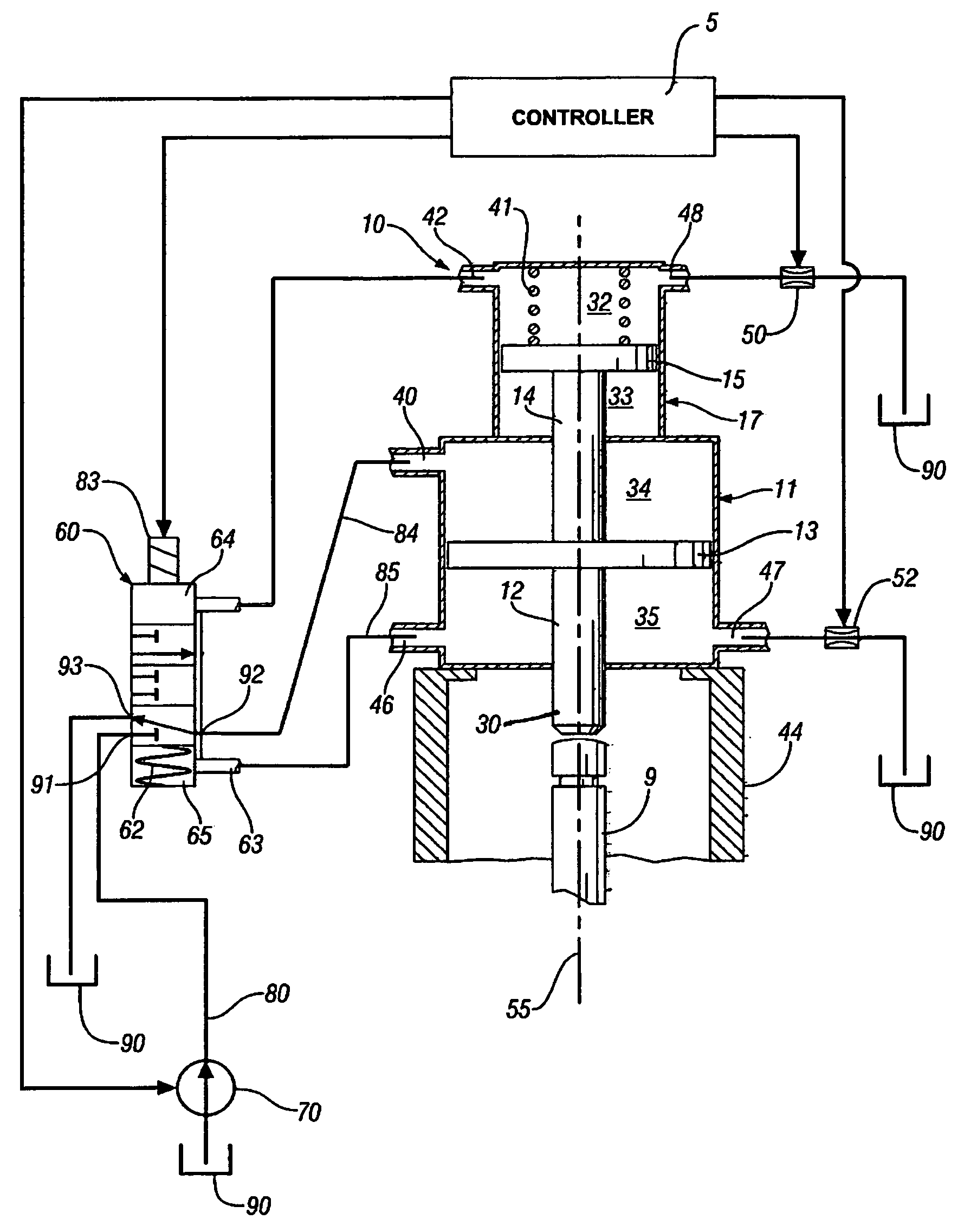
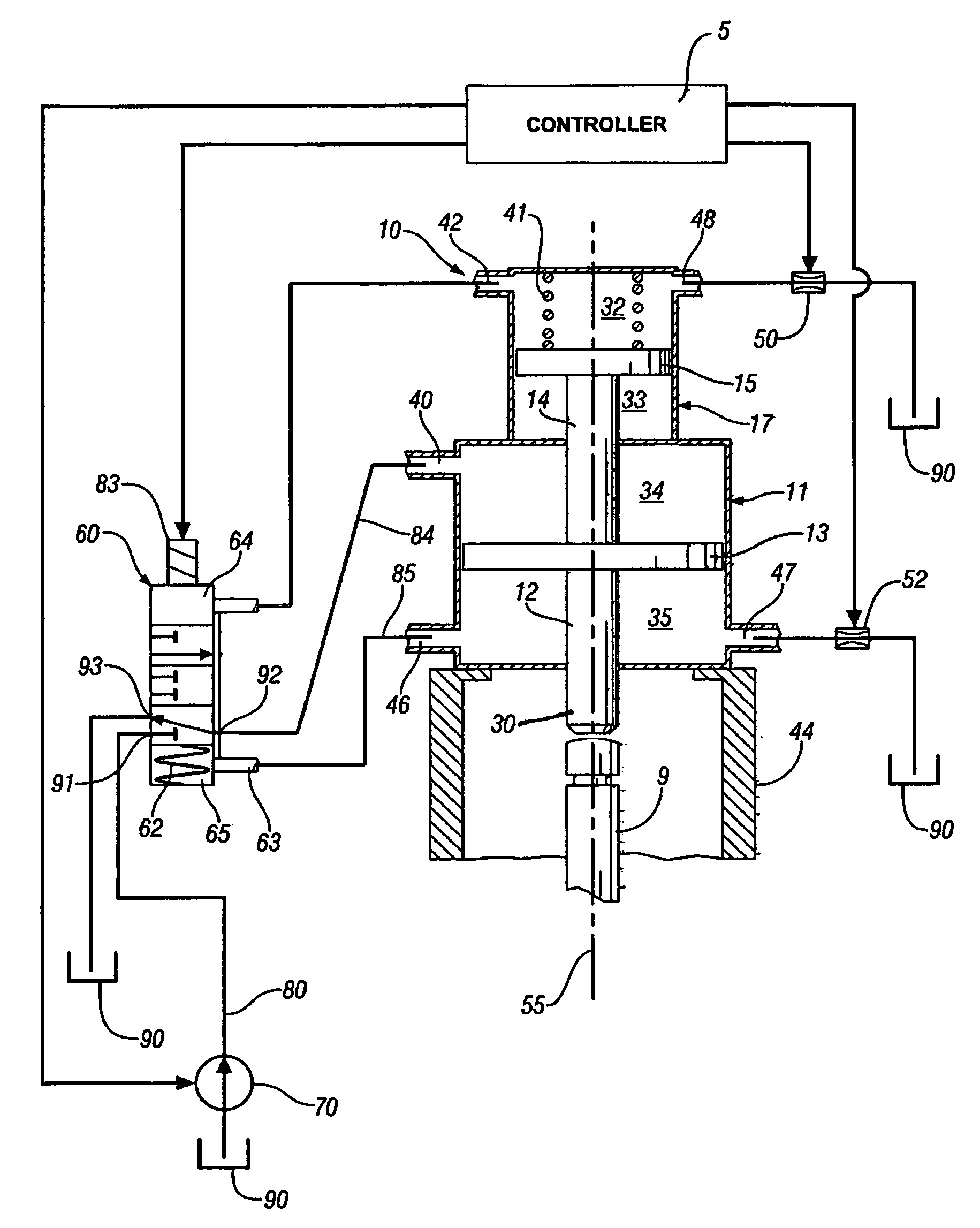
[0012]An exemplary engine valve actuator 10 and system is described hereinbelow, for application on with a fully flexible electro-hydraulic valve actuation system for implementation on a conventionally constructed multi-cylinder internal combustion engine. The exemplary engine typically comprises an engine block, a cylinder head 44, a crankshaft, and having a plurality of cylinders formed in the engine block. Each cylinder contains a piston operable to move linearly therewithin, and mechanically operably connected to the crankshaft via a piston rod. The crankshaft is mounted on main bearings attached to the engine block. A combustion chamber is formed in each cylinder between the top of each piston and the cylinder head. The crankshaft rotates in the main bearings, in response to linear force applied thereto by the piston rods, as a result of combustion events in each combustion chamber.
[0013]The cylinder head 44 preferably comprises a conventional cast-metal device providing mounti...
PUM
 Login to View More
 Abstract
Description
Claims
Application Information
 Login to View More