

Nitride semiconductor light emitting diode and fabrication method thereof
a technology of light-emitting diodes and nitride semiconductors, which is applied in the direction of semiconductor devices, basic electric elements, electrical appliances, etc., can solve the problem of rare high-reflectivity expected, and achieve the effect of improving electrostatic discharge characteristics and minimizing light loss
Patent Information
- Authority / Receiving Office
- US · United States
- Patent Type
- Patents(United States)
- Current Assignee / Owner
- Publication Date
- 2006-12-12
Smart Images
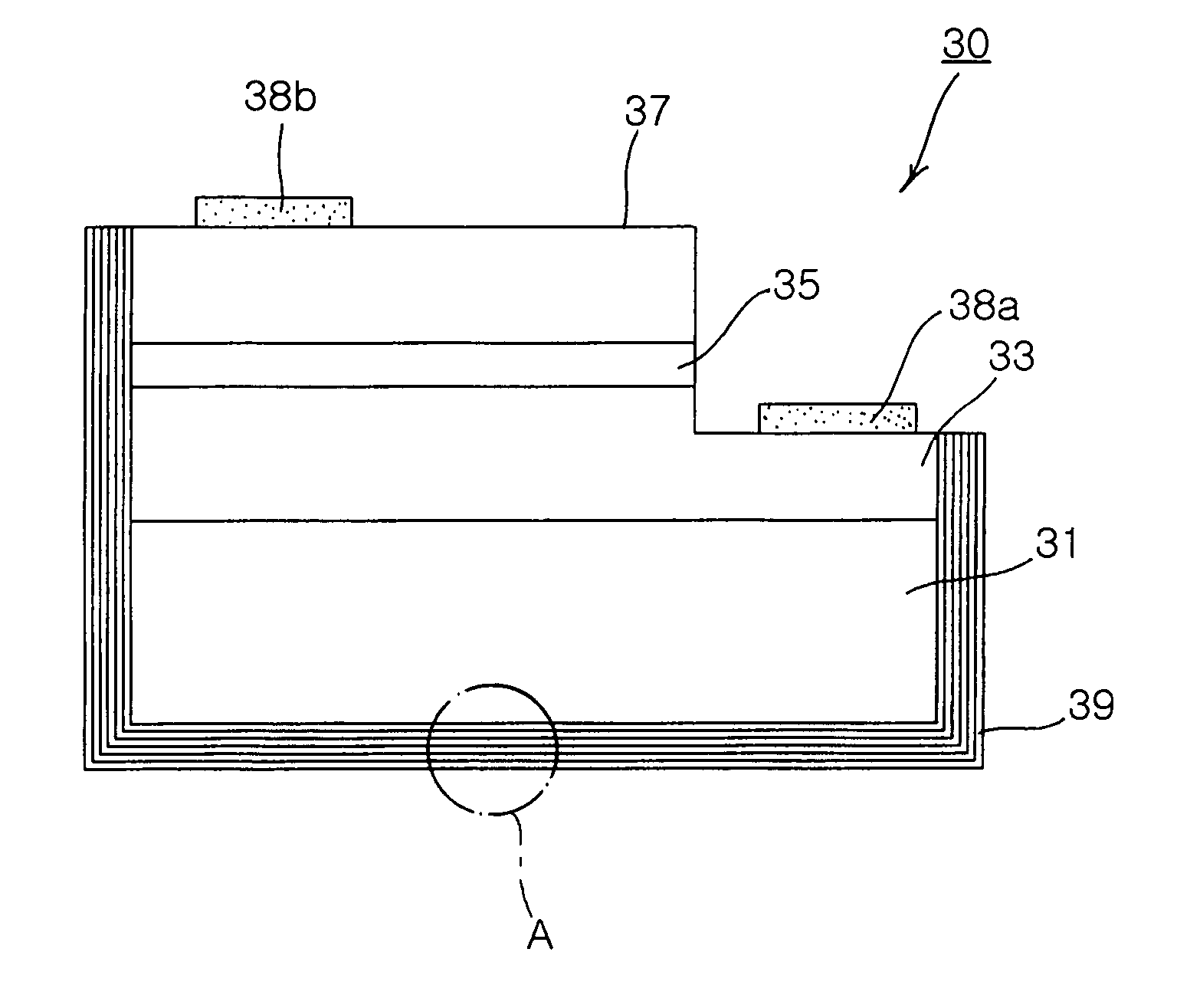
Figure 1 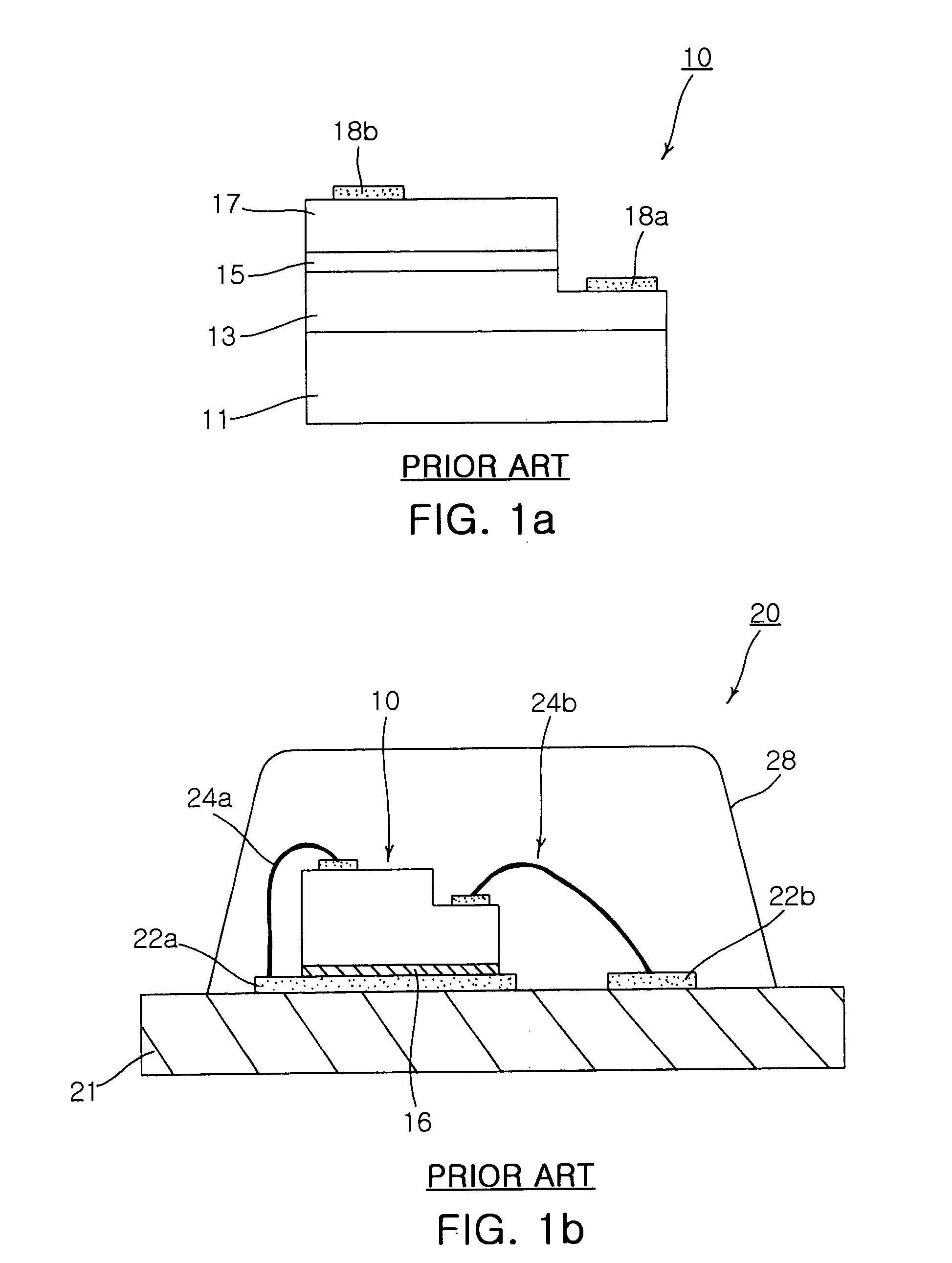
Figure 2 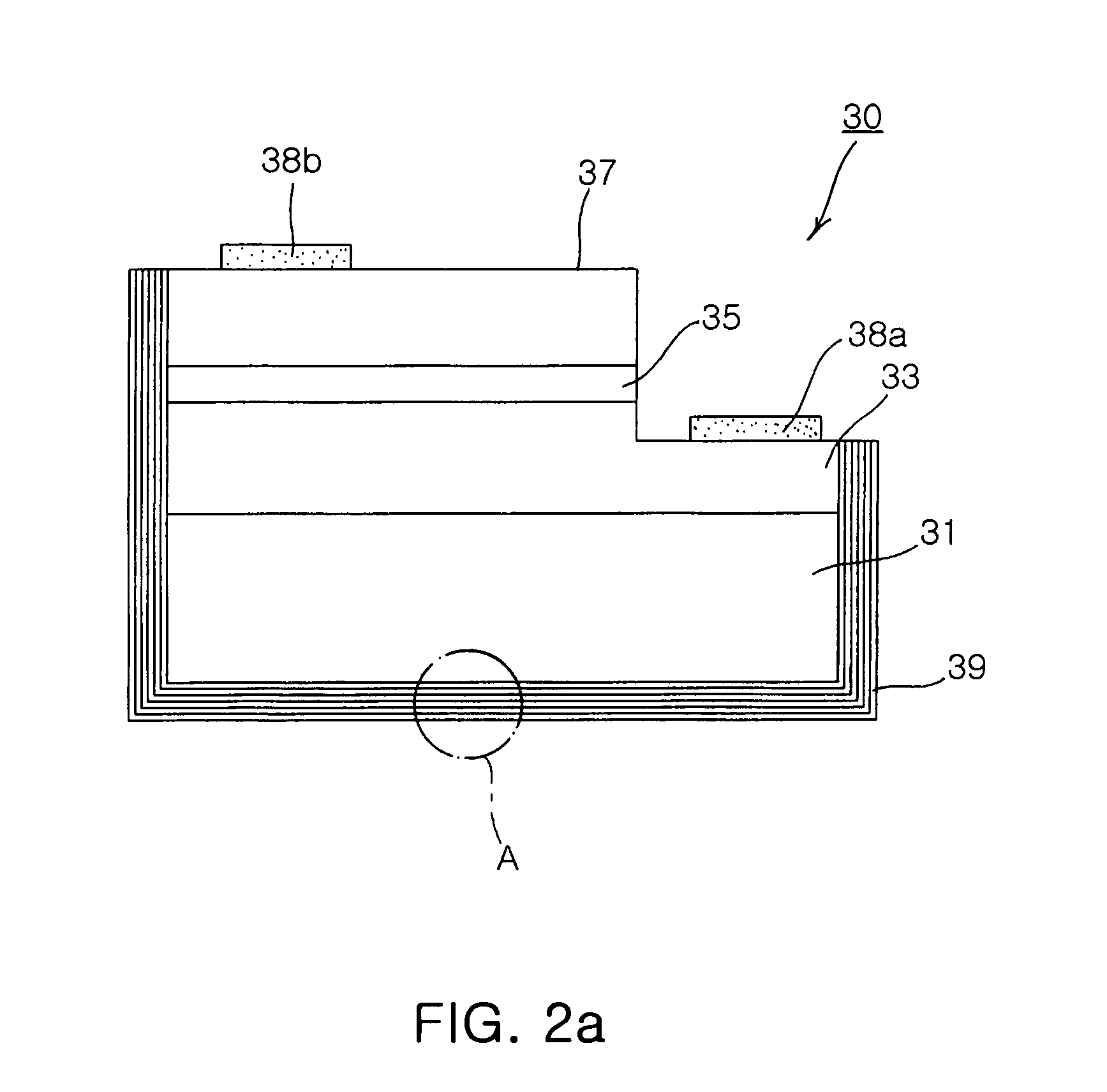
Figure 3
Abstract
Description
RELATED APPLICATIONS
[0001] The present application is based on, and claims priority from, Korean Application Serial Number 2003-95172, filed Dec. 23, 2003, the disclosure of which is hereby incorporated by reference herein in its entirety.BACKGROUND OF THE INVENTION
[0002] 1. Field of the Invention
[0003] The present invention relates to a nitride semiconductor light emitting diode, and more particularly, to a nitride semiconductor light emitting diode and a fabrication method thereof, in which a high reflectivity layer is formed to minimize light loss as well as achieve excellent electrostatic discharge characteristics.
[0004] 2. Description of the Related Art
[0005] As well-known in the art, Nitride semiconductor Light Emitting Diodes (LEDs) are being spotlighted as high power optical devices capable of generating single wavelength light such as blue or green light to realize full color display. A nitride semiconductor LED is made by growing single crystal semiconductor expressed as a form...
Examples
example
[0051]To demonstrate the improvement of brightness in the present invention, GaN LED according to the present invention was produced.
[0052]First, n-type GaN layer, InGaN / GaN MQW active layer and p-type GaN layer were grown on a sapphire substrate sequentially. Then, 7 pairs of Al2O3 film and Si3N4 film were formed as the present dielectric mirror layer on bottom and side surfaces of the resulting structure as the LED shown in FIG. 2A. In this example, the thickness of Al2O3 film was about 700 Å and the thickness of Si3N4 film was about 540 Å.