
Direct hardware processing of internal data structure fields
a hardware processing and data structure technology, applied in the field of data processing systems, can solve the problems of inefficient operation of conventional systems in the internal field of data structure, difficulty in human reading of machine code represented as binary or hexadecimal numbers, etc., and achieve the effect of increasing system computational efficiency and speed
- Summary
- Abstract
- Description
- Claims
- Application Information
AI Technical Summary
Benefits of technology
Problems solved by technology
Method used
Image

Examples
Embodiment Construction
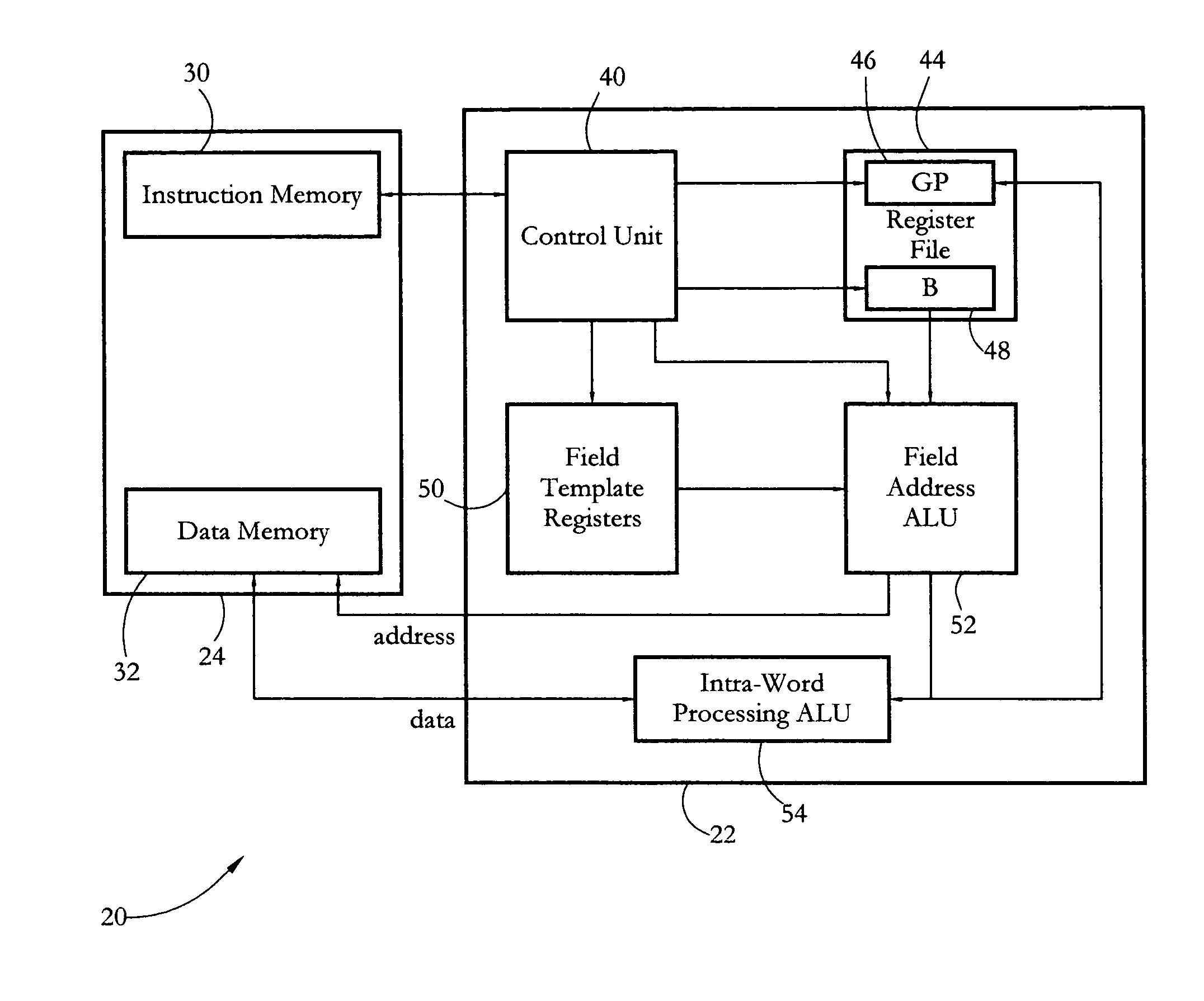
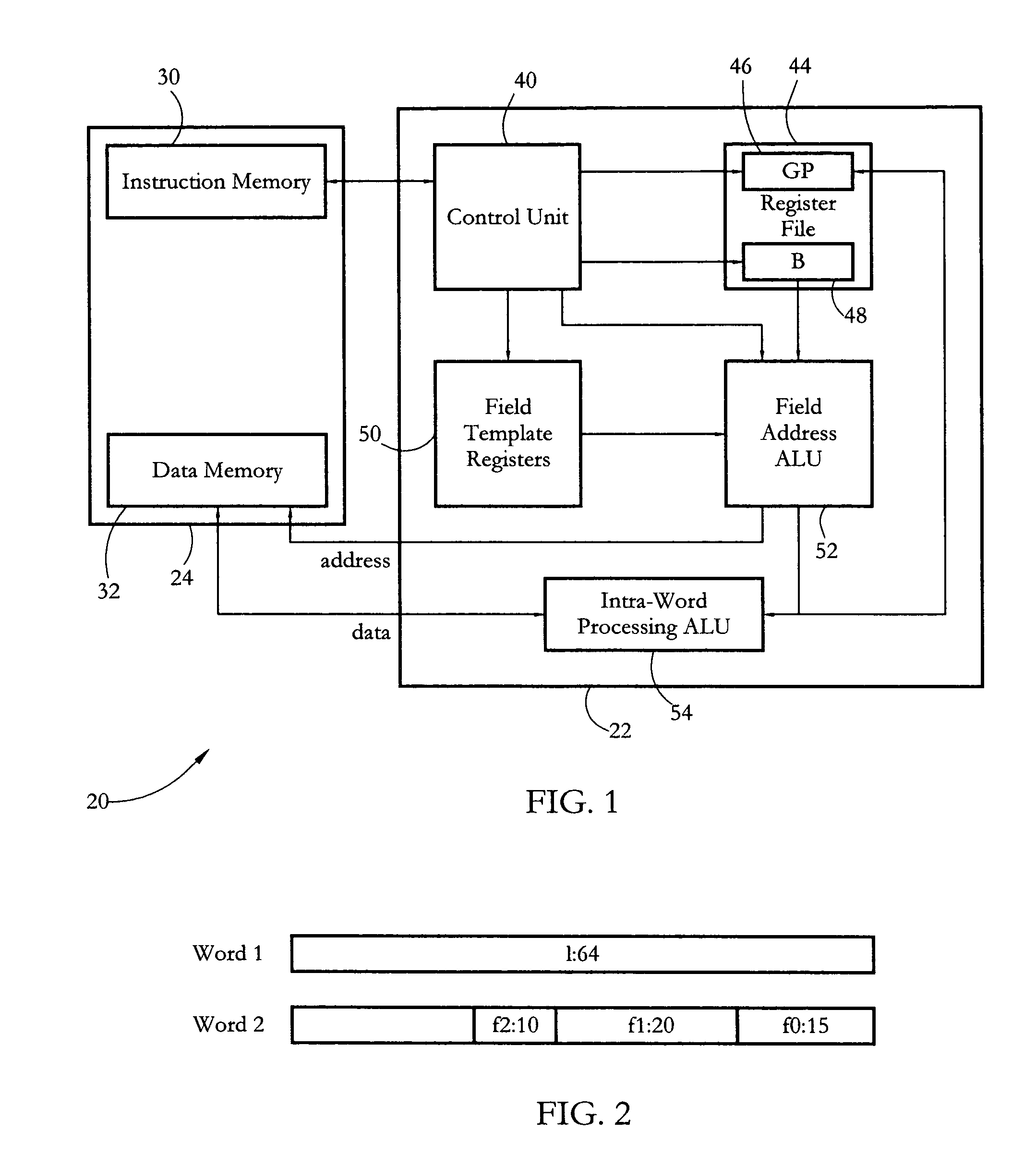
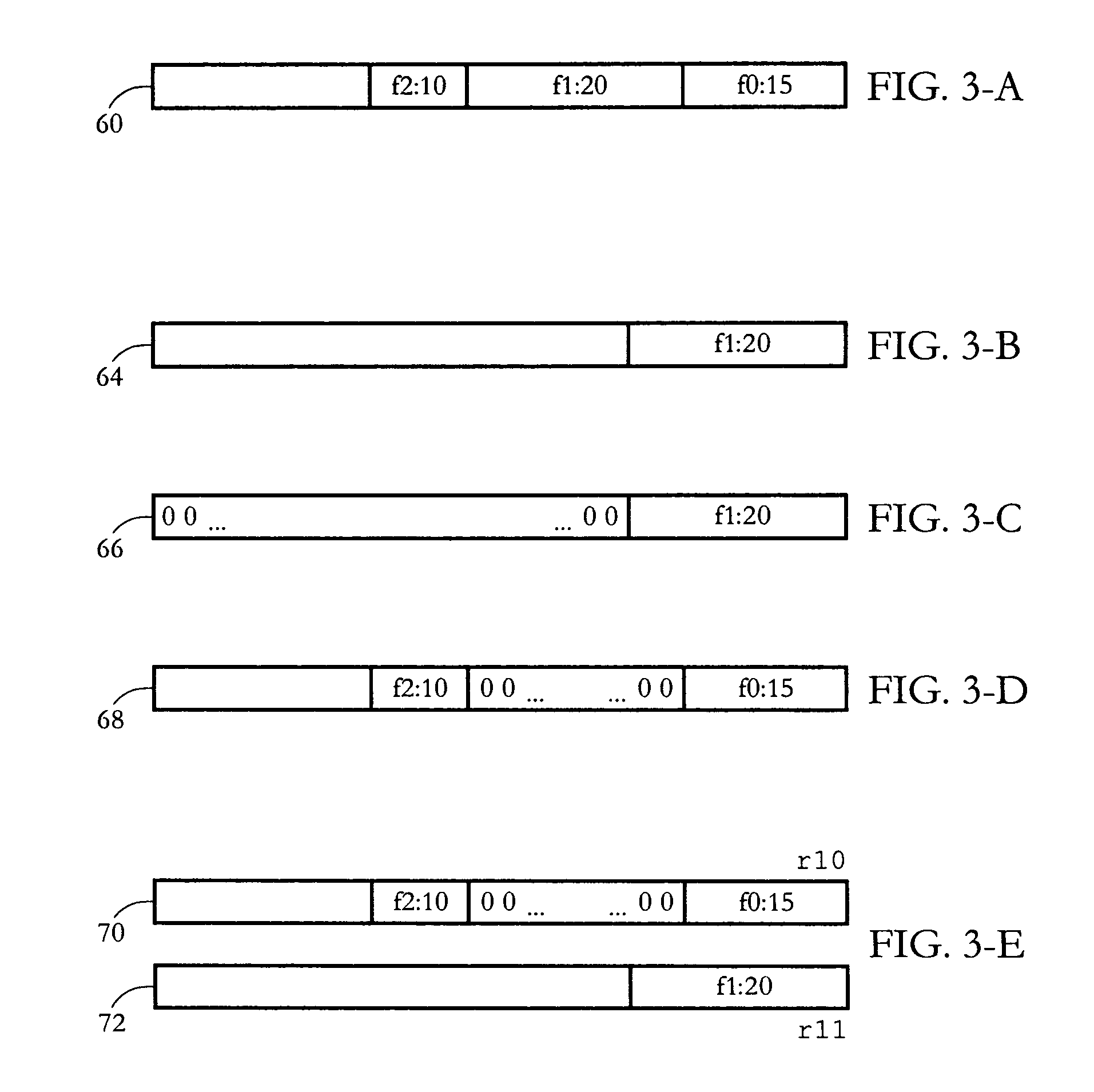
[0017]In the following description, it is understood that all recited connections between structures can be direct connections or indirect connections through intermediary structures. A set of elements includes one or more elements. A plurality of elements includes two or more elements. Any recitation of an element is understood to refer to at least one element. Unless otherwise specified, an identifier of an element may be the element itself (e.g. a template entry or part of a template entry), a representation of the element (e.g. a representation of a register), or information distinct from the element that identifies the element. For example, an identifier of an element may include an identity of a register that stores the element. An identifier of a field bitspan includes identifiers of at least two of the following three parameters: field start bit, field length, and field end bit. Unless otherwise specified, the term “logic” refers to special-purpose hardware. Any sequence of ...
PUM
 Login to View More
 Abstract
Description
Claims
Application Information
 Login to View More