
Self-aligned air-gap in interconnect structures
a self-aligning, interconnecting technology, applied in the direction of basic electric elements, electrical apparatus, semiconductor devices, etc., can solve the problems of increasing the capacitive coupling between the conductors, increasing power consumption, and creating new limiting factors for the geometry of smaller dimensions, so as to reduce parasitic capacitance, reduce electro-migration, and improve time dependent dielectric breakdown
- Summary
- Abstract
- Description
- Claims
- Application Information
AI Technical Summary
Benefits of technology
Problems solved by technology
Method used
Image

Examples
Embodiment Construction
[0017]The making and using of the presently preferred embodiments are discussed in detail below. It should be appreciated, however, that the present invention provides many applicable inventive concepts that can be embodied in a wide variety of specific contexts. The specific embodiments discussed are merely illustrative of specific ways to make and use the invention, and do not limit the scope of the invention.
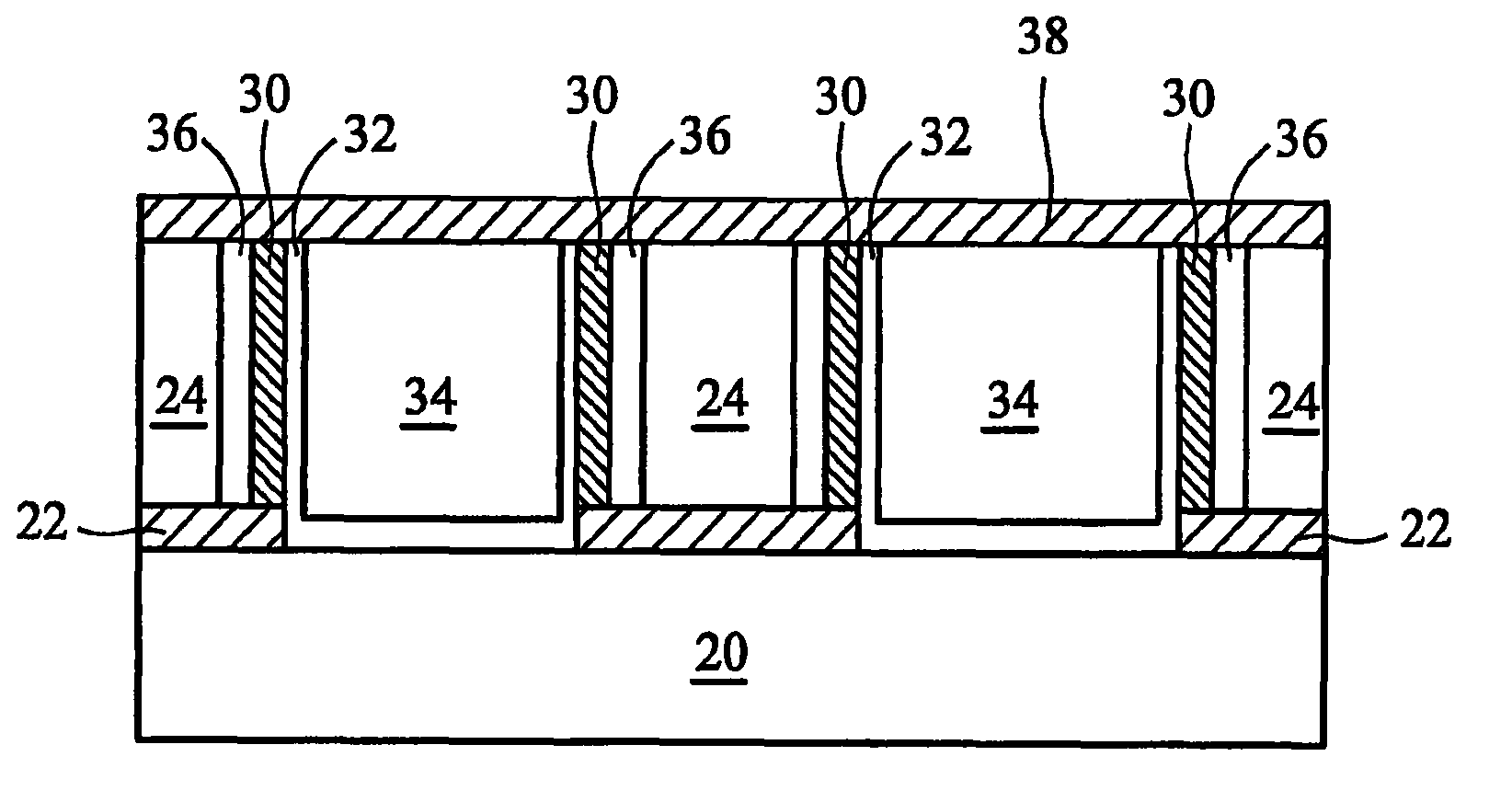
[0018]The present invention provides interconnect structures with air-gaps and self-aligned dielectric layers, which act as sidewall spacers, and methods for forming the same. The intermediate stages of manufacturing preferred embodiments of the present invention are illustrated. Throughout the various views and illustrative embodiments of the present invention, like reference numbers are used to designate like elements.
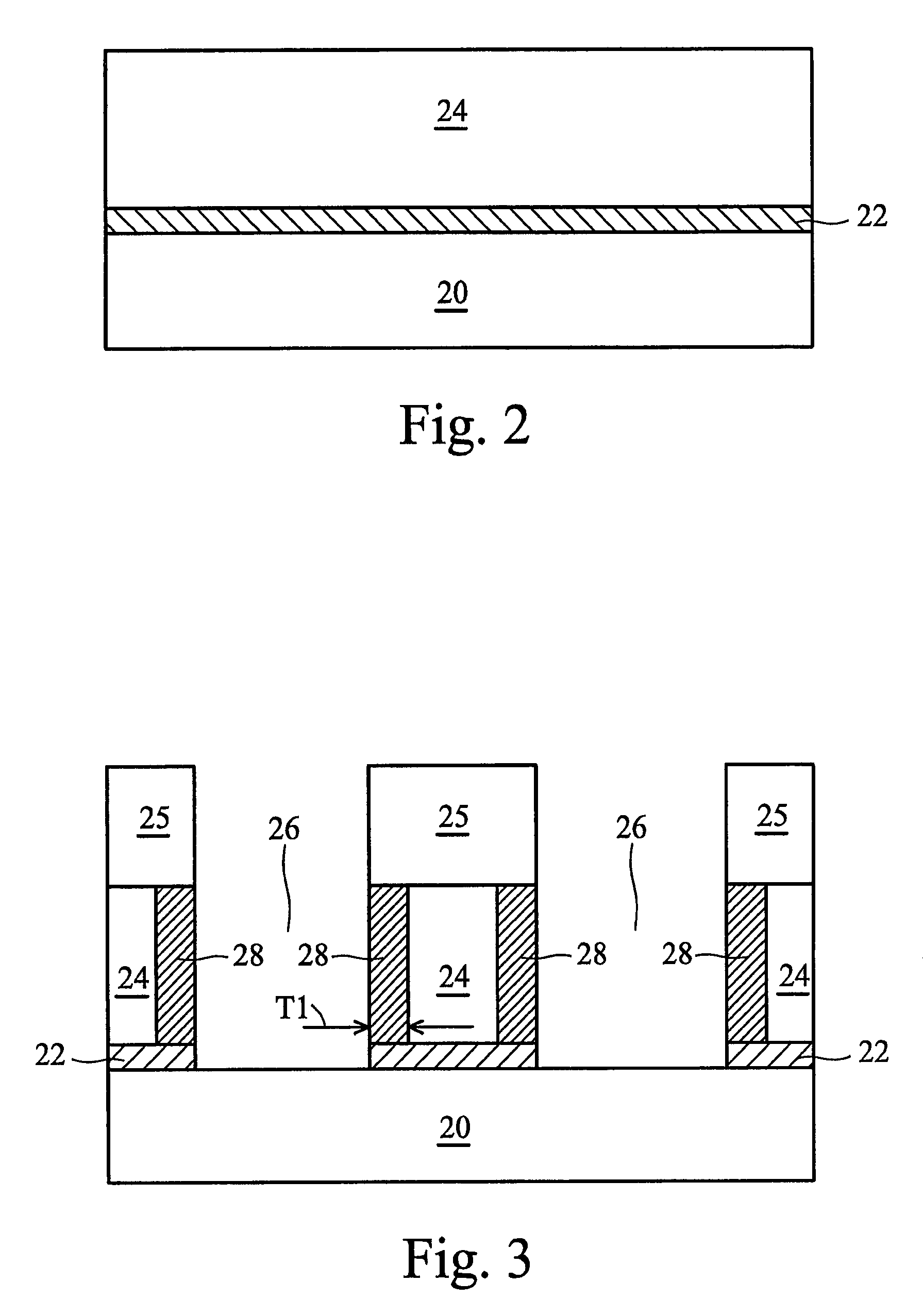
[0019]FIGS. 2 through 7 are cross-sectional views of intermediate stages in an embodiment for forming a single damascene structure. FIG. 2 illustrates a start...
PUM
 Login to View More
 Abstract
Description
Claims
Application Information
 Login to View More