
Electric power hoe
a technology of electric power hoe and walking operator, which is applied in the direction of electric vehicles, battery/fuel cell control arrangements, applications, etc., can solve the problems of limited power, limiting the possibility of power-related work, and reducing the performance of batteries suitable for such a us
- Summary
- Abstract
- Description
- Claims
- Application Information
AI Technical Summary
Benefits of technology
Problems solved by technology
Method used
Image

Examples
Embodiment Construction
1. Summary of the Principle of an Embodiment of the Invention
[0051]The general principle of an embodiment of the invention is the management of power hoe functionalities according to the charge level of the battery. The power hoe can thus run in a plurality of modes, including a running mode (also called “normal mode”) in which all of the functionalities are available, and a downgraded mode (also called “displacement mode”) in which certain functionalities are not available, or are only partially available.
2. Power Hoe According to an Embodiment of the Invention
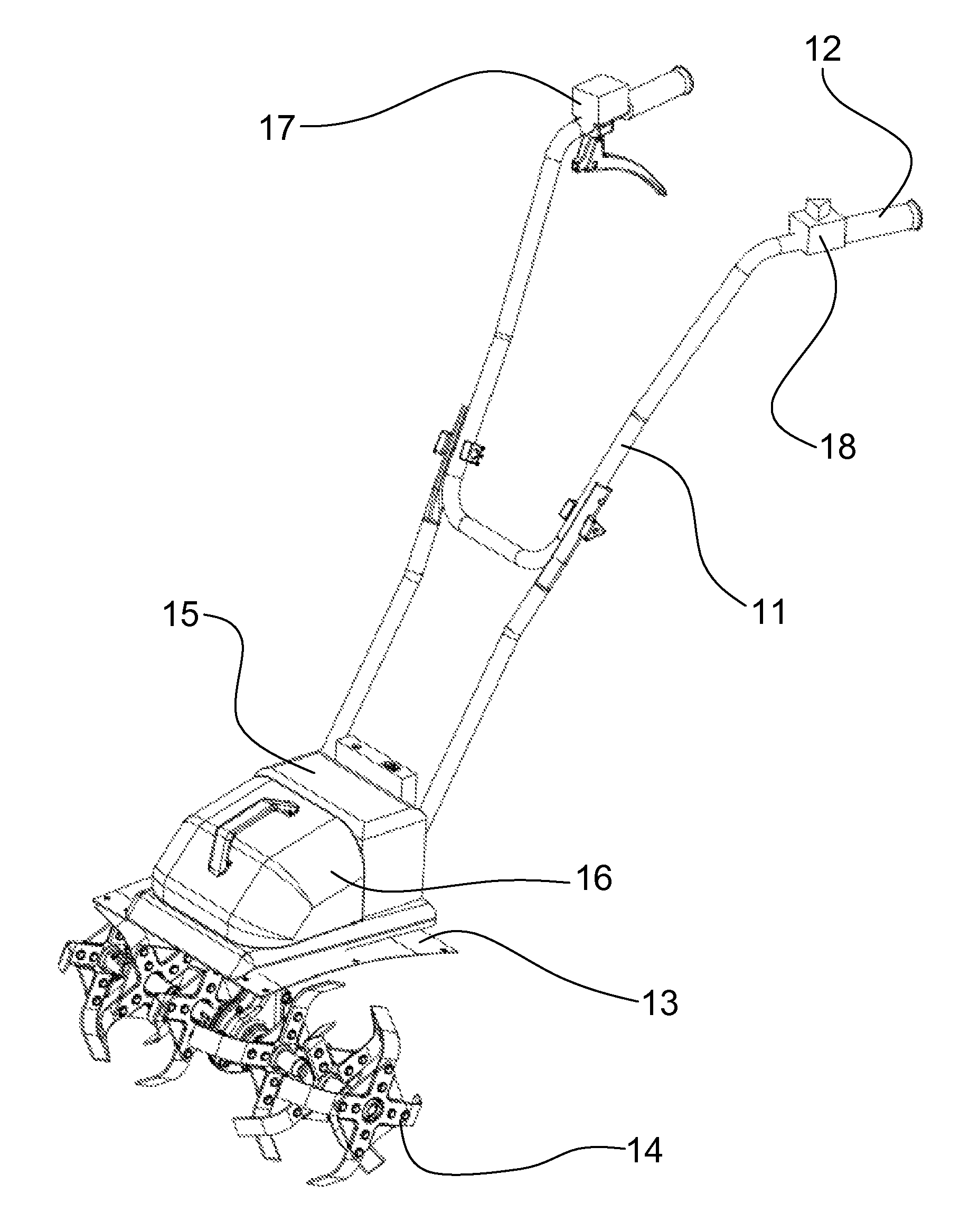
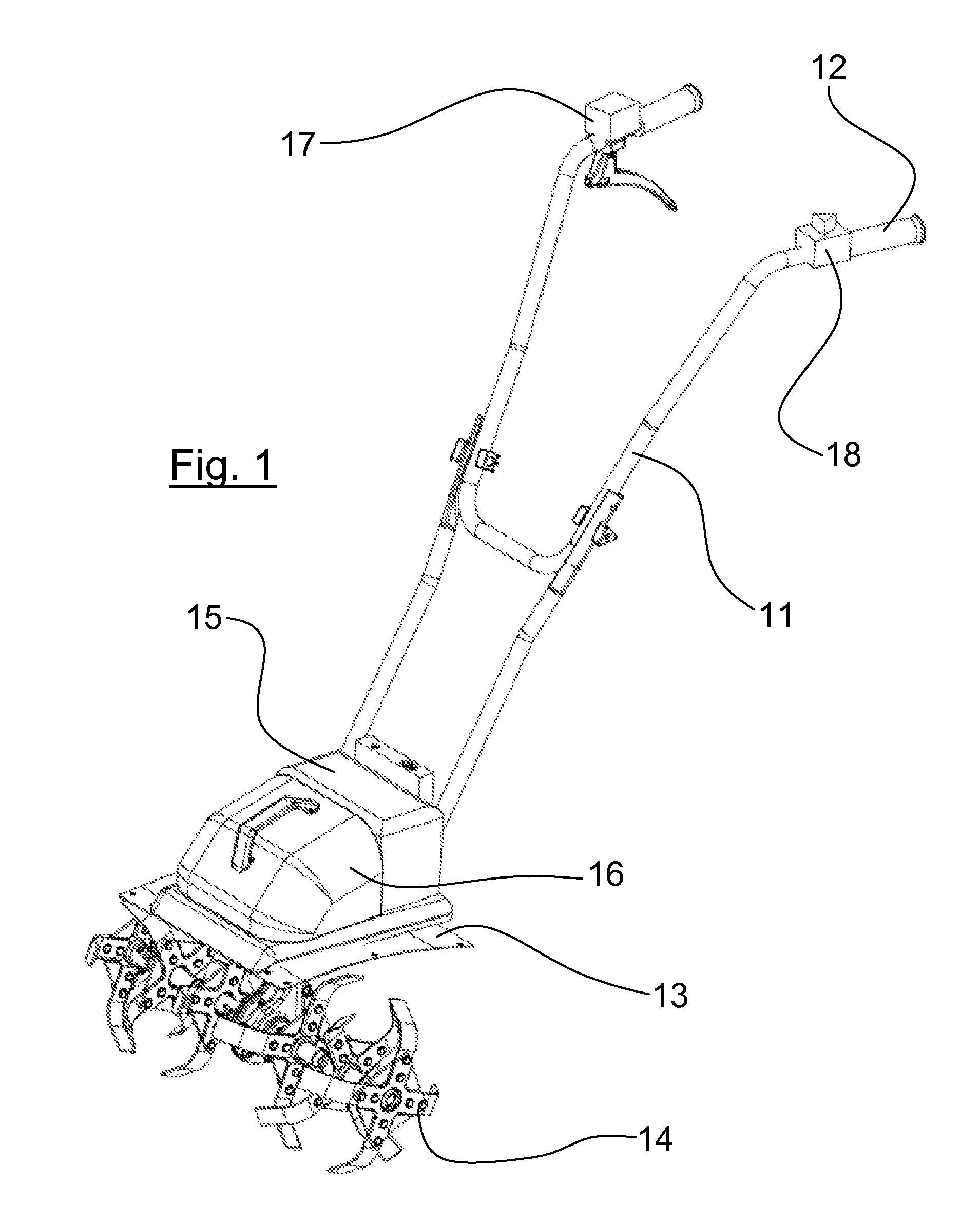
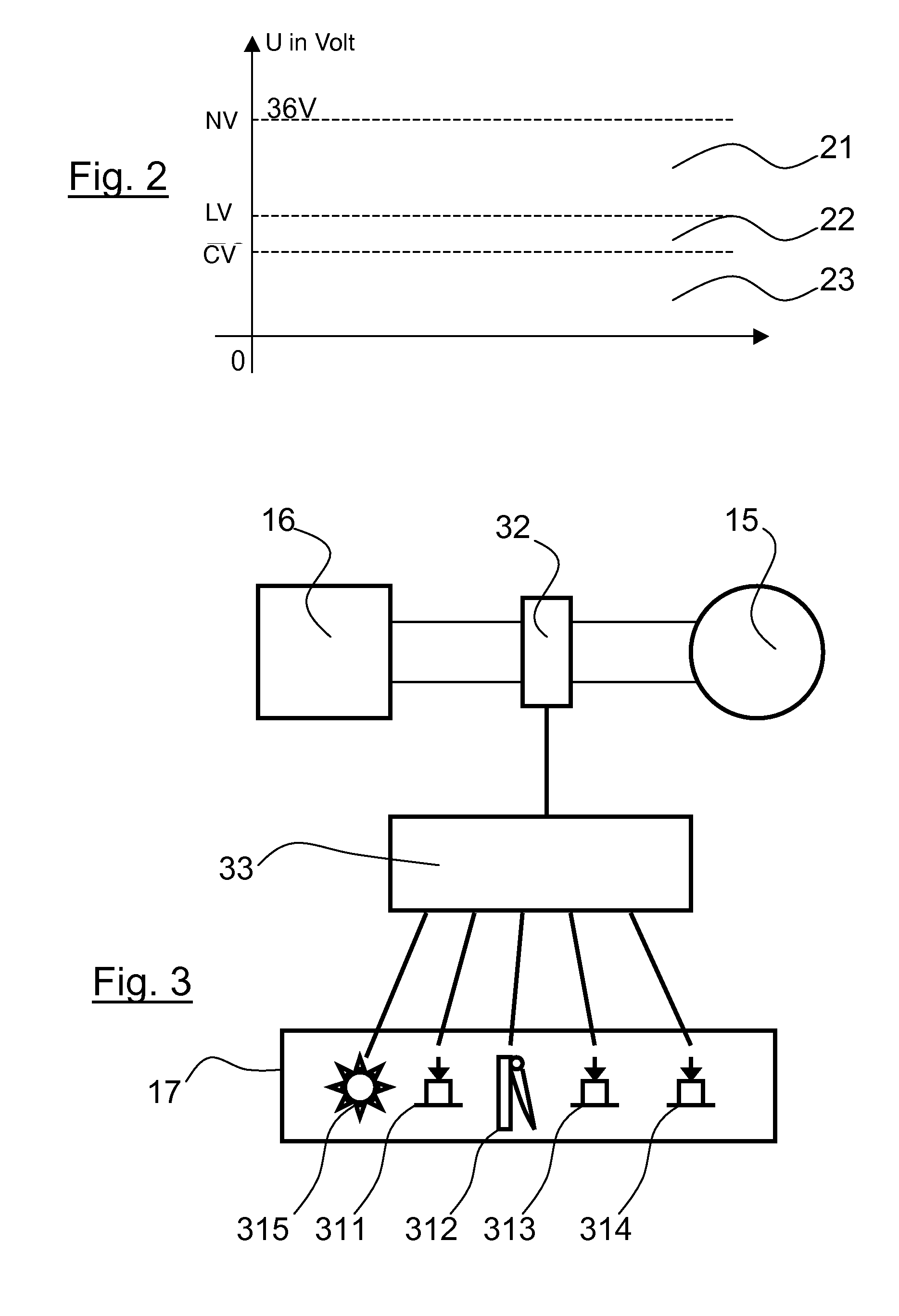
[0052]FIG. 1 shows a power hoe according to an embodiment of the invention. FIG. 3 diagrammatically shows certain elements constituting this power hoe, and the interactions between these various elements.
[0053]This power hoe conventionally comprises handlebars 11 with handgrips 12 at the ends, a crankcase 13, or machine body, and soil cultivation tools 14. This power hoe is electric, and therefore comprises an electric motor ...
PUM
 Login to View More
 Abstract
Description
Claims
Application Information
 Login to View More