
Attenuated ehrlichiosis vaccine
a technology of attenuated ehrlichiosis and vaccine, which is applied in the field of attenuated strains, can solve the problems of ineffective prevention of ehrlichiosis in challenged hosts, high cost of vaccine preparation, and deficiency of disclosed vaccines, and achieve the effect of preventing ehrlichiosis and effectively inducing protective immunity
- Summary
- Abstract
- Description
- Claims
- Application Information
AI Technical Summary
Benefits of technology
Problems solved by technology
Method used
Image

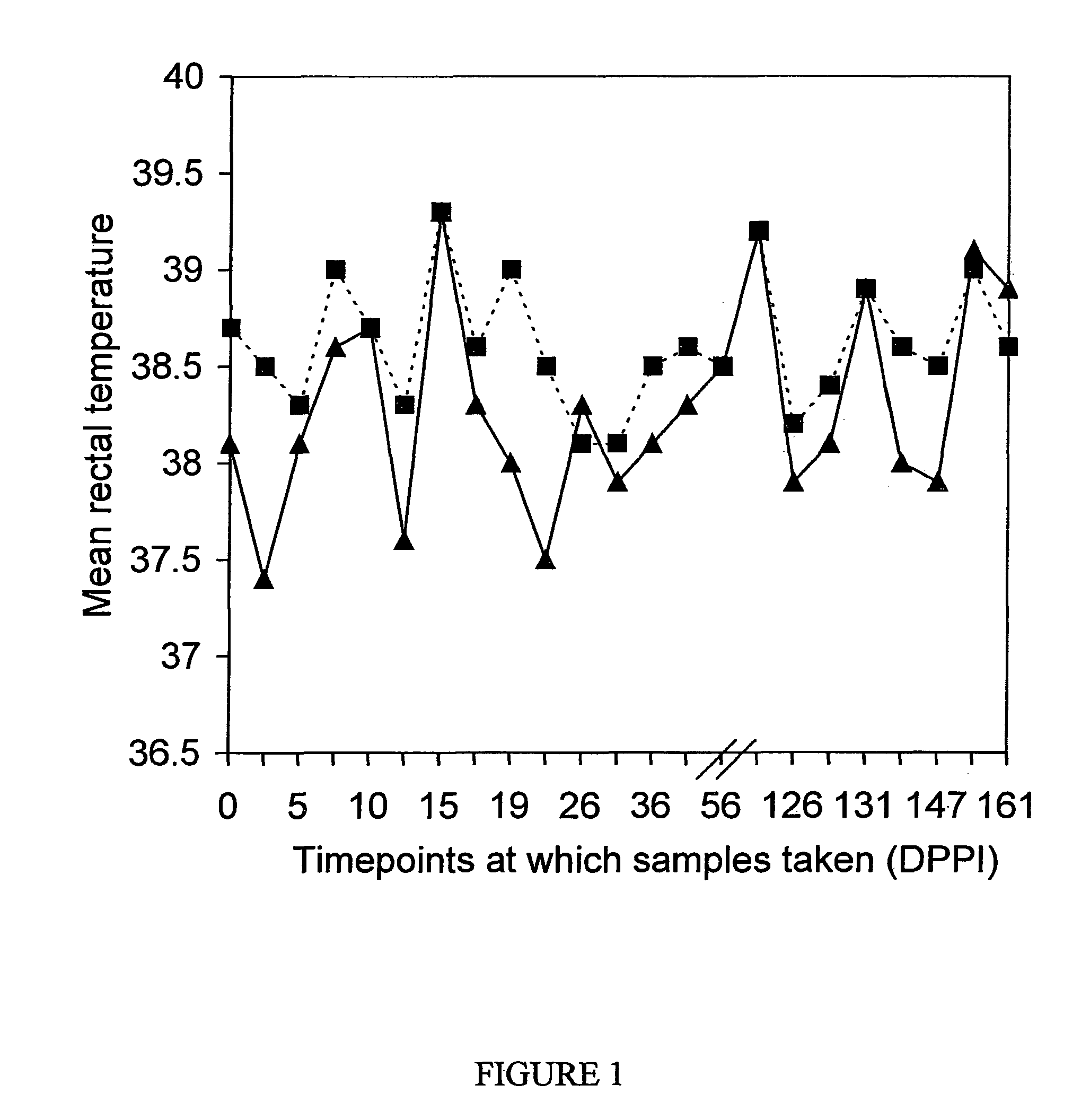
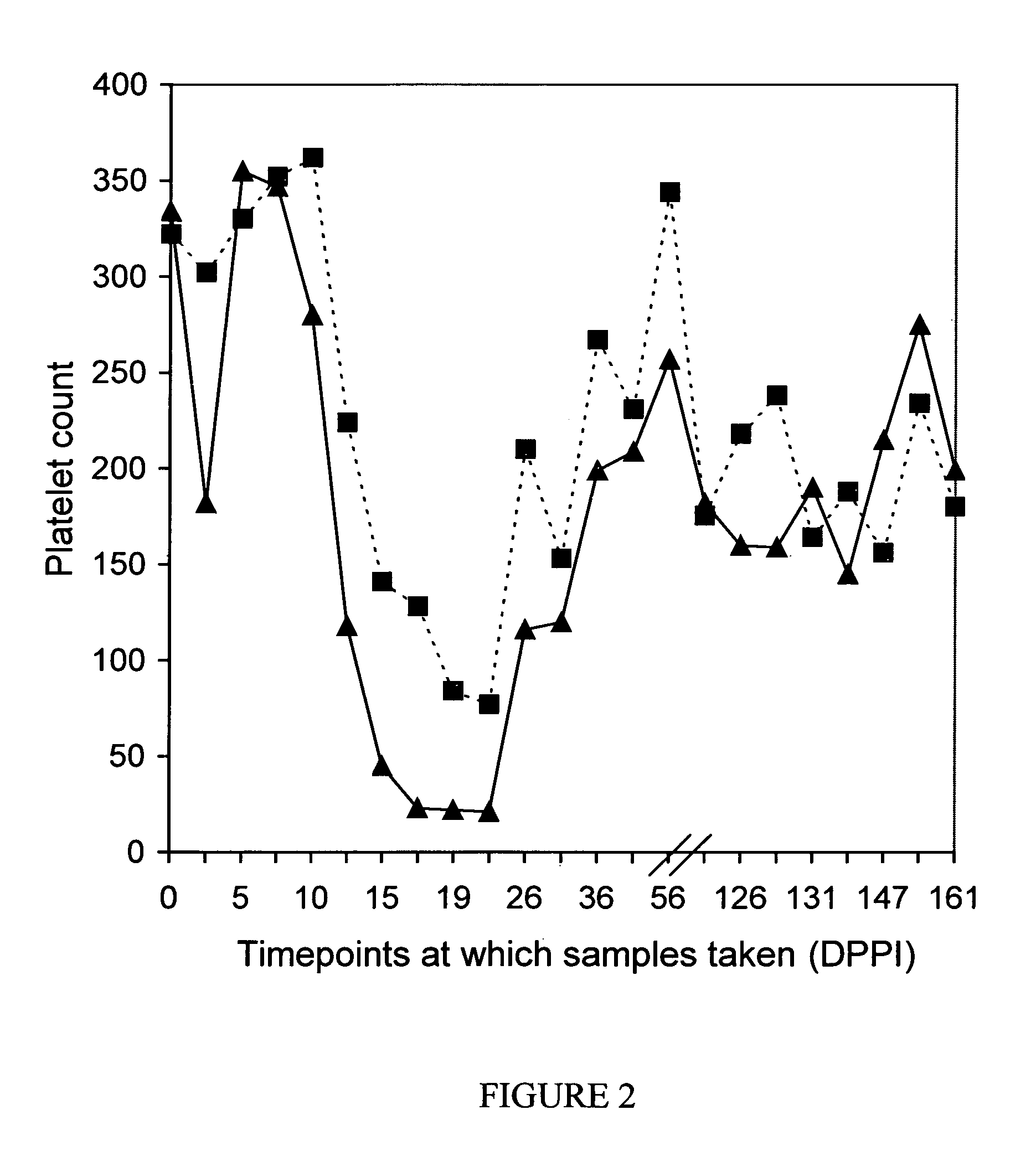
Examples
example 1
Serial and Alternate Passage of Ehrlichia canis in Two Different Types of Tissue Cell Culture
[0120]A viable culture of Ehrlichia canis Israeli strain 611 was propagated by serial passage in DH82 cells for a period of about 2 years. After this period, propagation of the strain was continued by serial passage in J774.A1 cells, as described in (9). Propagation in J774.A1 was carried out for a period of about 3 years. Next, the ehrlichiae were alternately propagated in DH82 and in J774.A1, with serial passage carried out in each cell line for a period of about 2 months, for a total of about 1 year. Finally, the ehrlichiae were propagated by serial passage in DH82 cells for an additional period of about 2 years, with each passage carried out every 7-10 days. The viability of the resultant strain was confirmed by culture.
example 2
An Attenuated E. canis Strain Confers Protection Against Clinical Manifestation of Ehrlichiosis in Dogs
[0121]While studying the minimal tick attachment time needed for the transmission of Ehrlichia canis, two dogs were experimentally infected with the strain of E. canis that had undergone multiple passages in two different cell cultures (DH82 and J774.A1 cells), as described in Example 1. After primary inoculation, the dogs exhibited a mild disease, indicated by thrombocytopenia with no apparent clinical signs. Intravenous challenge with a wild virulent strain of E. canis resulted in a mild clinical illness with no fever, compared to a severe disease in control dogs. The results of this study suggest for the first time that the multiple passages of E. canis in two different types of cell culture may lead to alteration and / or attenuation of ehrlichiae.
Materials and Methods
Experimental Ticks
[0122]Laboratory reared R. sanguineus ticks, free from infection with vertebrate pathogens were...
PUM
| Property | Measurement | Unit |
|---|---|---|
| time | aaaaa | aaaaa |
| time | aaaaa | aaaaa |
| body weight | aaaaa | aaaaa |
Abstract
Description
Claims
Application Information
 Login to View More