Spin-on layer for directed self assembly with tunable neutrality

a technology of tunable neutrality and spin-on layer, which is applied in the direction of photomechanical equipment, instruments, and photosensitive material processing, etc., can solve the problems of insufficiently small holes, trenches, and lines in the pattern developed from photoresists, and achieve efficient, directed self-assembly

a technology of tunable neutrality and spin-on layer, which is applied in the direction of photomechanical equipment, instruments, and photosensitive material processing, etc., can solve the problems of insufficiently small holes, trenches, and lines in the pattern developed from photoresists, and achieve efficient, directed self-assembly

US9733566B2Active Publication Date: 2017-08-15TOKYO ELECTRON LTD

Image

Smart Image Click on the blue labels to locate them in the text.
Viewing Examples
Smart Image
  • Spin-on layer for directed self assembly with tunable neutrality
  • Spin-on layer for directed self assembly with tunable neutrality
  • Spin-on layer for directed self assembly with tunable neutrality

Examples

Experimental program
Comparison scheme
Effect test

Embodiment Construction

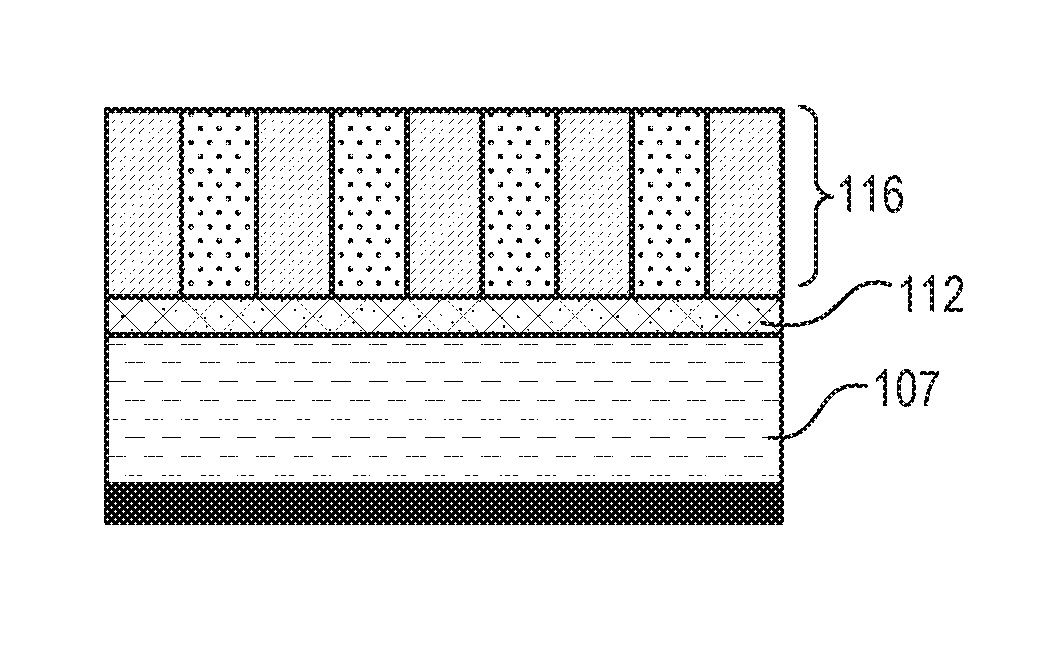
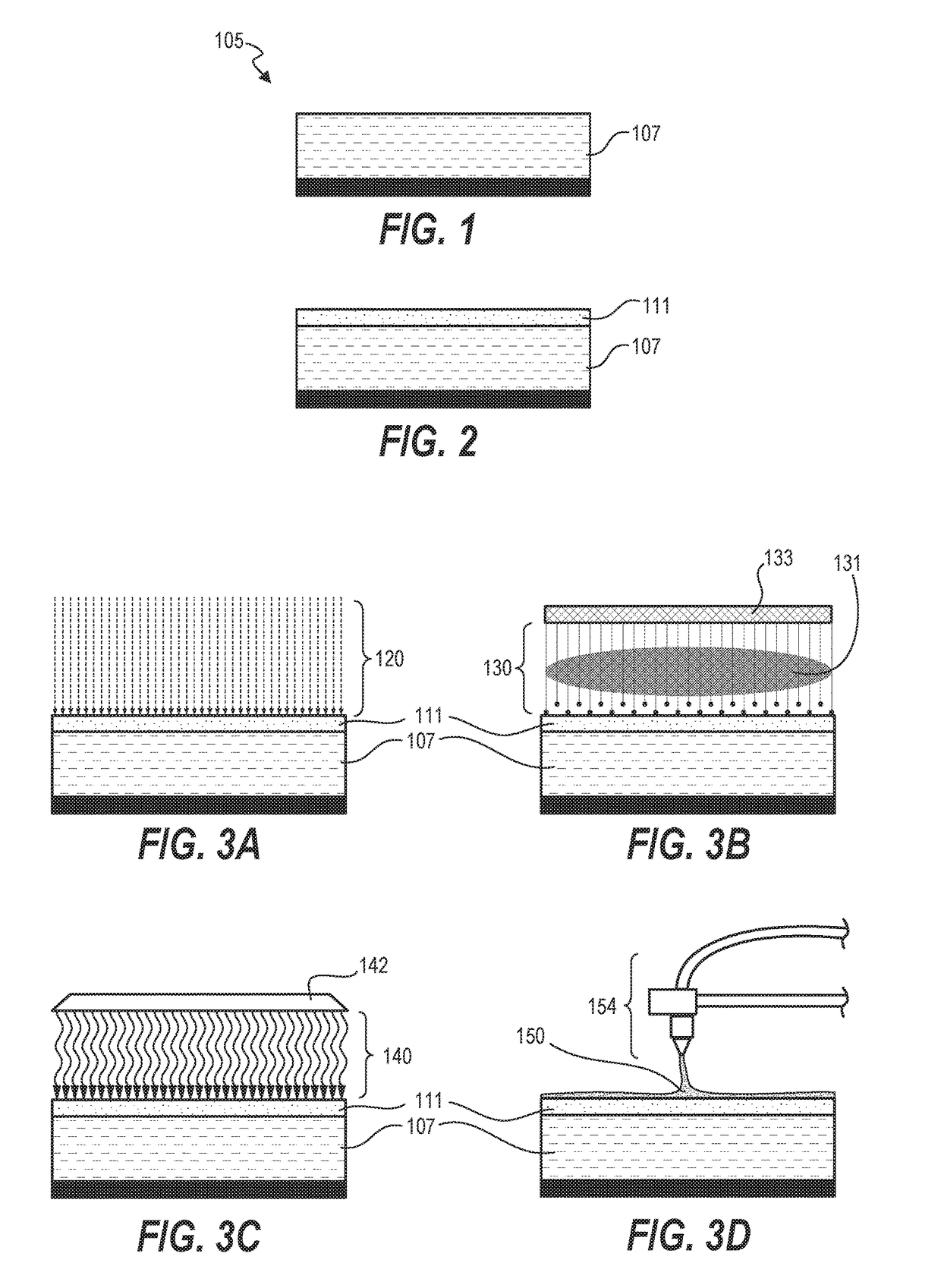
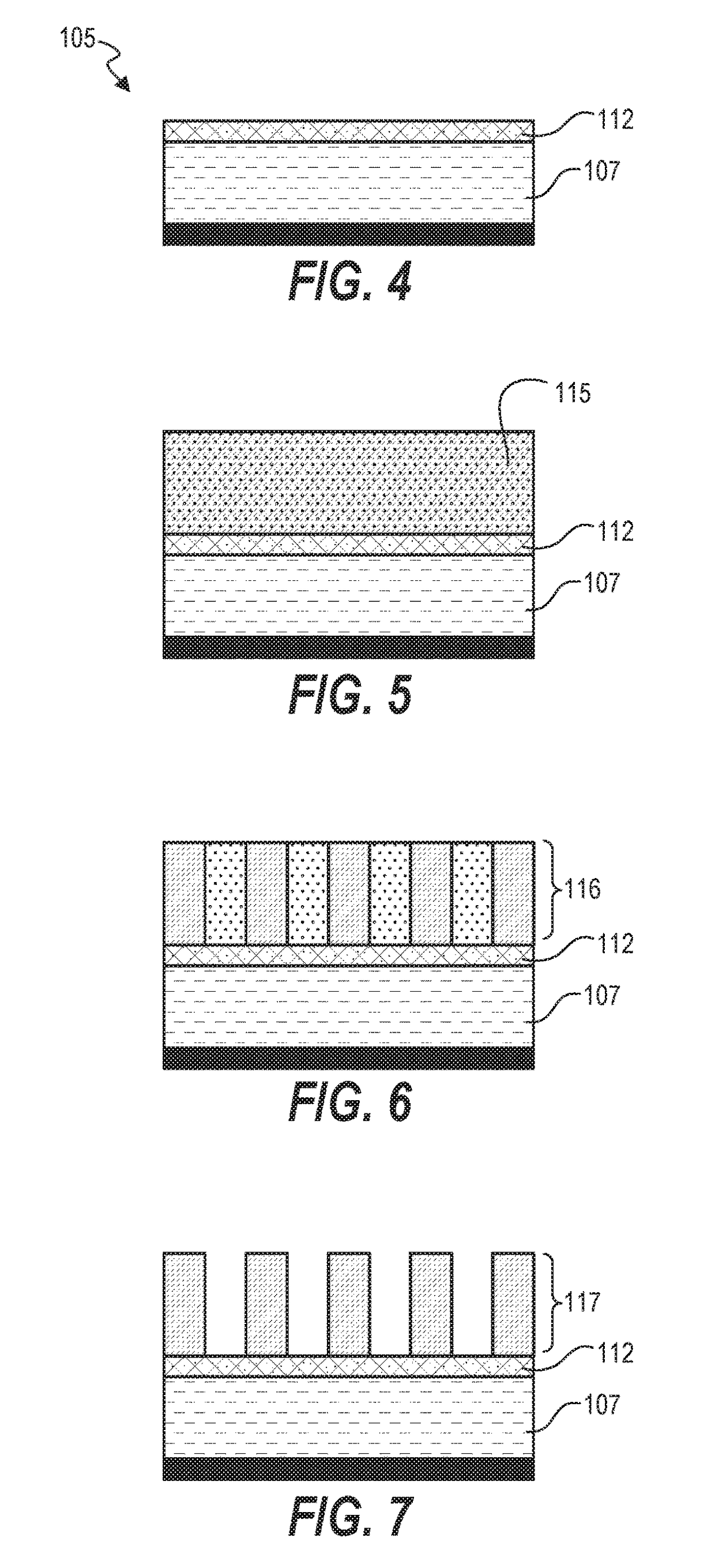
[0022]Successful directed self-assembly of block copolymers is realized when self-assembled on a neutral layer. This neutral layer matches (in characteristics) the directed self-assembly material to be applied on top of the neutral layer. Conventionally, there is no generic neutral layer that is compatible with multiple different block copolymer materials. Techniques disclosed herein include methods for creating a directed self-assembly tunable neutral layer that works with multiple different block copolymer materials. Techniques herein can include depositing a neutral layer and then post-processing this neutral layer to tune its characteristics so that the neutral layer is compatible with a particular block copolymer scheme or schemes. Post-processing herein of such a neutral layer can modify a ratio of pi and sigma bonds in a given carbon film or other film to approximate a given self-assembly film that will be deposited on this neutral layer.

[0023]Techniques herein include treati...

the structure of the environmentally friendly knitted fabric provided by the present invention; figure 2 Flow chart of the yarn wrapping machine for environmentally friendly knitted fabrics and storage devices; image 3 Is the parameter map of the yarn covering machine
Login to View More

PUM

PropertyMeasurementUnit
wavelengthaaaaaaaaaa
wavelengthsaaaaaaaaaa
Login to View More

Abstract

Techniques disclosed herein include methods for creating a directed self-assembly tunable neutral layer that works with multiple different block copolymer materials. Techniques herein can include depositing a neutral layer and then post-processing this neutral layer to tune its characteristics so that the neutral layer is compatible with a particular block copolymer scheme or schemes. Post-processing herein of such a neutral layer can modify a ratio of pi and sigma bonds in a given carbon film or other film to approximate a given self-assembly film that will be deposited on this neutral layer. Accordingly, a generic or single material can be used for a neutral layer and modified to match a given block copolymer to be deposited.

Description

CROSS REFERENCE TO RELATED APPLICATIONS[0001]The present application claims the benefit of U.S. Provisional Patent Application No. 62 / 134,149, filed on Mar. 17, 2015, entitled β€œSpin-On Under Layer for Directed Self Assembly with Tunable Neutrality,” which is incorporated herein by reference in its entirety.BACKGROUND OF THE INVENTION[0002]Techniques herein relate to methods of fabricating semiconductors including methods for patterning substrates.[0003]Fabricating semiconductors includes patterning a wafer surface to be able to create various trenches, holes, and openings in underlying layers. Currently there are challenges with using lithographic tools to create patterns having critical dimensions to meet design specifications. In other words, due to the resolution limitations of patterning photoresists, patterns developed from photoresists do not have lines, trenches, and holes that are sufficiently small to meet design specifications. One technique to shrink patterns to desired d...

Claims

the structure of the environmentally friendly knitted fabric provided by the present invention; figure 2 Flow chart of the yarn wrapping machine for environmentally friendly knitted fabrics and storage devices; image 3 Is the parameter map of the yarn covering machine
Login to View More

Application Information

Patent Timeline
15 Aug 2017
Publication
US9733566B2
IPC
G03F7/11; B82Y30/00; C08L53/00; G03F7/00; H01L21/033; H01L21/308; G03F7/16; G03F7/20; C09D153/00; G03F7/26; G03F7/004; G03F7/40; H01L21/3105; H01L21/027
CPC
G03F7/11; B82Y30/00; C08L53/00; C09D153/00; G03F7/002; G03F7/004; G03F7/16; G03F7/165
Inventors
SMITH, JEFFREY