Meridian aviation tyre using nylon/aramid fiber composite cord as framework material

A technology of aviation tires and composite cords, which is applied to tire parts, reinforcement layers of pneumatic tires, transportation and packaging, etc., can solve problems such as heat resistance, high heat generation, and low rigidity of tread parts, and meet high requirements. Effects of internal pressure and high speed

CN101200161AInactive Publication Date: 2008-06-18中国化工集团曙光橡胶工业研究设计院有限公司
0 Cites 7 Cited by

Patent Information

Authority / Receiving Office
CN · China
Patent Type
Applications(China)
Current Assignee / Owner
Publication Date
2008-06-18
Estimated Expiration
Not applicable · inactive patent

Smart Images

  • Figure 1
    Figure 1
Patent Text Reader

Abstract

The invention discloses a steel-belted aerial tire with the skeleton material of nylon-kelvar composite cord, which is mainly characterized in that the carcass ply is composed of multi-layer nylon 66 cords or nylon-kelvar composite cords. The belt structure layer is composed of at least more than two layers of nylon-kelvar composite cords. A tire tread structure layer is arranged above the belt structure layer, in which the nylon-kelvar composite cord is also applied. Both ends of the carcass ply cord layer are wound with a pair of left and right wire loops and counter wrapped upward. The belt structure layer is composed of the invert folded cords, in which the curling ends are all in the middle of the tread of tire. This aerial tire has the advantages that (1) the nylon-kelvar composite cord is taken as the skeleton material of the tire so that the fine characteristics of the nylon-kelvar composite cords are reflected, in which a good basis is laid in order to meet the using requirements of the steel-belted aerial tire. (2) With the belt structure layer of multi-layer nylon-kelvar composite cords, the high internal pressure, high-speed, high-load, large deformation and impact resistant use requirements of the steel-belted tire can be met.
Need to check novelty before this filing date? Find Prior Art

Description

Technical field:

[0001] The invention relates to an aviation tire and its skeleton material, in particular to a radial aviation tire using nylon / aramid composite cords as the skeleton material. Background technique:

[0002] The use characteristics of radial aviation tires are high internal pressure, high speed, high load, large deformation (sinking rate reaches 28% to 40%), impact resistance, and intermittent use. The mechanical properties of radial aviation tires and their harsh service conditions determine that the cords used must have high strength, fatigue resistance, impact resistance, and deformation resistance.

[0003] At present, most of the carcass of high-load and high-speed pneumatic aviation tire technology adopts a diagonal structure that crosses each other, and the main belt also adopts a diagonal belt layer structure. Aviation tires with this structure are used under high-load, high-speed and harsh conditions. At this time, due to the arrangement direction ...

Examples

Embodiment Construction

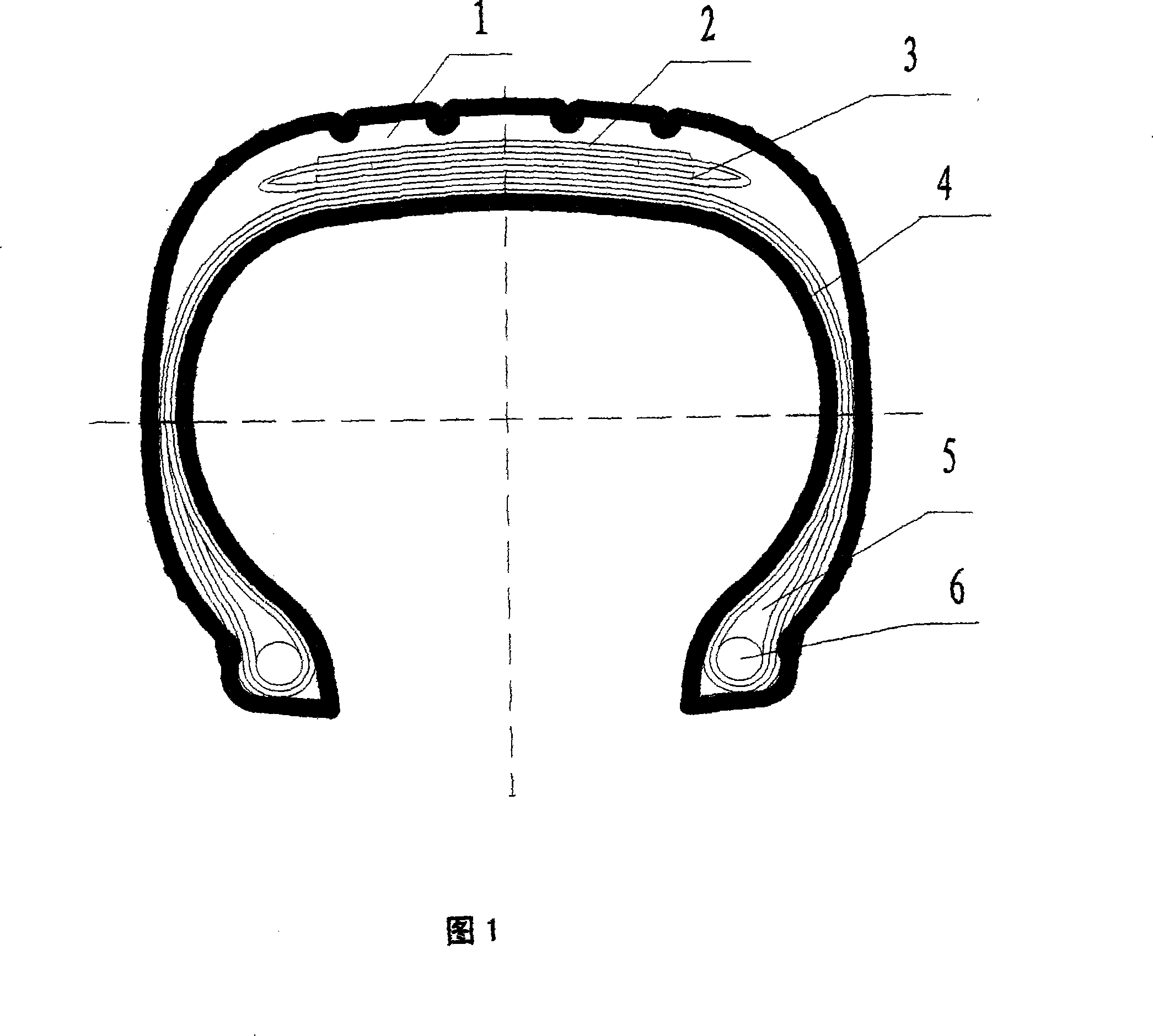
[0009] Referring to Fig. 1, the radial aviation tire of the present invention comprises a tread 1, a cap structure layer 2, a belt structure layer 3, a carcass 4, a filling rubber 5, and a traveler 6. The ply of the carcass 4 is composed of multiple layers of organic fiber ply, and the steel ring 6 is turned up from the inside to the outside. At least one layer of organic fiber ply wraps the steel ring 6 from the outside to the inside. The included angle is 60°~90°. The belt structure layer 3 and the cap structure layer 2 are arranged at the crown of the tire. The belt structure layer 3 is composed of at least two layers of cords, and the angle between the cords of the belt structure layer and the circumferential direction of the tire is 0° to 30°. In order to reduce the interlayer shear stress concentration at the end of the belt structure layer, at least one belt layer has a wrapping structure, and the curling ends of the belt structure layer are all in the middle of the cro...