Waste gas post-processing system of twin-turbo supercharged engine

A technology for supercharged engine and exhaust gas after-treatment, which is applied to engine components, combustion engines, machines/engines, etc., can solve the problems of low three-way catalytic conversion efficiency, etc. Efficiency, simple effect of piping arrangement

CN102588051BInactive Publication Date: 2013-11-27GREAT WALL MOTOR CO LTD
5 Cites 0 Cited by

Patent Information

Authority / Receiving Office
CN · China
Patent Type
Patents(China)
Current Assignee / Owner
Publication Date
2013-11-27
Estimated Expiration
Not applicable · inactive patent

Smart Images

  • Figure 1
    Figure 1
  • Figure 2
    Figure 2
  • Figure 3
    Figure 3
Patent Text Reader

Abstract

The invention discloses a waste gas post-processing system of a twin-turbo supercharged engine, which belongs to the technical field of engines and is aiming at solving the problem that the three-way catalytic conversion efficiency is low in the prior art. The waste gas post-processing system of a twin-turbo supercharged engine comprises a first gas exhaust manifold and a second gas exhaust manifold, wherein a gas inlet of the first gas exhaust manifold is connected to a waste gas outlet of a first turbo supercharger; a gas inlet of the second gas exhaust manifold is connected to a waste gas outlet of a second turbo supercharger; the gas outlet of the first gas exhaust manifold and the gas outlet of the second gas exhaust manifold are connected to a three-way catalyst; a meeting chamber is arranged among the gas outlet of the first gas exhaust manifold and the gas outlet of the second gas exhaust manifold and the three-way catalyst; the gas outlets of the first gas exhaust manifold and the second gas exhaust manifold are connected to the meeting chamber after being converged; and the meeting chamber is connected to the catalyst. The waste gas post-processing system of a twin-turbo supercharged engine disclosed by the invention is used for processing the waste gas produced by an engine.
Need to check novelty before this filing date? Find Prior Art

Description

technical field

[0001] The invention relates to the technical field of engines, in particular to an exhaust gas post-treatment system of a twin-turbocharged engine. Background technique

[0002] At present, the intake and exhaust system of the engine usually adopts turbocharging to increase the power of the engine. The turbocharging is to compress the air in advance and then inject it into the cylinder of the engine. Turbocharging is usually achieved by a turbocharger. Exhaust gas turbocharging relies on the remaining kinetic energy of the exhaust gas from the engine to drive the turbine to rotate. The advantage is that the engine power is increased by increasing the turbine speed and the intake pressure. Small, it cannot drive the turbine to rotate at high speed to increase the intake pressure. At this time, the engine power is equal to that of natural aspiration. When the speed increases, the turbocharger works, and the power will suddenly increase. For the turbo lag phe...

Examples

Embodiment Construction

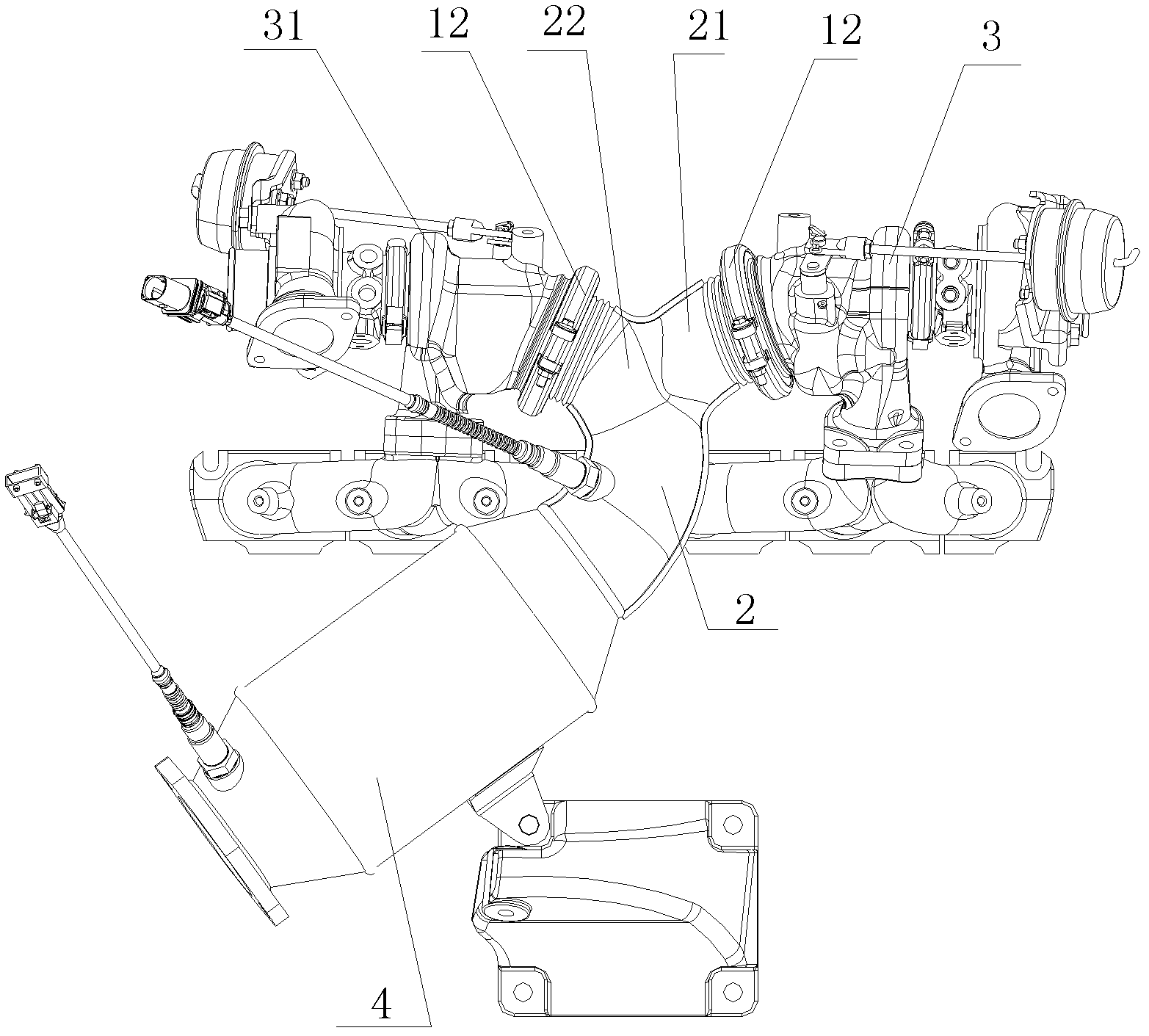
[0024] The exhaust gas post-treatment system of the twin-turbocharged engine of the embodiment of the present invention will be described in detail below in conjunction with the accompanying drawings.

[0025] It should be clear that the described embodiments are only some of the embodiments of the present invention, not all of them. Based on the embodiments of the present invention, all other embodiments obtained by persons of ordinary skill in the art without creative efforts fall within the protection scope of the present invention.

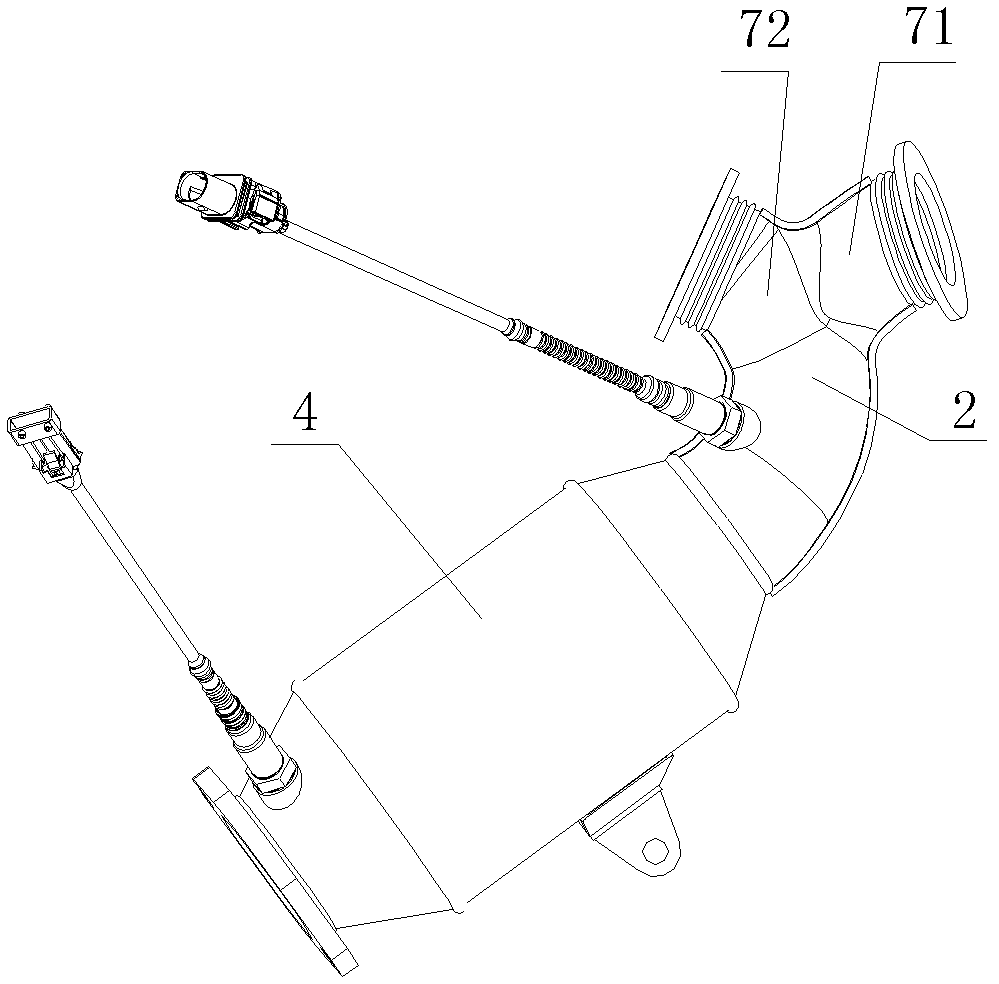
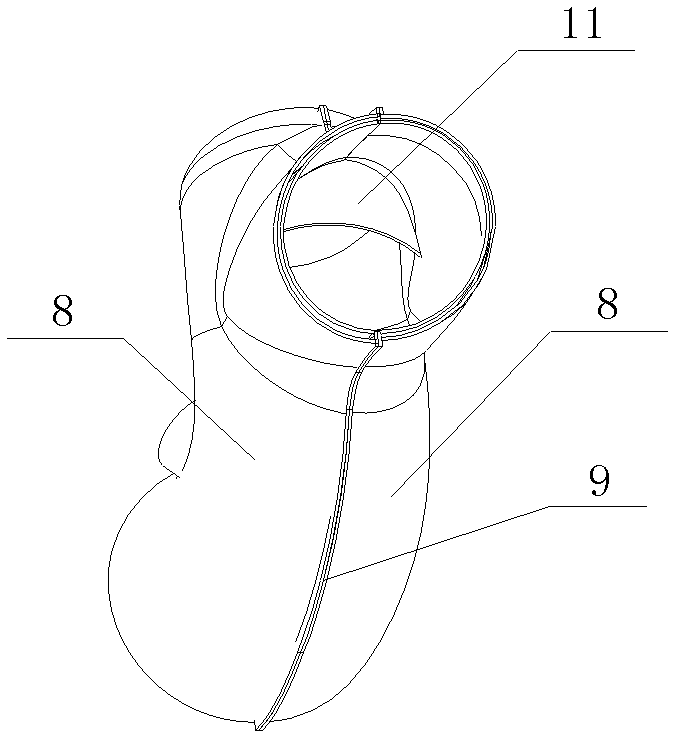
[0026] see figure 1 Shown is a specific embodiment of the exhaust gas after-treatment system of the twin-turbocharged engine of the present invention. The exhaust gas after-treatment system of the twin-turbocharged engine in this embodiment includes: a first exhaust branch pipe 21 and a second row Gas branch pipe 22, the air inlet of the first exhaust branch pipe 21 is connected to the exhaust gas outlet of the first turbocharger 3, and the a...