

Pt/Al2O3 catalyst and application thereof in room-temperature catalytic oxidation of formaldehyde
A catalyst, room temperature technology, applied in chemical instruments and methods, dispersed particle separation, separation methods, etc., can solve the problems of high required temperature, inconvenient use, inability to eliminate formaldehyde, etc., achieving good stability, low environmental cost, The effect of good stability
Patent Information
- Authority / Receiving Office
- CN · China
- Patent Type
- Applications(China)
- Current Assignee / Owner
- Publication Date
- 2014-02-26
- Estimated Expiration
- Not applicable · inactive patent
Smart Images
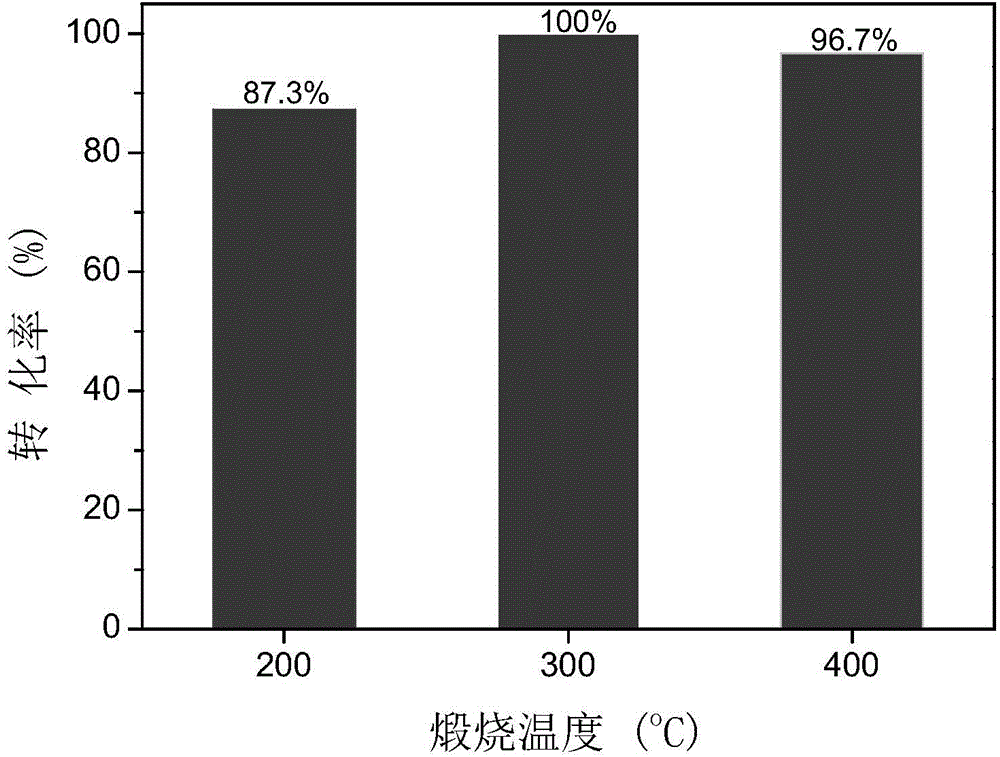
Figure 1 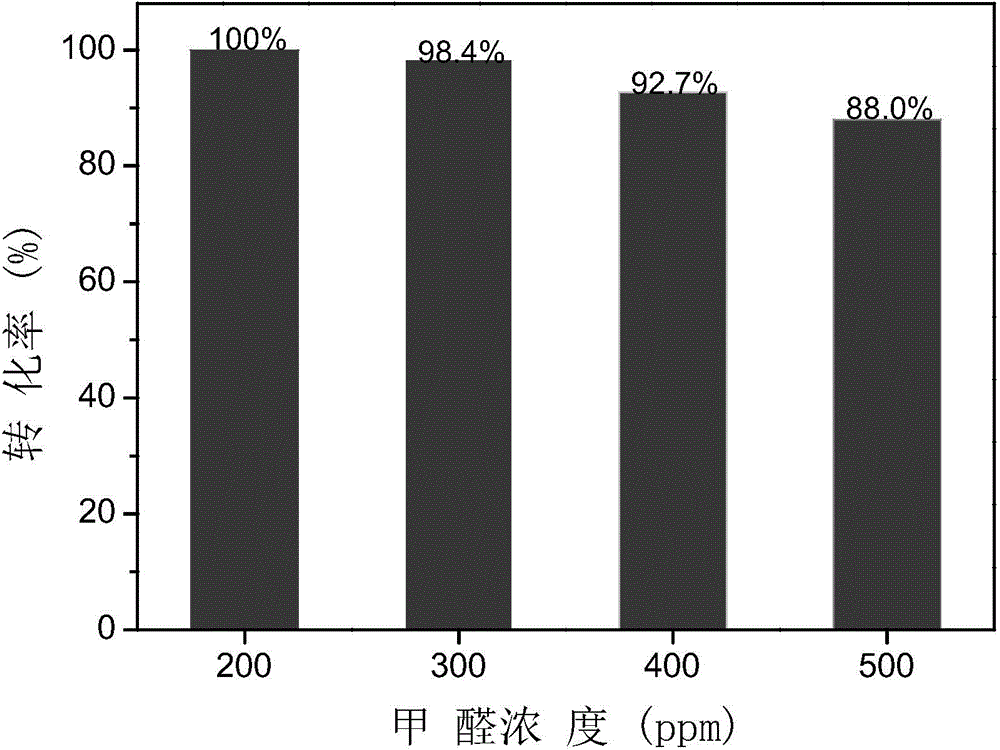
Figure 2 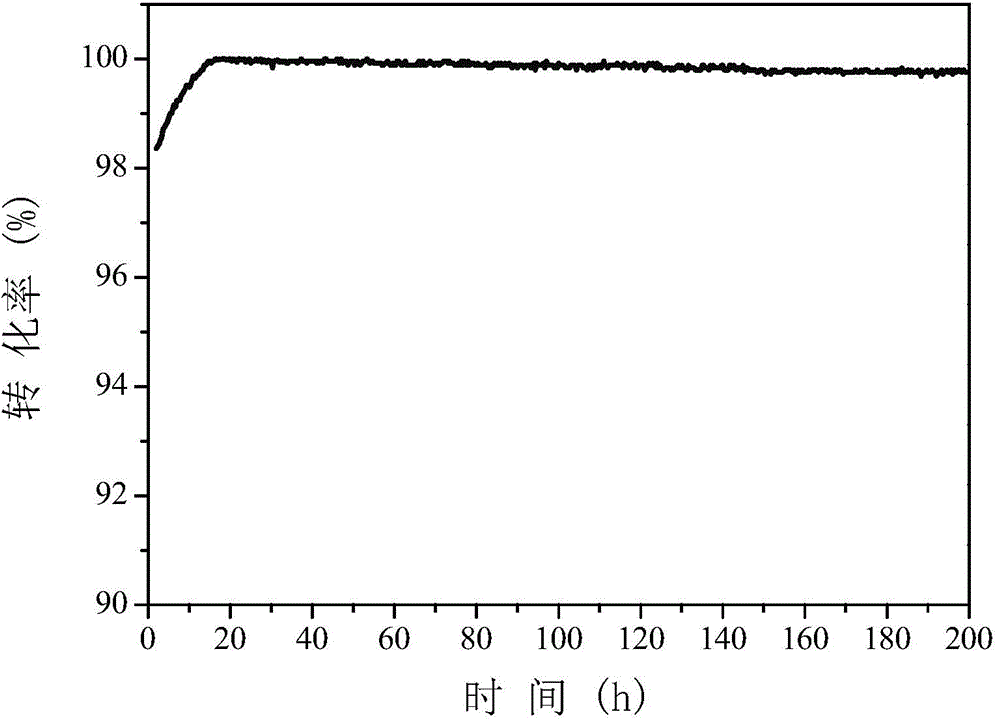
Figure 3
Abstract
Description
technical field
[0001] The present invention relates to a kind of Pt / Al 2 o 3 Catalyst and its application in the catalytic oxidation of formaldehyde, especially in the catalytic oxidation of formaldehyde at room temperature. Background technique
[0002] Formaldehyde (HCHO), also known as formaldehyde, is a kind of volatile organic compounds (VOCs), a colorless, irritating gas with a strong odor. It is widely used in renovated living rooms, shopping malls, hotels, and offices. Due to the large amount of wood-based panels used in decoration and furniture manufacturing, and the production of wood-based panels requires the use of a large amount of adhesives made of highly toxic formaldehyde. Due to the release period of formaldehyde in the adhesive Generally as long as 15 years, causing formaldehyde to become the main pollutant in the indoor air. The concentration limit of formaldehyde pollutants in indoor air stipulated by my country's national standards is 0.08mg / m 3 . ...
Examples
Embodiment 1
[0026] Prebody 28mg Pt 2 (dba) 3 Add 100ml of propylene carbonate, and react in a stainless steel reactor at a hydrogen pressure of 3.0MPa and room temperature (25°C) for 2 hours to obtain a reaction solution, namely 100ml of a Pt nanoparticle solution; 1.0g of Al 2 o 3 The carrier was added to the obtained Pt nanoparticle solution, stirred overnight under the action of electromagnetic force stirring, filtered, and the filter cake was roasted at 200 ° C for 2 hours to obtain 1% Pt / Al 2 o 3 catalyst.
Embodiment 2
[0028] Prebody 28mg Pt 2 (dba) 3 Add 100ml of propylene carbonate, and react in a stainless steel reactor at a hydrogen pressure of 3.0MPa and room temperature (25°C) for 2 hours to obtain a reaction solution, namely 100ml of a Pt nanoparticle solution; 1.0g of Al 2 o 3 The carrier was added to the obtained Pt nanoparticle solution, stirred overnight under the action of electromagnetic force stirring, filtered, and the filter cake was calcined at 300°C for 2 hours to obtain 1%Pt / Al 2 o 3 catalyst.
Embodiment 3
[0030] Prebody 28mg Pt 2 (dba) 3 Add 100ml of propylene carbonate, and react in a stainless steel reactor at a hydrogen pressure of 3.0MPa and room temperature (25°C) for 2 hours to obtain a reaction solution, namely 100ml of a Pt nanoparticle solution; 1.0g of Al 2 o 3The carrier was added to the obtained Pt nanoparticle solution, stirred overnight under the action of electromagnetic force stirring, filtered, and the filter cake was calcined at 400°C for 2 hours to obtain 1%Pt / Al 2 o 3 catalyst.