

Analytical method for biochemical sensors based on tandem LPWG
A biochemical sensor and analysis method technology, applied in the field of qualitative and quantitative analysis models in the biochemical sensing mechanism, can solve the problems of limited detection range, inability to complete quantitative, biochemical detection problems, etc., and achieve high sensitivity, far-reaching practical significance, and low cost. Effect
- Summary
- Abstract
- Description
- Claims
- Application Information
AI Technical Summary
Problems solved by technology
Method used
Image

Examples
Embodiment Construction
[0038] In order to facilitate those skilled in the art to understand the technical content of the present invention, the content of the present invention will be further explained below in conjunction with the accompanying drawings.
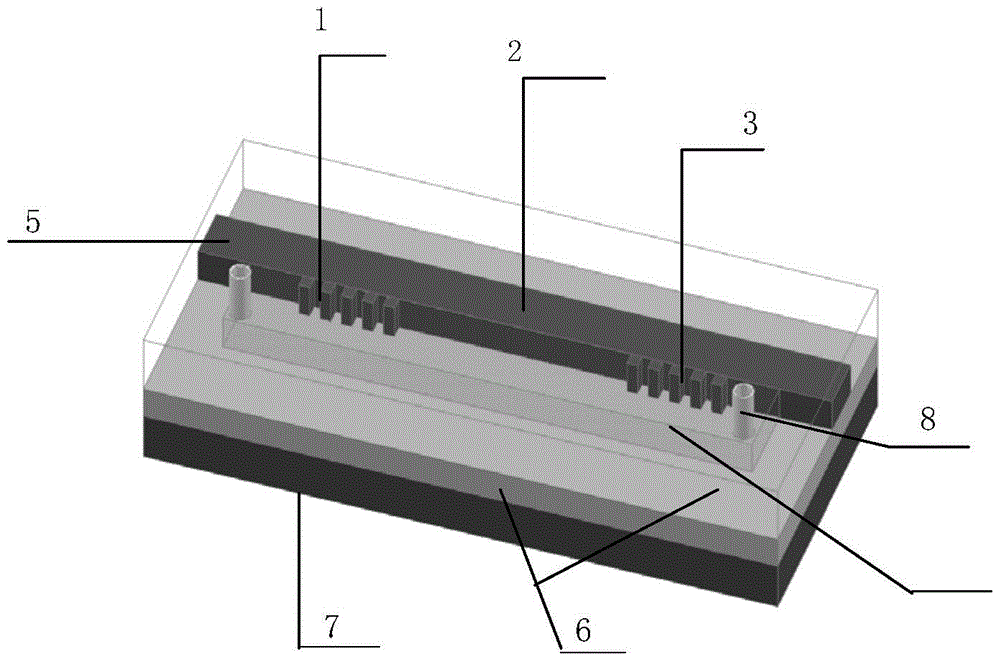
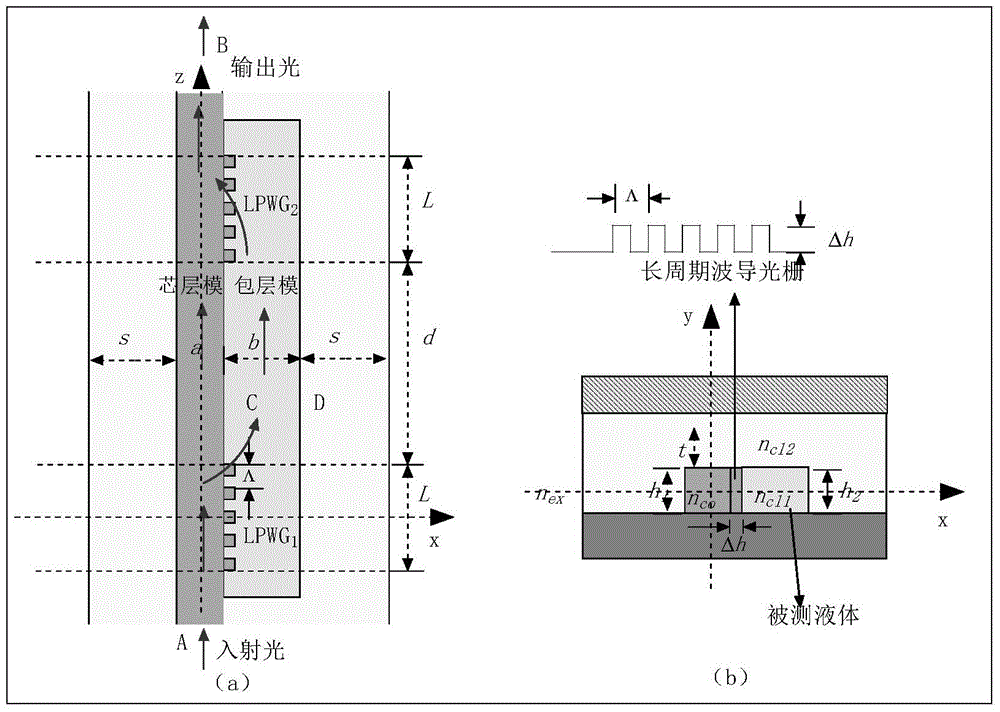
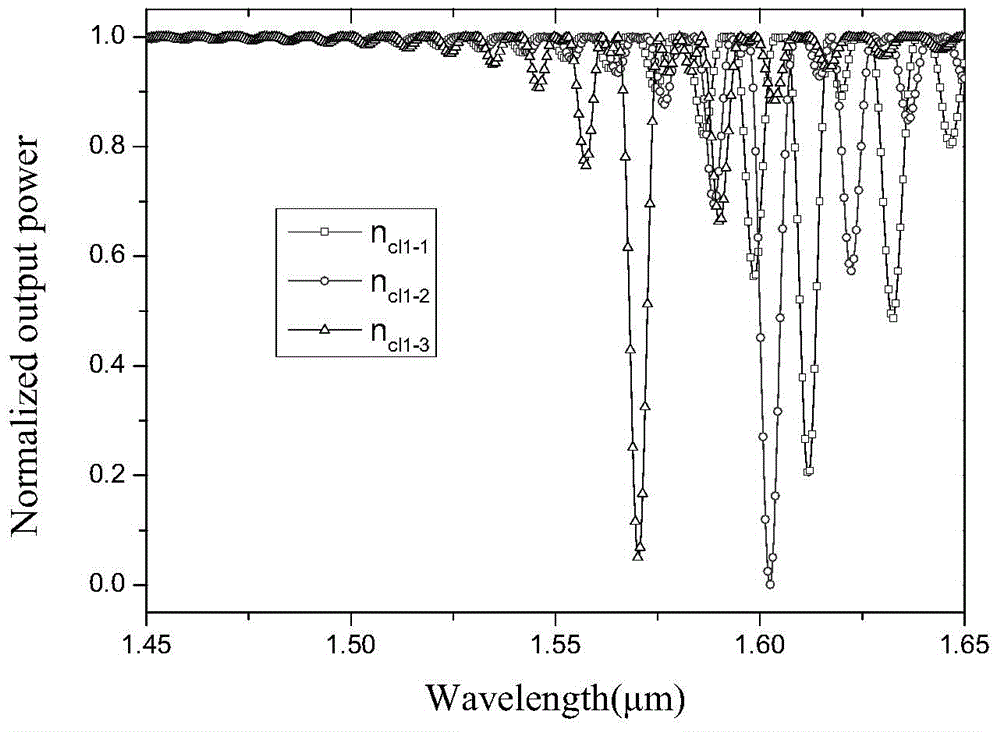
[0039] like figure 1 Shown is the three-dimensional structural diagram of novel polymer LPWG biochemical sensor of the present invention, see figure 1 The three-dimensional structure diagram, the sensor of the present invention is composed of two serial long-period waveguide gratings, namely LPWG1 and LPWG 2 , and the measured liquid as a side cladding composition. The incident light enters the LPWG1 through the first end of the waveguide to couple part of the optical signal into the cladding layer 4 to be tested, and the light in the core layer enters the LPWG through a straight waveguide 2 2 . The core layer is made of polymer material, and the other cladding layers except the tested cladding layer 4 are made of silicon dioxide. The whole s...
PUM
 Login to View More
 Abstract
Description
Claims
Application Information
 Login to View More