
Actinic radiation-initiated epoxy adhesive and articles made therefrom
An adhesive and initiator technology, applied in the direction of epoxy resin glue, adhesive type, non-polymer adhesive additives, etc., can solve the problems of long time, short open time, poor storage period and so on
- Summary
- Abstract
- Description
- Claims
- Application Information
AI Technical Summary
Problems solved by technology
Method used
Image

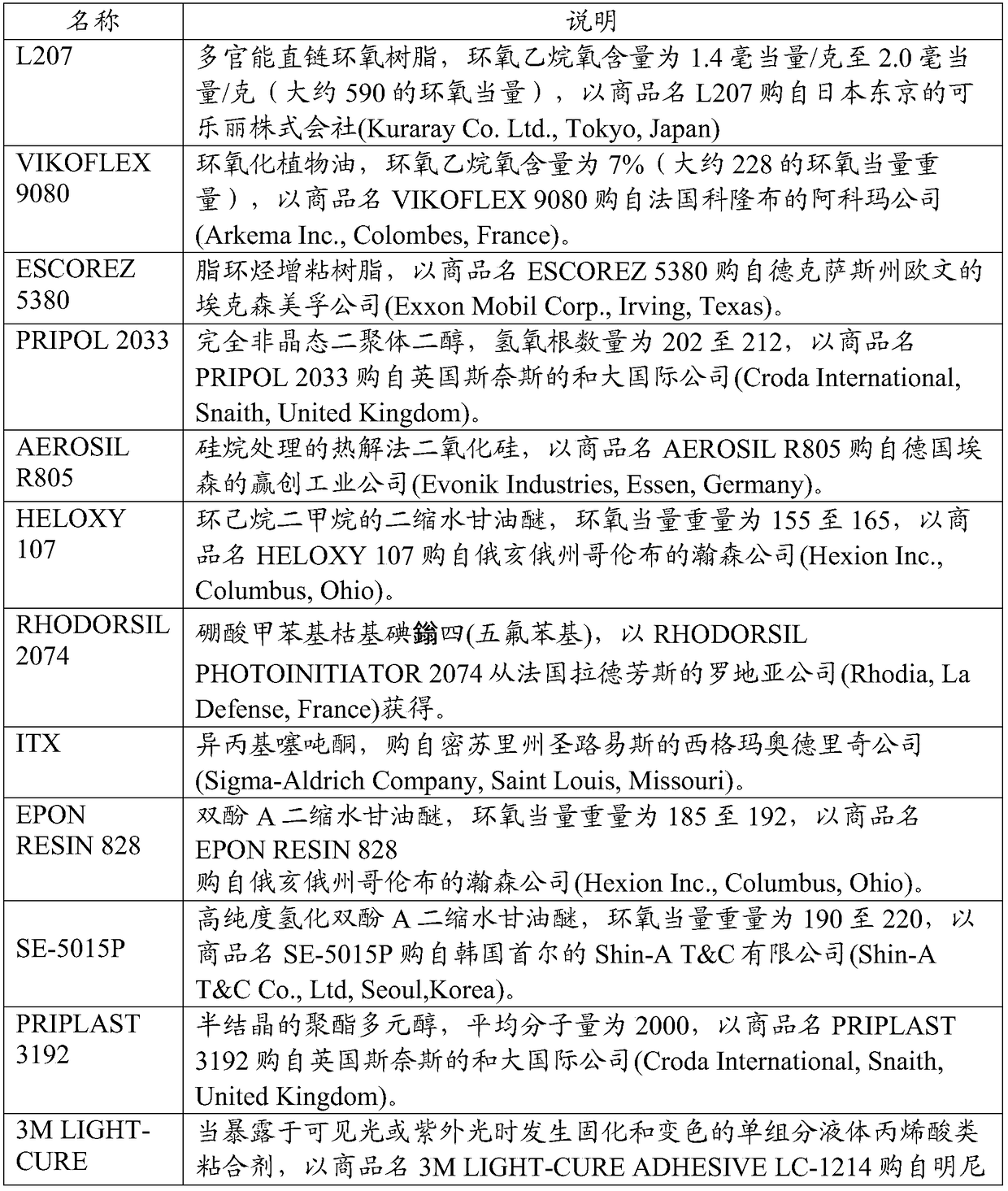
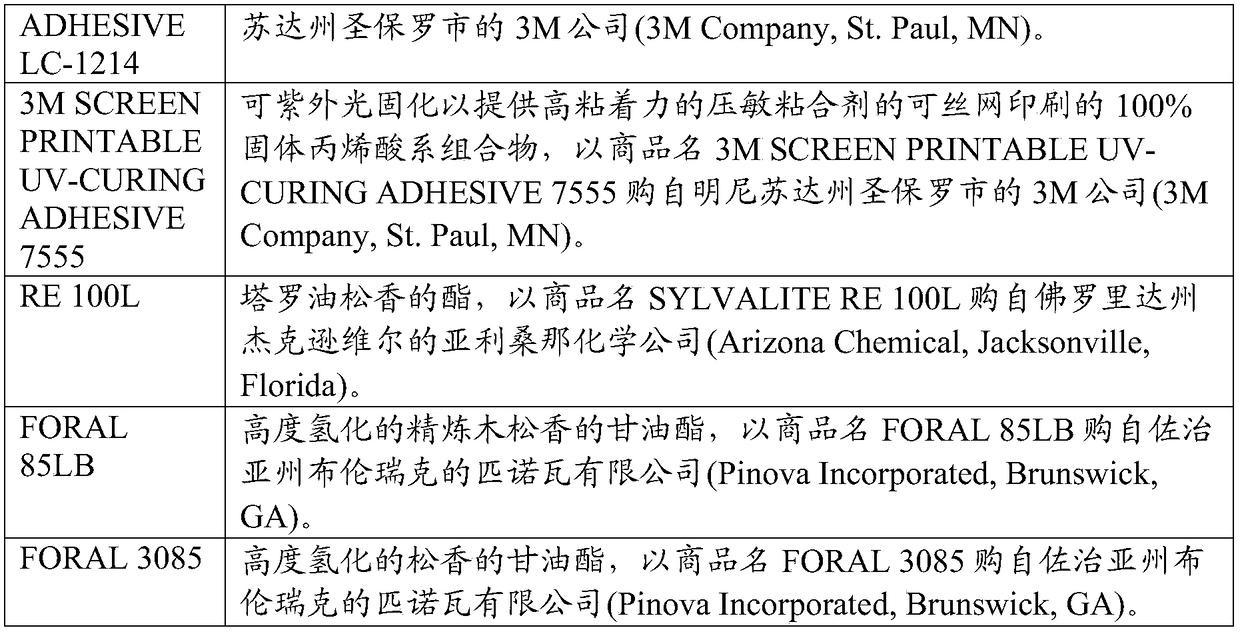
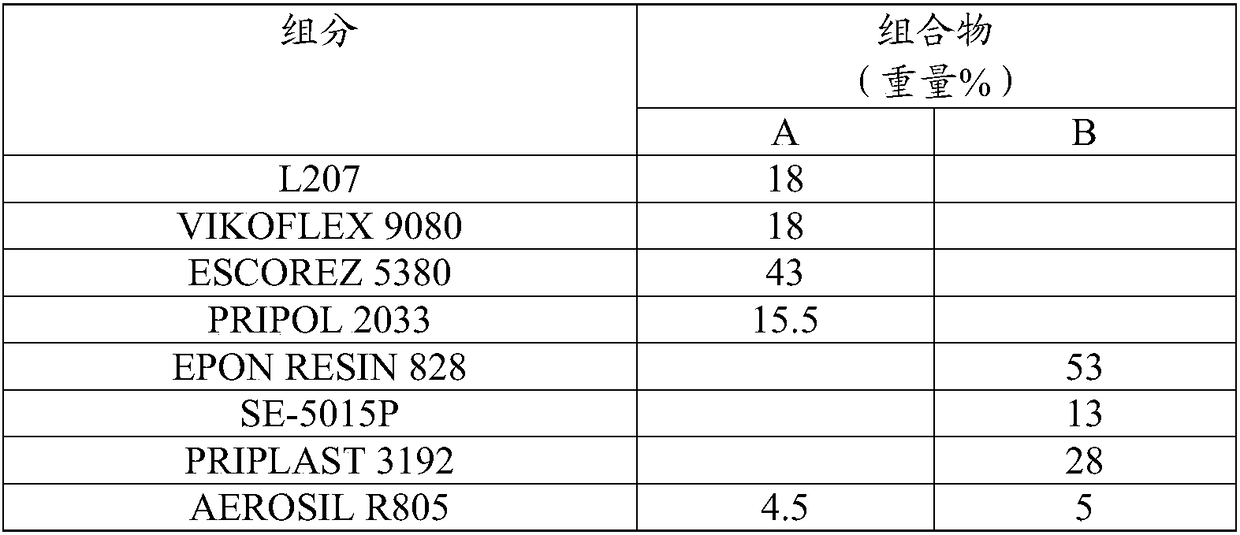
Examples
Embodiment 1-6 and comparative example A-F
[0024] For each of the following examples and comparative examples, an approximately 2 mm thick bead of adhesive was dispensed in a 1 inch wide bead using an EFD 1500XL DISPENSER from Nordson EFD, Westlake, Ohio. Measure the entire width of a clear polycarbonate (PC) plastic coupon 4 inches long. Immediately after dispensing, the coupons were placed on the conveyor of the FUSION UV CURING SYSTEM available from Fusion UV Systems Inc., Gaithersburg, Maryland, using a D-type bulb The low intensity mercury vapor lamps expose them to various levels of UV-A energy. Total UV-A (320 nm to 390 nm) energy was measured using a UV POWER PUCK II radiometer from EIT Inc., Sterling, Virginia. The total energy exposure is varied by adjusting the conveyor speed. Immediately after 1 second of UV exposure, a 1-inch by 4-inch PC coupon was placed on top of the bead-coated surface of the first coupon, and was obtained using Eunsung Industrial Co., Ltd., Ansan, Korea. Industrial Co., Ltd., Ansan...
Embodiment 7-14 and comparative example G-N
[0029]Examples 7-14 and Comparative Examples G-N were prepared as described in Examples 1-6 and Comparative Examples A-F, with the following modifications. UV-A exposure was fixed at 2.5 J / cm2 and the time elapsed before coupon bonding was varied. The results are reported in Table 4.
[0030] Table 4
[0031]
Embodiment 15-22 and comparative example O-V
[0033] Examples 15-22 and Comparative Examples O-V were prepared as described in Examples 1-6 and Comparative Examples A-F, with the following modifications. UV-A exposure was fixed at 1.0 J / cm2 and the time elapsed before coupon bonding was varied. The results are reported in Table 5.
[0034] table 5
[0035]
PUM
 Login to View More
 Abstract
Description
Claims
Application Information
 Login to View More