
A depth convolution neural network image denoising method based on Inception model
A deep convolution, neural network technology, applied in the field of image processing, can solve the problems of denoising performance, difficulty, and denoising effect.
- Summary
- Abstract
- Description
- Claims
- Application Information
AI Technical Summary
Problems solved by technology
Method used
Image

Examples
no. 1 example
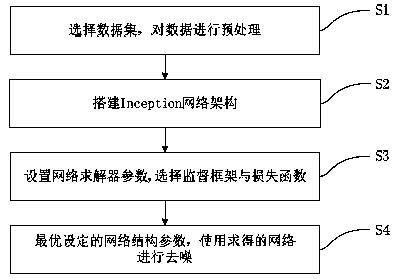
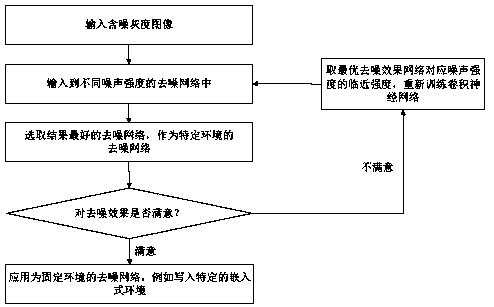
[0044] Such as Figure 1 to Figure 4 Shown is the first embodiment of the image denoising method based on the deep convolutional neural network model of the Inception model of the present invention, comprising the following steps:
[0045] S1. Select a data set in the source image set, and preprocess the data in the data set to obtain a noisy grayscale image used as input;
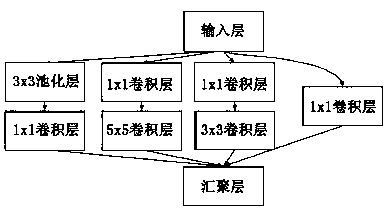
[0046] S2. Build and train a deep convolutional neural network with an Inception model layer, use the noisy grayscale image in step S1 as input, use Gaussian white noise to simulate real noise, and denoise through the deep convolutional neural network, the output is denoising image;
[0047] S3. Input the denoised image and the actual clear image in step S2 into the supervisory framework, obtain the gap between the denoised image and the actual clear image, and optimize the deep convolutional neural network in step S2 through a reverse iterative algorithm to reduce small loss function;
[0048] S4. Inpu...
PUM
 Login to View More
 Abstract
Description
Claims
Application Information
 Login to View More