

Preparation method of borosilicate glass ceramic solidified body containing uranpyrochlore
A borosilicate glass and ceramic solidification technology, which is applied in the field of radioactive waste treatment, can solve the problems of limited containment capacity, limited proportion of ceramic phase, and the inability of the solidified body to handle high-level radioactive waste to the greatest extent, so as to increase the containment capacity, The effect of uniform distribution of ceramic phase and compact structure
Patent Information
- Authority / Receiving Office
- CN · China
- Patent Type
- Applications(China)
- Current Assignee / Owner
- Publication Date
- 2019-05-17
- Estimated Expiration
- Not applicable · inactive patent
Smart Images
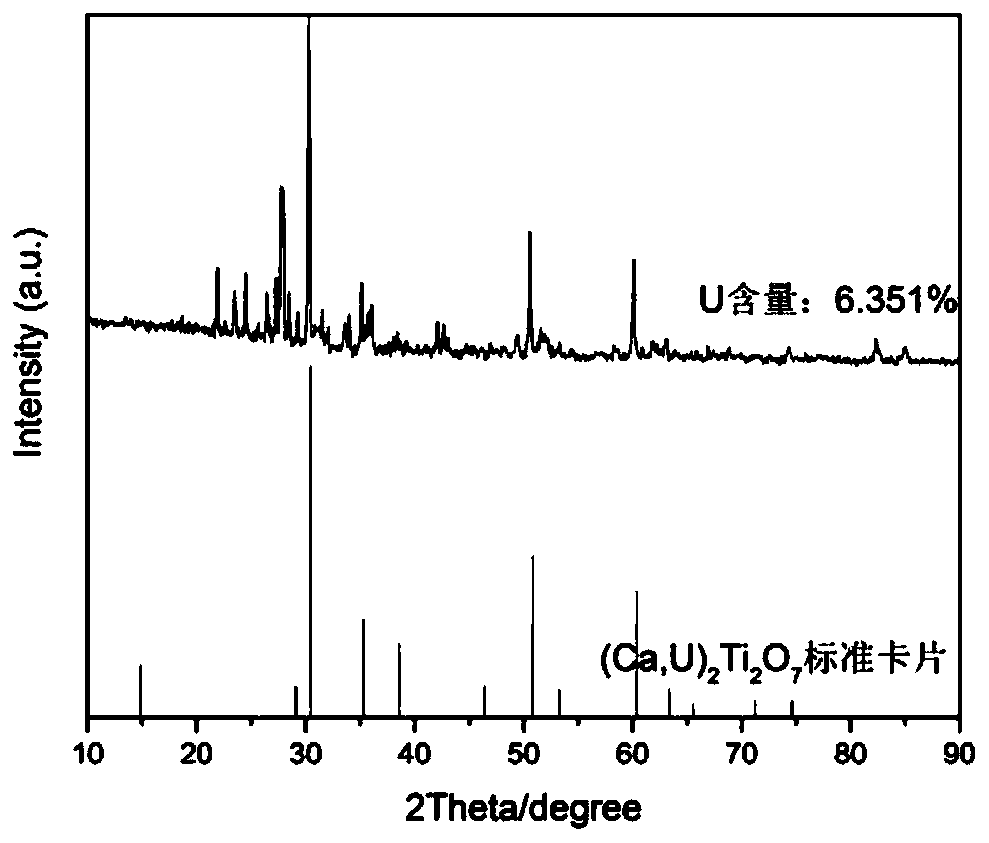
Figure 1 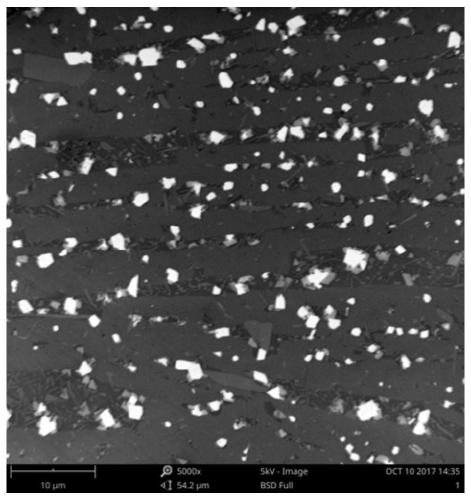
Figure 2 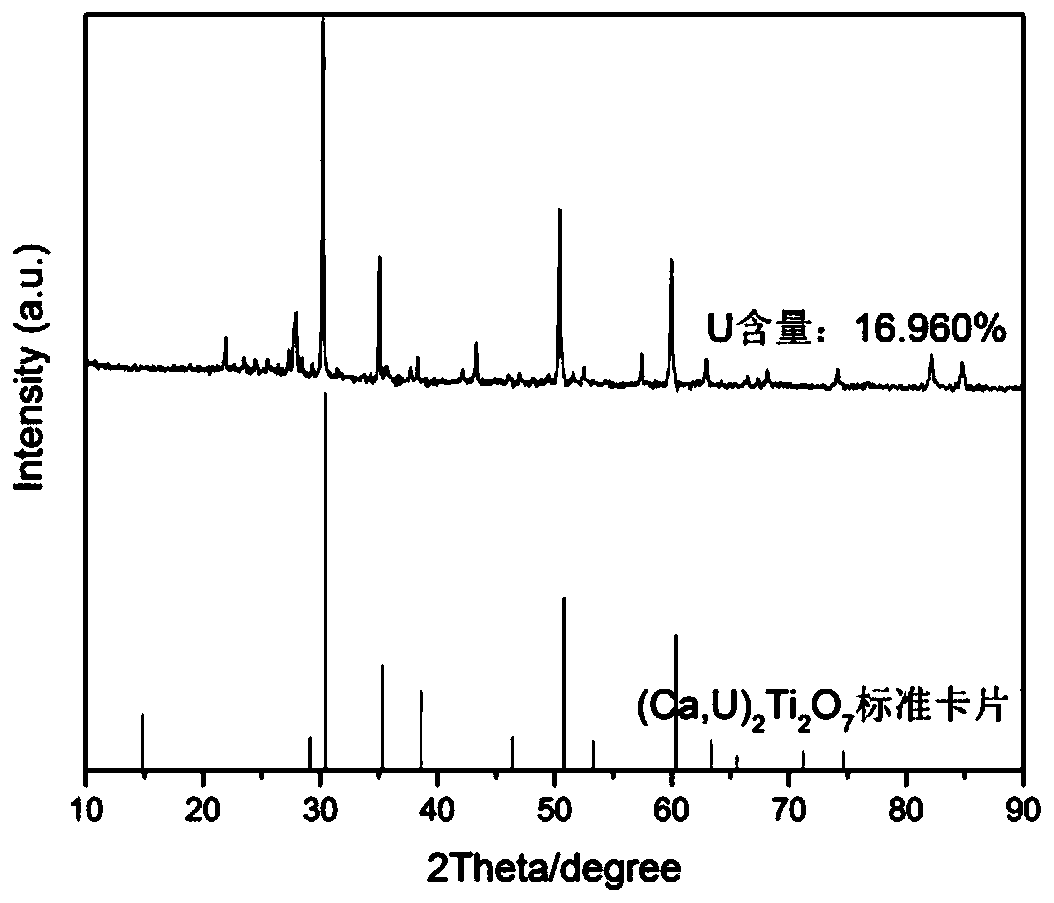
Figure 3
Abstract
Description
technical field
[0001] The invention relates to the technical field of radioactive waste treatment, in particular to a method for preparing a solidified body of borosilicate glass ceramics containing uranium pyrochlore. Background technique
[0002] In the reprocessing process of spent fuel with co-decontamination of uranium and plutonium, high-level radioactive wastes (High-Level Radioactive Wastes, HLWs) will be produced. HLWs are highly radioactive, highly toxic, and have a high heating rate. If HLWs are released into the environment, it will Great harm to the environment.
[0003] In the prior art, there are ways to vitrify HLLW (high-level radioactive waste) or to solidify HLLW ceramics to process HLLW, but HLLW vitrification has low containment capacity for actinide nuclides (≤0.4wt.%) and poor long-term stability (Easy phase separation and water-soluble yellow phase) and other problems, resulting in the development of large-scale production of HLLW vitrification; HLL...
Examples
Embodiment 1
[0035] A method for preparing a borosilicate glass ceramic solidified body containing uranium pyrochlore in this embodiment, step 1, weighing the following components by weight percentage: SiO 2 20.5%, Al 2 o 3 4%, Na 2 CO 3 9%, B 2 o 3 4%, CaF 2 17.5%, CaO4%, U 3 o 8 25.5%, TiO 2 15%;
[0036] Step 2. Pretreatment of glass-ceramic raw materials
[0037] SiO 2 、Al2 o 3 、Na 2 CO 3 , B 2 o 3 , CaF 2 Wet-mix and dry the six components of CaO to obtain a uniformly mixed first mixture, and U 3 o 8 and TiO 2 The two components were wet-mixed and dried to obtain a uniformly mixed second mixture. The first mixture and the second mixture were respectively sintered at 650° C. for 1 h under an argon atmosphere, and then the sintered first mixture and The second mixture is ball milled for 3 hours respectively, the first mixture after ball milling is the first glass-ceramic raw material, and the second mixture after ball-milling is the second glass-ceramic raw material...
Embodiment 2
[0048] A method for preparing a borosilicate glass ceramic solidified body containing uranium pyrochlore in this embodiment, step 1, weighing the following components by weight percentage: SiO 2 20%, Al 2 o 3 2%, Na 2 CO 3 8%, B 2 o 3 3%, CaF 2 17%, CaO3%, U 3 o 8 30%, TiO 2 16%;
[0049] Step 2. Pretreatment of glass-ceramic raw materials
[0050] SiO 2 、Al 2 o 3 、Na 2 CO 3 , B 2 o 3 , CaF 2 Wet-mix and dry the six components of CaO to obtain a uniformly mixed first mixture, and U 3 o 8 and TiO 2 The two components were wet mixed and dried to obtain a uniformly mixed second mixture. The first mixture and the second mixture were respectively sintered at 750° C. for 3 hours under an argon atmosphere, and then the sintered first mixture and The second mixture is ball milled for 4 hours respectively, the first mixture after ball milling is the first glass-ceramic raw material, and the second mixture after ball-milling is the second glass-ceramic raw material...
Embodiment 3
[0066] A method for preparing a borosilicate glass ceramic solidified body containing uranium pyrochlore in this embodiment, step 1, weighing the following components by weight percentage: SiO 2 23.5%, Al 2 o 3 2.1%, Na 2 CO 3 8.1%, B 2 o 3 3.1%, CaF 2 20%, CaO3.1%, U 3 o 8 20.1%, TiO 2 20%;
[0067] Step 2. Pretreatment of glass-ceramic raw materials
[0068] SiO 2 、Al 2 o 3 、Na 2 CO 3 , B 2 o 3 , CaF 2 Wet-mix and dry the six components of CaO to obtain a uniformly mixed first mixture, and U 3 o 8 and TiO 2 The two components were wet-mixed and dried to obtain a uniformly mixed second mixture. The first mixture and the second mixture were respectively sintered at 700° C. for 2 hours under an argon atmosphere, and then the sintered first mixture and The second mixture is ball milled for 3.5 hours respectively, the first mixture after ball milling is the first glass-ceramic raw material, and the second mixture after ball-milling is the second glass-cerami...