Congestion control method and system based on deep reinforcement learning
What is AI technical title?
AI technical title is built by Patsnap AI team. It summarizes the technical point description of the patent document.
A technology of congestion control and reinforcement learning, which is applied in the computer field, can solve problems such as poor control effects, achieve the effects of reducing network congestion, optimizing network performance, and solving poor control effects
Active Publication Date: 2019-12-17
WUHAN UNIV
View PDF8 Cites 45 Cited by
Summary
Abstract
Description
Claims
Application Information
AI Technical Summary
This helps you quickly interpret patents by identifying the three key elements:
Problems solved by technology
Method used
Benefits of technology
Problems solved by technology
[0007] In view of this, the present invention provides a congestion control method and system based on deep reinforcement learning to solve or at least partially solve the technical problem of poor control effect existing in the methods in the prior art
Method used
the structure of the environmentally friendly knitted fabric provided by the present invention; figure 2 Flow chart of the yarn wrapping machine for environmentally friendly knitted fabrics and storage devices; image 3 Is the parameter map of the yarn covering machine
View more
Image
Smart Image Click on the blue labels to locate them in the text.
Viewing Examples
Smart Image
Click on the blue label to locate the original text in one second.
Reading with bidirectional positioning of images and text.
Smart Image
Examples
Experimental program
Comparison scheme
Effect test
Embodiment 1
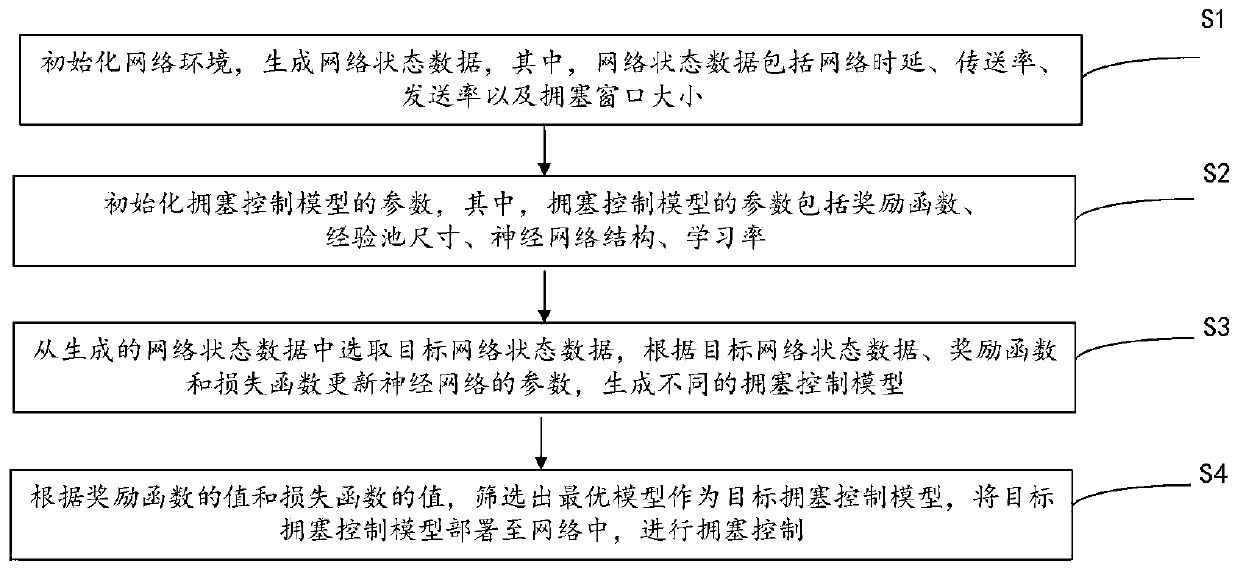
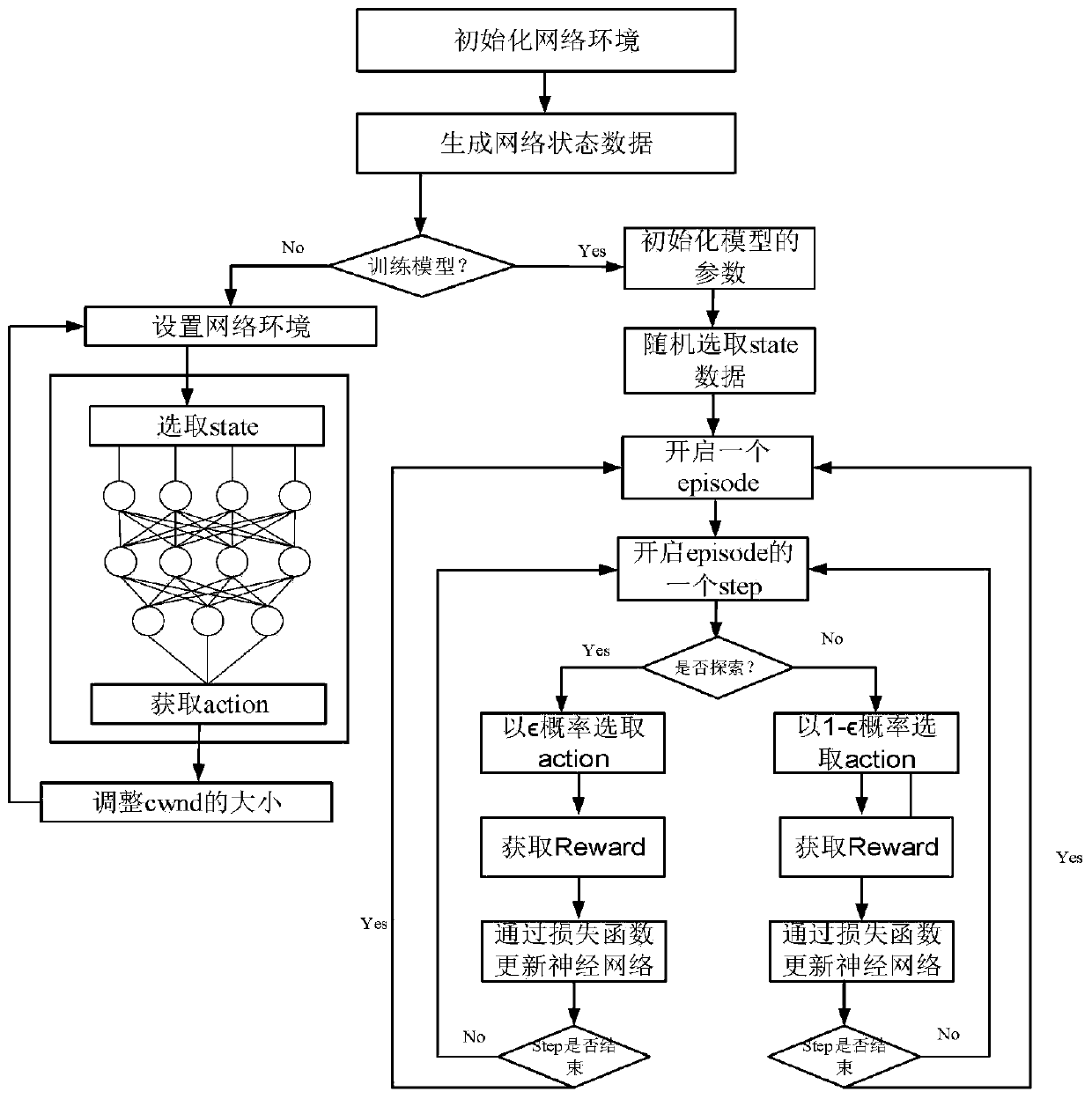
[0050] This embodiment provides a congestion control method based on deep reinforcement learning, please refer to figure 1 , the method includes:
[0052] Specifically, step S1 is to initialize the parameters of the computer network, and then generate network status data.
[0053] During specific implementation, step S1 specifically includes:
[0054] Step S1.1: Establish a connection between the two communicating parties;
[0055] Step S1.2: According to the data sent by the communication parties through the established connection, calculate the network delay, transmission rate, transmission rate and congestion window size.
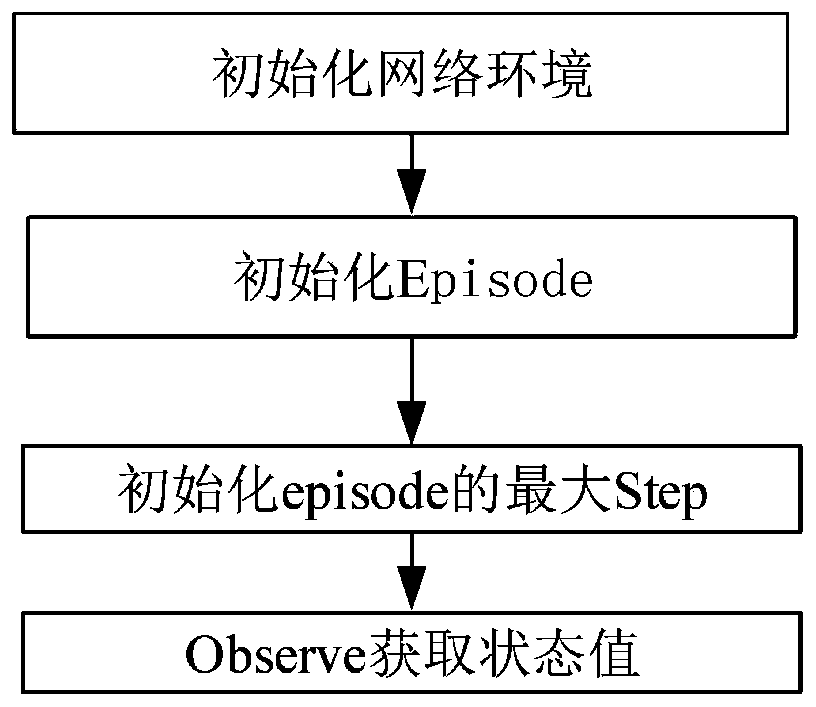
[0056] Specifically, before the program starts, it is necessary to initialize the network environment, establish a connection between the two par...
Embodiment 2
[0110] Based on the same inventive concept, this embodiment provides a congestion control system based on deep reinforcement learning, please refer to Figure 6 , the system consists of:
[0111]The parameter initialization module 201 is used to initialize the network environment and generate network state data, wherein the network state data includes network delay, transmission rate, transmission rate and congestion window size;
[0112] The environment initialization module 202 is used to initialize the parameters of the congestion control model, wherein the parameters of the congestion control model include a reward function, an experience pool size, a neural network structure, and a learning rate;
[0113] The model generating module 203 is used to select the target network state data from the generated network state data, update the parameters of the neural network according to the target network state data, reward function and loss function, and generate different conges...
the structure of the environmentally friendly knitted fabric provided by the present invention; figure 2 Flow chart of the yarn wrapping machine for environmentally friendly knitted fabrics and storage devices; image 3 Is the parameter map of the yarn covering machine
Login to View More
PUM
Login to View More
Abstract
The invention discloses a congestion control method and system based on deep reinforcement learning. The congestion control method includes: firstly, initializing the environment and model parametersof a network; and training a congestion control model by utilizing the collected current window, the throughput, the time delay, the data transmission rate and the like in the network, selecting the congestion control model with the minimum model loss function value and the maximum reward function value according to a training result, and deploying the model into the network to perform congestioncontrol. According to the method, the size of the congestion window is dynamically adjusted according to the current network throughput, round-trip time delay and data packet loss rate, so that the data transmission rate is controlled, the network throughput is improved, the data transmissiondelay and the data packet loss rate are reduced, the network congestion is reduced, and the aim of optimizing the network performance is fulfilled.
Description
technical field [0001] The invention relates to the field of computer technology, in particular to a congestion control method and system based on deep reinforcement learning. Background technique [0002] The rapid development of next-generation Internet technology and the rapid increase of Internet applications bring convenience to people's life and improve the quality of experience, but also put forward new requirements for network performance, especially in the aspect of network congestion control. Network indicators such as the number of packets retransmitted over time, the average packet delay, and the percentage of discarded packets, etc., continuously adjust the data sending rate, reduce the occurrence of network congestion, make effective use of network resources, improve network performance, and provide users with High-quality service experience. Computer network congestion control, as an important method to improve network throughput, reduce data transmission del...
Claims
the structure of the environmentally friendly knitted fabric provided by the present invention; figure 2 Flow chart of the yarn wrapping machine for environmentally friendly knitted fabrics and storage devices; image 3 Is the parameter map of the yarn covering machine
Login to View More
Application Information
Patent Timeline
Application Date:The date an application was filed.
Publication Date:The date a patent or application was officially published.
First Publication Date:The earliest publication date of a patent with the same application number.
Issue Date:Publication date of the patent grant document.
PCT Entry Date:The Entry date of PCT National Phase.
Estimated Expiry Date:The statutory expiry date of a patent right according to the Patent Law, and it is the longest term of protection that the patent right can achieve without the termination of the patent right due to other reasons(Term extension factor has been taken into account ).
Invalid Date:Actual expiry date is based on effective date or publication date of legal transaction data of invalid patent.



 Login to View More
  Login to View More