

Bacillus altitudinis strain and application thereof to rhizoctonia solani
A technology of bacillus uplander and rice sheath blight, applied in the direction of application, bacteria, fungicides, etc., to achieve good control effect
- Summary
- Abstract
- Description
- Claims
- Application Information
AI Technical Summary
Problems solved by technology
Method used
Image


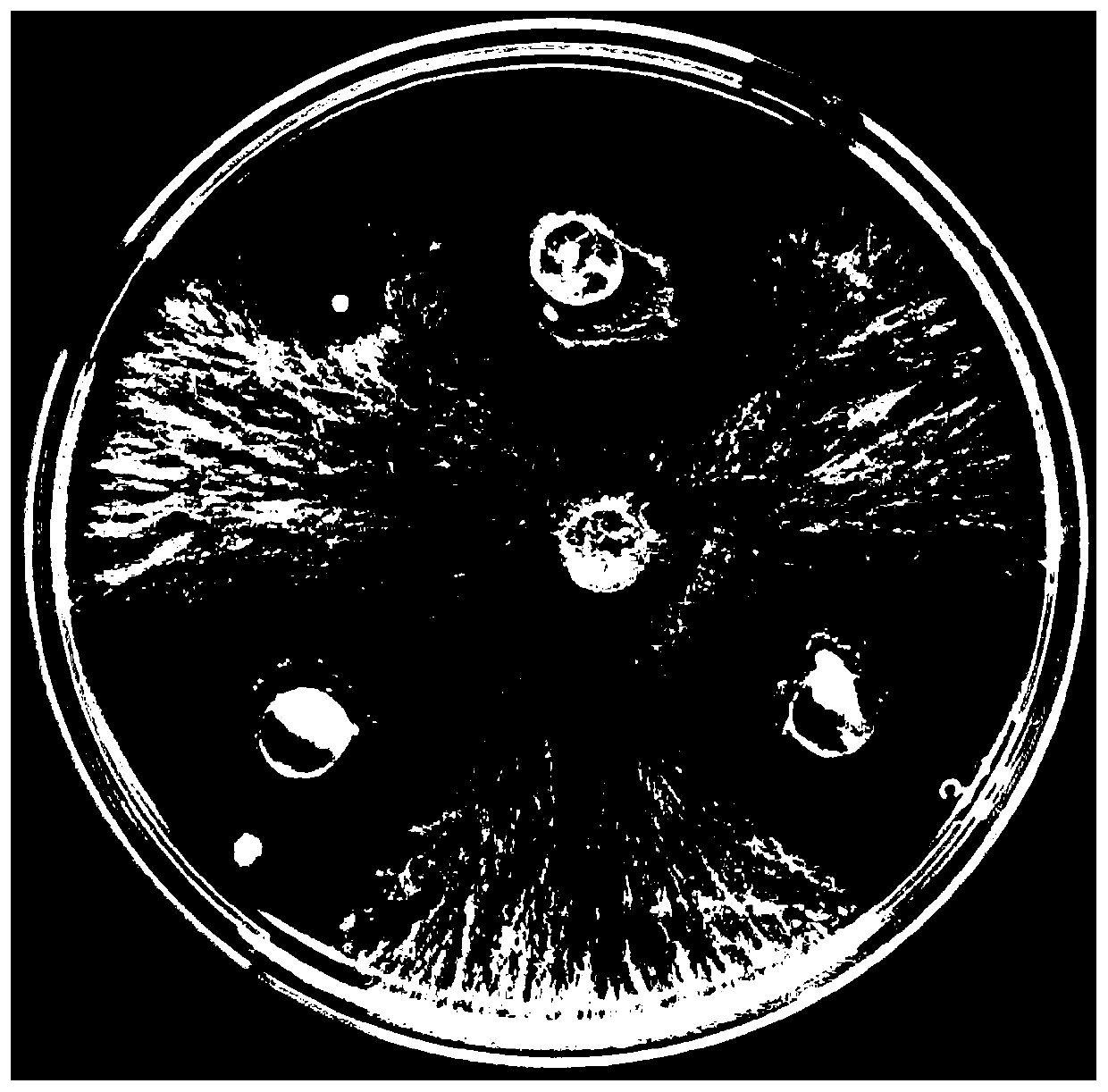

Examples
Embodiment 1
[0029] A strain of Bacillus altitudinis DSQ N-1, the preservation number of which is: CGMCC No. 17236. The preservation date is: January 25, 2019. The depository unit is: General Microbiology Center of China Committee for the Collection of Microbial Cultures. The preservation address is: Institute of Microbiology, Chinese Academy of Sciences, No. 3, Yard 1, Beichen West Road, Chaoyang District, Beijing.
[0030] The screening method of the highland bacillus bacterial strain comprises the following steps:
[0031] Soil samples were taken from paddy fields in the main rice producing areas of various places, and the microbial strains existing in the soil were isolated from the soil samples, and the three-point confrontation culture method was used to conduct confrontation experiments with rice sheath blight strains;
[0032] (1) Pour the culture medium suitable for the growth of pathogenic bacteria on the petri dish;
[0033] (2) put a rice sheath blight fungus bacterium cake ...
PUM
| Property | Measurement | Unit |
|---|---|---|
| Diameter | aaaaa | aaaaa |
Abstract
Description
Claims
Application Information
 Login to View More