Preparation method for graphite phase carbon nitride-doped bismuth molybdate binary photocatalyst with good performance

A technology of graphite phase carbon nitride and photocatalyst, which is applied in the direction of physical/chemical process catalysts, chemical instruments and methods, chemical/physical processes, etc., can solve the problems of high recombination rate of photogenerated holes and electrons in bismuth molybdate, and achieve Reduce the effect of sublimation
CN110721718AInactive Publication Date: 2020-01-24NANCHANG HANGKONG UNIVERSITY

Patent Information

Authority / Receiving Office
CN · China
Patent Type
Applications(China)
Current Assignee / Owner
NANCHANG HANGKONG UNIVERSITY
Publication Date
2020-01-24
Estimated Expiration
Not applicable · inactive patent

Smart Images

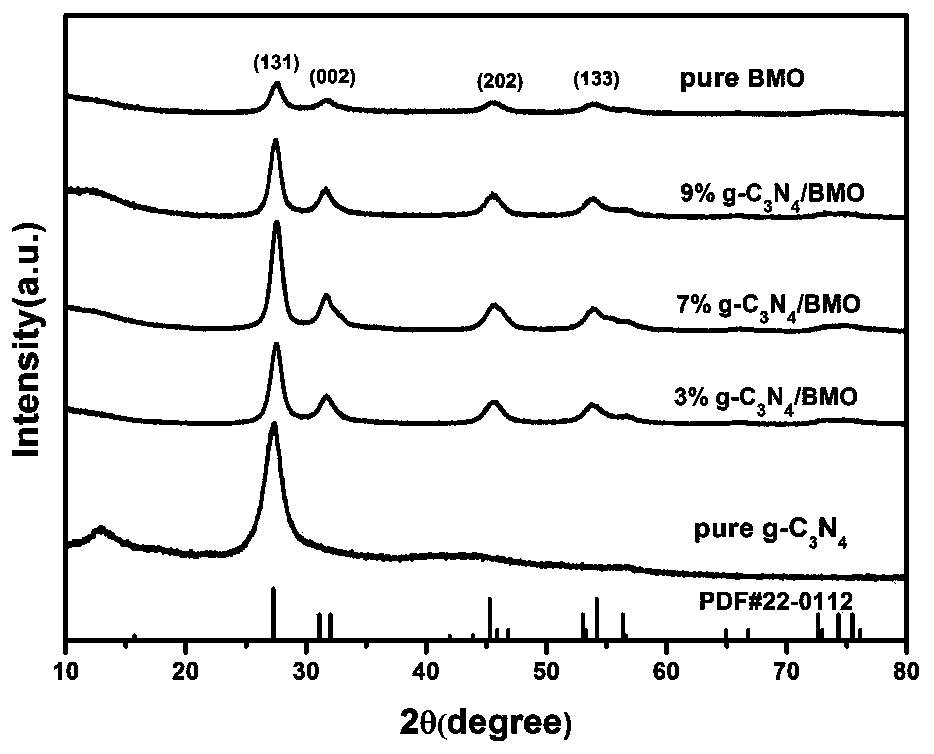
  • Figure 1
    Figure 1
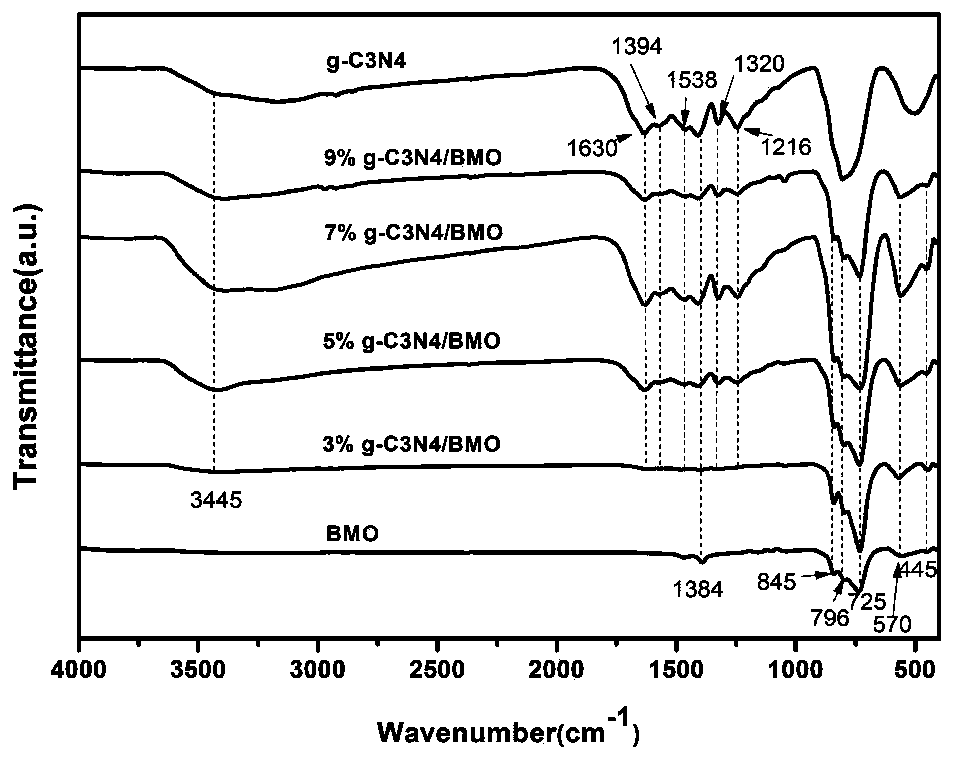
  • Figure 2
    Figure 2
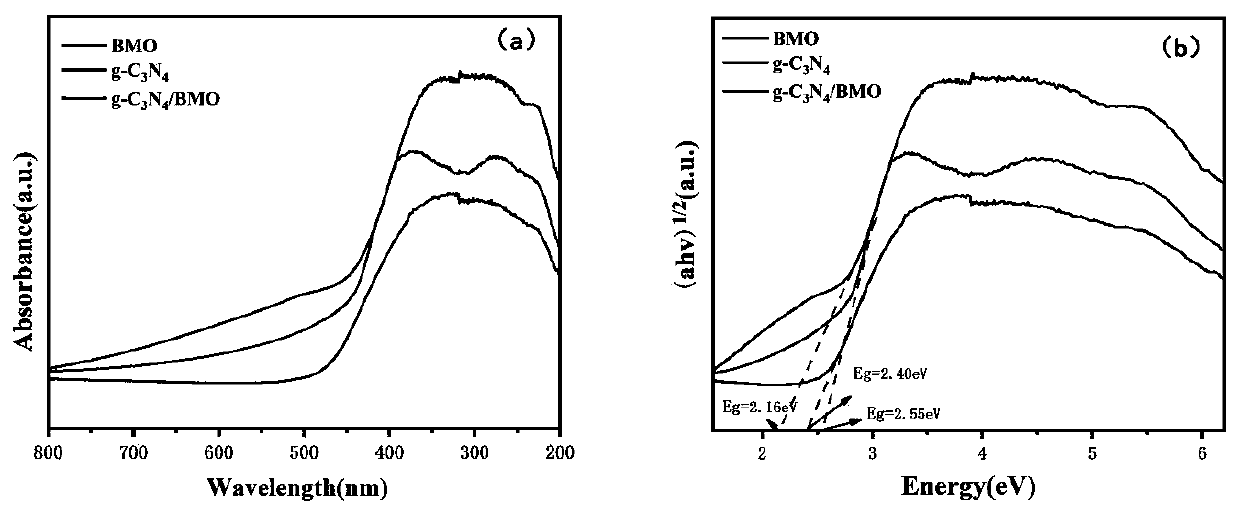
  • Figure 3
    Figure 3
Patent Text Reader

Abstract

The invention discloses a preparation method for a graphite phase carbon nitride-doped bismuth molybdate binary photocatalyst with good performance. The method includes the following steps: step 1, weighing urea and melamine, adding the weighed urea and melamine into deionized water, after the urea and melamine are dissolved, putting the solution in a 100 ml reaction kettle, and performing a reaction at 180 DEG C for 24 h to obtain an A; step 2, cooling the A to room temperature, performing centrifugation, performing drying at 70 DEG C for 10 h, and performing two-stage calcination on the dried A at 520 DEG C for 4 h to obtain g-C3N4; step 3, dissolving bismuth nitrate pentahydrate in dilute nitric acid, adding ammonium molybdate, and performing heating and stirring at 40 DEG C to obtain asolution B; step 4, adding citric acid and the g-C3N4 into the solution B to adjust the pH to 6, adding 1.75 ml of ethylene glycol, performing magnetic stirring at 80 DEG C, transferring the mixed solution to a 100 ml reaction kettle, and performing a reaction at 150 DEG C for 8 h; and step 5, performing cooling to room temperature, performing suction filtration and drying, allowing the dried material to stand for overnight, performing calcination at 400 DEG C for 4 h to obtain the g-C3N4 / BMO. According to the method, doping is performed by using the modified bismuth molybdate, so that the recombination ratio of photogenerated electrons and holes affecting an interface reaction is reduced to improve the photocatalytic efficiency of the composite material.
Need to check novelty before this filing date? Find Prior Art

Description

technical field

[0001] The invention relates to the field of modification and synthesis of photocatalytic nanomaterials, in particular to a method for preparing a graphite-phase carbon nitride-doped bismuth molybdate binary photocatalyst with good performance. Background technique

[0002] There is only one earth for human beings. As a large developing country, my country is developing rapidly in today's world. Countries around the world, including China, have to face major problems such as environmental pollution and resource shortage. The use of photocatalytic technology to solve organic wastewater pollution is a promising technical means. Common photocatalytic materials such as titanium dioxide and zinc oxide have low utilization rate of solar energy and no response to visible light, which limits the development of photocatalysis. Due to the narrow band gap of bismuth molybdate and its photoresponse to sunlight, it is of great significance to study the application of pho...

Claims

the structure of the environmentally friendly knitted fabric provided by the present invention; figure 2 Flow chart of the yarn wrapping machine for environmentally friendly knitted fabrics and storage devices; image 3 Is the parameter map of the yarn covering machine
Login to View More