
Method for typing chronic sinusitis based on digital pathological slide and system thereof
A technology of chronic sinusitis and digital pathology, applied in the field of medical treatment methods, can solve the problems of measurement deviation, lack of accuracy and timeliness of auxiliary diagnosis method and its system, and high time cost, achieve strong social benefits, and improve the pathology of nasal polyps. Diagnostic level, high efficiency
Patent Information
- Authority / Receiving Office
- CN · China
- Current Assignee / Owner
- Publication Date
- 2020-01-24
Smart Images
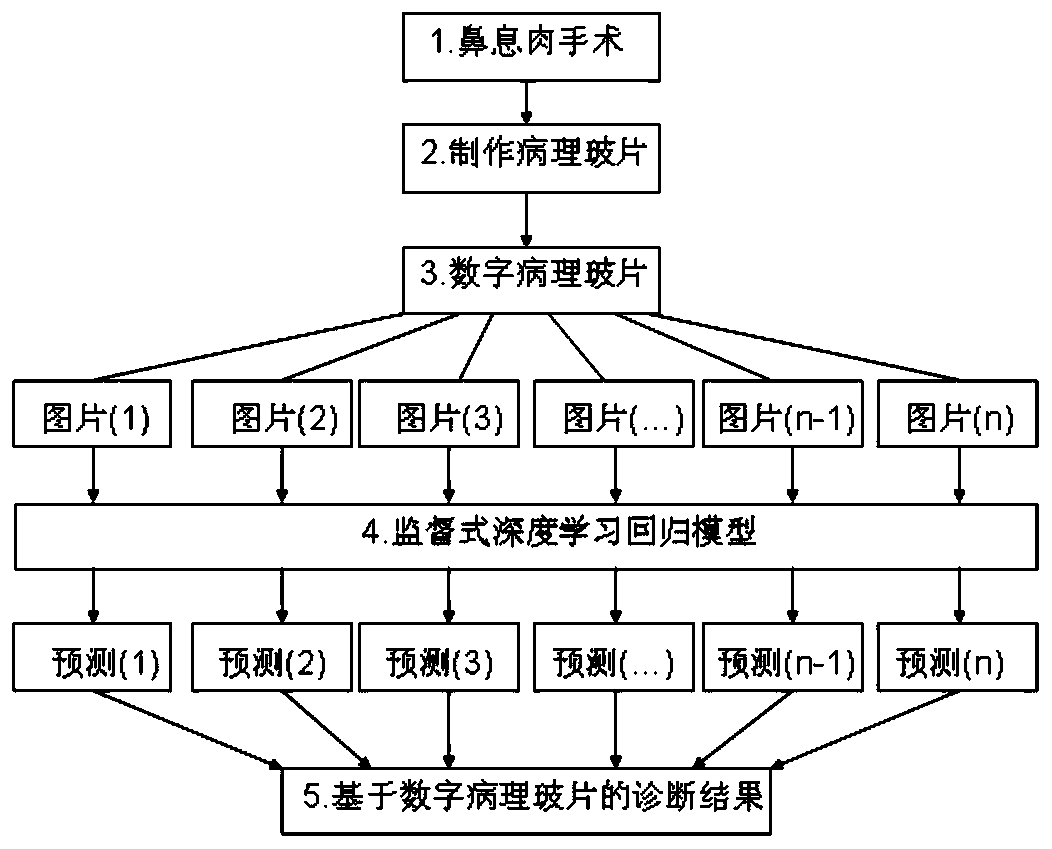
Figure 1 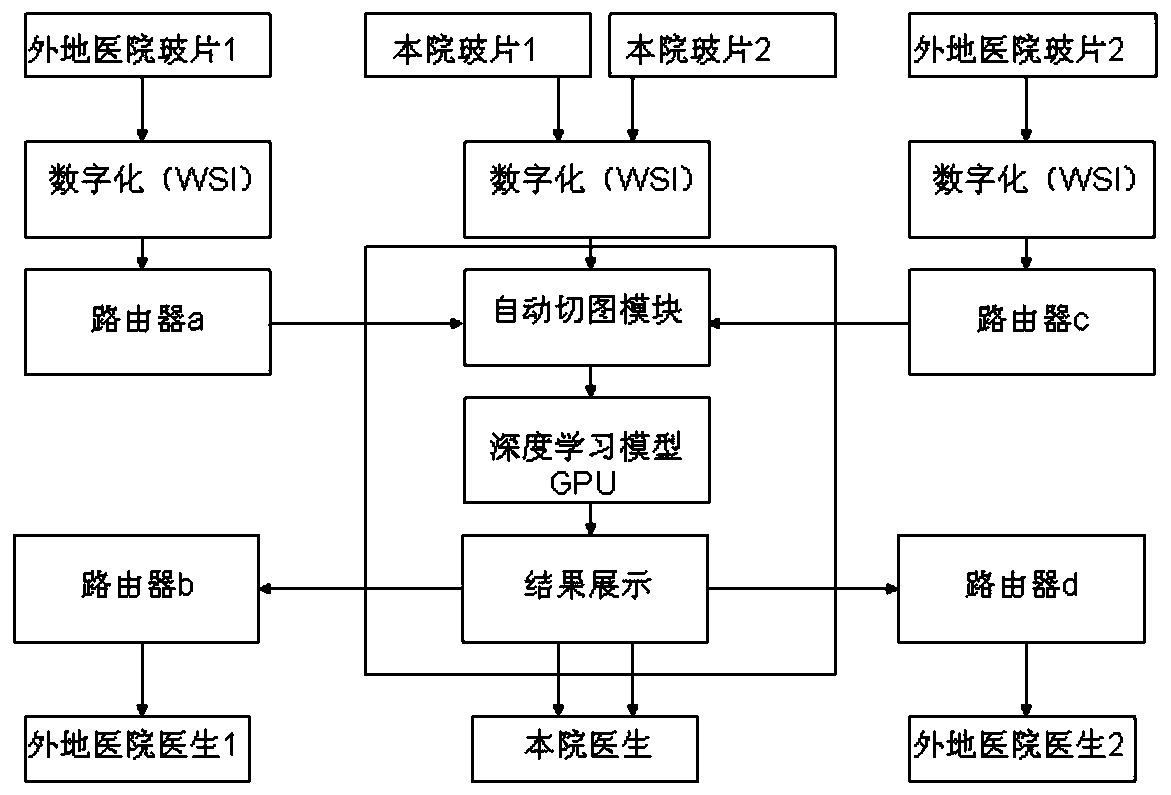
Figure 2 
Figure 3
Abstract
Description
technical field
[0001] The invention relates to the technical field of medical treatment means, in particular to a method for typing chronic sinusitis based on digital pathological slides and a system technology thereof. Background technique
[0002] Chronic rhinosinusitis (CRS) can be clinically divided into two types: without nasal polyps (CRSsNP) and with nasal polyps (CRSwNP). Chronic sinusitis with nasal polyps (CRSwNP) is subdivided into two subtypes: eosinophilic nasal polyps (eCRSwNP) and non-eosinophilic nasal polyps (neCRSwNP). Eosinophilic nasal polyps (eCRSwNP) were sensitive to steroid therapy, whereas non-eosinophilic nasal polyps (neCRSwNP) were sensitive to macrolide antibiotics. Clinically, for how to define eosinophilic nasal polyps (eCRSwNP) and non-eosinophilic nasal polyps (neCRSwNP), pathologists usually randomly take 10 high-power fields of eosinophilic nasal polyp slide specimens from patients The average percentage of granulocytes, and using 10% as...
Examples
Embodiment Construction
[0040] The following will clearly and completely describe the technical solutions in the embodiments of the present invention with reference to the accompanying drawings in the embodiments of the present invention. Obviously, the described embodiments are only some, not all, embodiments of the present invention. Based on the embodiments of the present invention, all other embodiments obtained by persons of ordinary skill in the art without making creative efforts belong to the protection scope of the present invention.
[0041] The present invention carries out the typing method of chronic sinusitis based on the digital pathology slide, mainly comprises the following technical measures:
[0042] (1) The processing of pathological pictures comprises the following steps:
[0043] Image Acquisition:
[0044] 1) Complete scanning of chronic sinusitis nasal polyp slides to obtain digital pathological images;
[0045] 2) Outlining the lesion area with the digitalized pathological ...