

Liquid crystal polyester resin composition and molded article
A technology of resin composition and liquid crystal polyester, applied in the field of liquid crystal polyester resin composition and molded body, can solve the problems such as inability to electrically connect metal terminals and circuits, poor bonding, etc., and achieve the effect of excellent flowability of sheets
- Summary
- Abstract
- Description
- Claims
- Application Information
AI Technical Summary
Problems solved by technology
Method used
Image

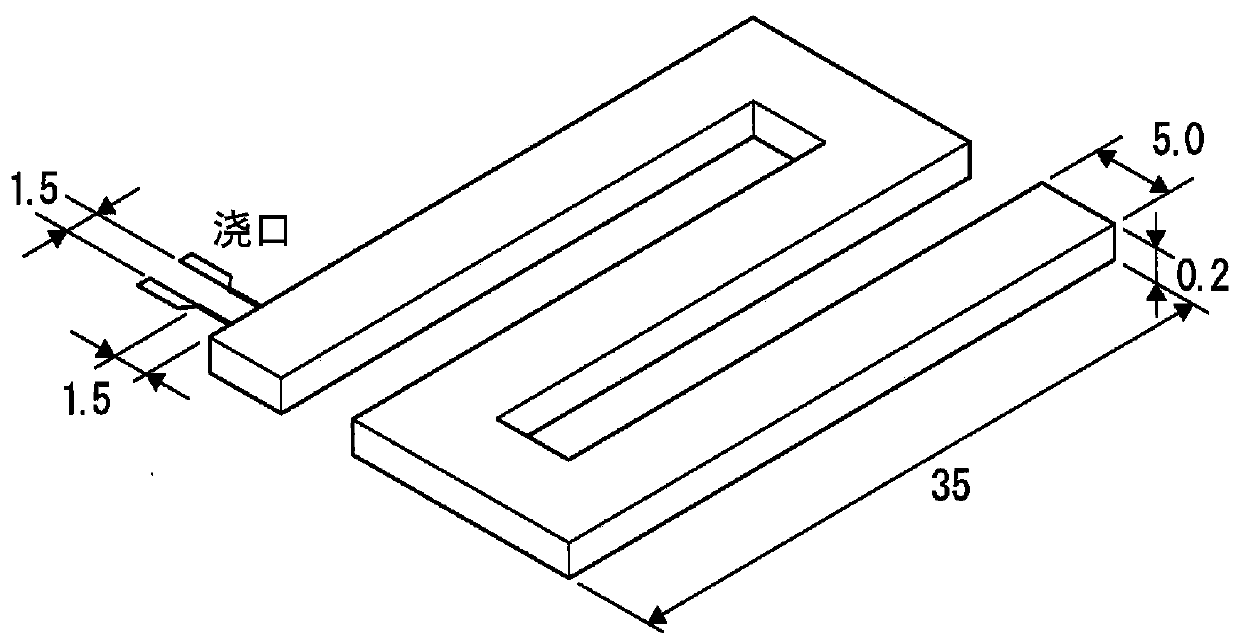
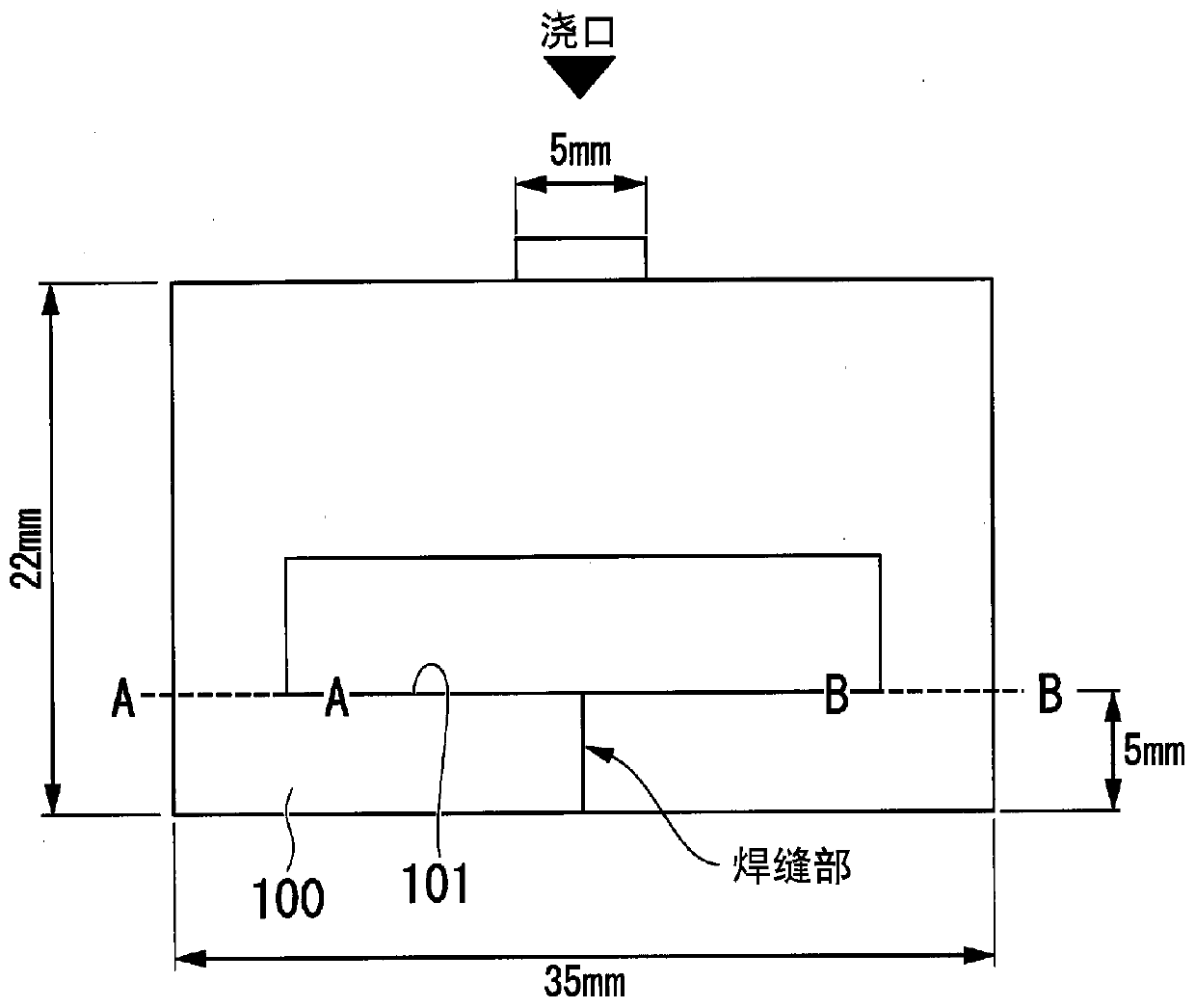

Examples
Embodiment
[0299] Hereinafter, although this invention is demonstrated by an Example, this invention is not limited to these Examples. Each measurement was performed as described below.
[0300]
[0301] Using a flow tester ("CFT-500EX type" manufactured by Shimadzu Corporation), about 2 g of liquid crystal polyester resin is filled into a cylinder equipped with a mold having a nozzle with an inner diameter of 1 mm and a length of 10 mm. Under a load, the liquid crystal polyester resin was melted while raising the temperature at a rate of 4° C. / min, extruded from a nozzle, and the temperature showing a viscosity of 4800 Pa·s (48000 poise) was measured.
[0302]
[0303] First, 5 g of particles made of the liquid crystal polyester resin composition of the present embodiment was heated in a muffle furnace (manufactured by Yamato Scientific Co., Ltd., "FP410") at 600° C. for 4 hours in an air atmosphere to remove the resin. The ashed residue containing the obtained fibrous filler was d...
manufacture example 1
[0305] [production example 1 (liquid crystal polyester resin [A-1])]
[0306] In the reactor equipped with stirring device, torque meter, nitrogen inlet pipe, thermometer and reflux cooler, 994.5g (7.2 moles) of 4-hydroxybenzoic acid, 446.9g (2.4 mol), terephthalic acid 299.0g (1.8 mol), isophthalic acid 99.7g (0.6 mol) and acetic anhydride 1347.6g (13.2 mol), add 1-methylimidazole 0.2g as a catalyst, and the inside of the reactor Fully replace with nitrogen gas.
[0307] Thereafter, the temperature was raised from room temperature to 150° C. over 30 minutes while stirring under a nitrogen gas stream, and the temperature was maintained at the same temperature for 30 minutes under reflux.
[0308] Next, 2.4 g of 1-methylimidazole was added. Thereafter, while distilling off by-produced acetic acid and unreacted acetic anhydride, the temperature was raised from 150° C. to 320° C. over 2 hours and 50 minutes. In addition, after holding at 320° C. for 30 minutes, the contents we...
manufacture example 2
[0310] [production example 2 (liquid crystal polyester resin [A-2])]
[0311] In the reactor equipped with stirring device, torque meter, nitrogen gas introduction pipe, thermometer and reflux cooler, charge 4-hydroxybenzoic acid 994.5g (7.2 mole), 4,4'-dihydroxybiphenyl 446.9g (2.4 moles), terephthalic acid 239.2g (1.44 moles), isophthalic acid 159.5g (0.96 moles) and acetic anhydride 1347.6g (13.2 moles), add 1-methylimidazole 0.2g as a catalyst, and make the reactor Fully replaced with nitrogen gas.
[0312] Thereafter, the temperature was raised from room temperature to 150° C. over 30 minutes while stirring under nitrogen flow, and the temperature was maintained at the same temperature for 1 hour under reflux.
[0313] Next, 0.9 g of 1-methylimidazole was added, and the temperature was raised from 150° C. to 320° C. over 2 hours and 50 minutes while distilling off by-produced acetic acid and unreacted acetic anhydride. After holding at 320° C. for 30 minutes, the content...
PUM
| Property | Measurement | Unit |
|---|---|---|
| Fiber diameter | aaaaa | aaaaa |
| Warpage | aaaaa | aaaaa |
| Fiber length | aaaaa | aaaaa |
Abstract
Description
Claims
Application Information
 Login to View More