This helps you quickly interpret patents by identifying the three key elements:
Problems solved by technology
Method used
Benefits of technology
Problems solved by technology
At present, Bacillus coagulans has been used in foods with low water content, such as biscuits, candies, etc., but due to the limitations of the production process, etc., research on the use of Bacillus coagulans in beverages with a long shelf life has not been carried out
Method used
the structure of the environmentally friendly knitted fabric provided by the present invention; figure 2 Flow chart of the yarn wrapping machine for environmentally friendly knitted fabrics and storage devices; image 3 Is the parameter map of the yarn covering machine
View more
Image
Smart Image Click on the blue labels to locate them in the text.
Viewing Examples
Smart Image
Click on the blue label to locate the original text in one second.
Reading with bidirectional positioning of images and text.
[0035] 2.1. Sterilize the environmentally-friendly long-life yogurt at 75°C for 25s.
[0036] 2.2. Disperse Bacillus coagulans in sterile water (the ratio of bacteriaraw material to water is 1:5), and pasteurize the solution at 75° C. for 25 s.
[0037] 2.3. The aseptic yogurt obtained in step 2.1 and the bacillus coagulans solution obtained in step 2.2 are mixed online, and aseptically sent into canned packaging to obtain a finished yogurt containing bacillus coagulans.
[0038] 3. Results
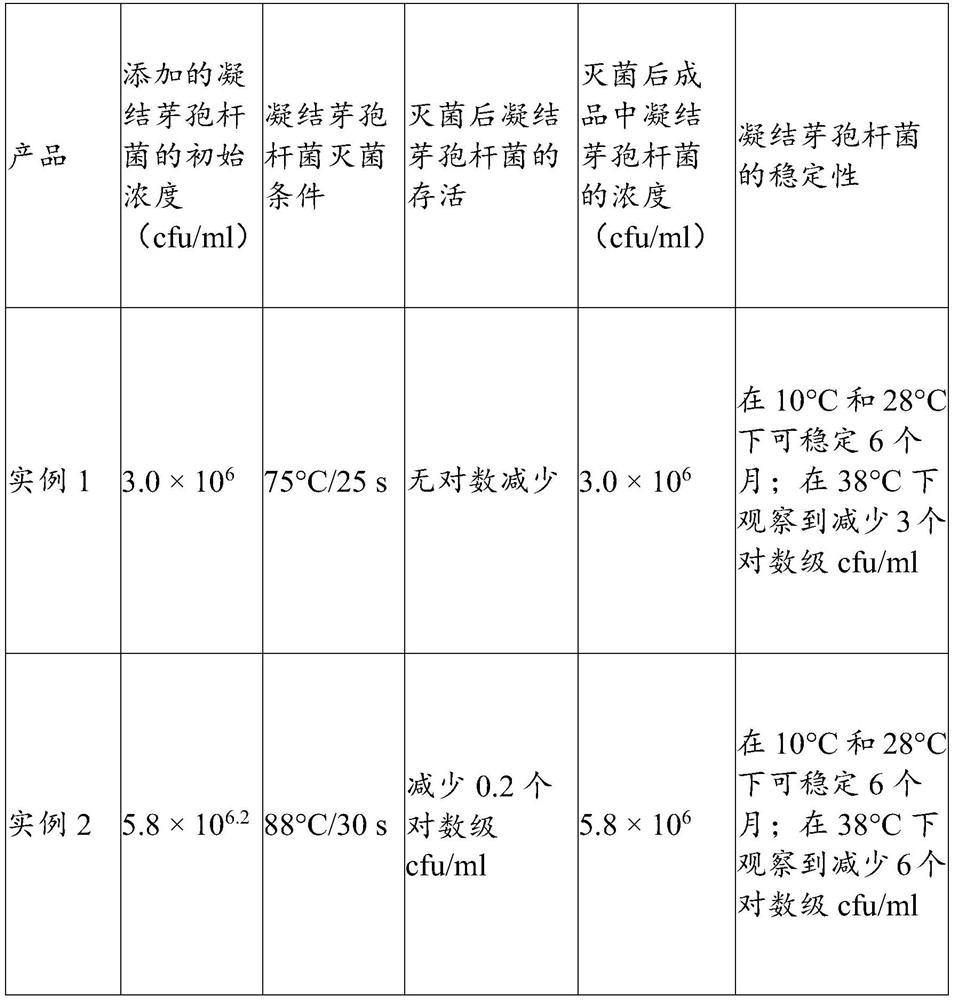
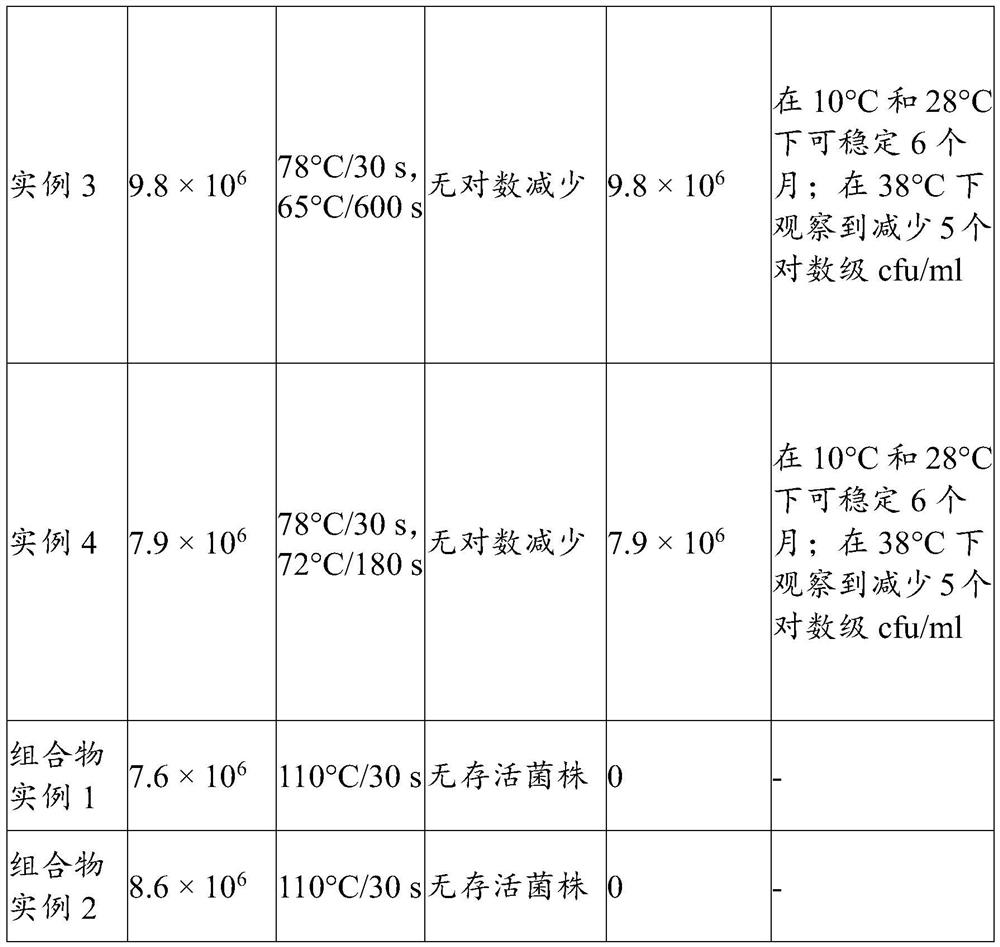
[0039] Since the long shelf-life yogurt itself contains only a small amount of microorganisms, it can be completely sterilized at 75°C for 25s. The long-life yogurt containing Bacillus coagulans produced by the methods described herein exhibits a pleasing texture and mouthfeel. Testing showed no log reduction in Bacillus coagulans counts for the final pro...
[0044] 2.1. Prepare a yogurt drink and sterilize it at a temperature of 110°C for 30s.
[0045] 2.2. Disperse Bacillus coagulans in sterile water (the ratio of bacterial raw material to water is 1:5), and pasteurize at 88°C for 30s.
[0046] 2.3. At a temperature of 88° C., the solution obtained in the previous two steps was hot-filled to obtain the final yoghurt drink product.
[0047] 3. Results
[0048] Yogurt drinks containing Bacillus coagulans showed good texture and mouthfeel. Testing showed a 0.2 log reduction in Bacillus coagulans in the final product.
[0053] 2.1. Prepare the flavored yogurt drink and sterilize it at 110° C. for 30 seconds.
[0054] 2.2. Disperse Bacillus coagulans in sterile water (the ratio of bacteriaraw material to water is 1:5), and pasteurize at 78°C for 30s.
[0055] 2.3. Hot fill the solution obtained in the previous two steps at a temperature of 78°C.
[0056] 2.4. At a temperature of 65° C., pasteurize in a secondary container for 600 seconds to obtain a flavored yogurt drink.
[0057] 3. Results
[0058] Flavored yogurt drinks containing Bacillus coagulans showed good texture and mouthfeel. Testing showed no log reduction of Bacillus coagulans in the final product.
the structure of the environmentally friendly knitted fabric provided by the present invention; figure 2 Flow chart of the yarn wrapping machine for environmentally friendly knitted fabrics and storage devices; image 3 Is the parameter map of the yarn covering machine
Login to View More
PUM
Login to View More
Abstract
The present invention discloses a method for the production of a room-temperature acidic beverage containing sporic Bacillus coagulans, which comprises the following steps: an acidic beverage is prepared and sterilized under sterilization conditions corresponding to 750C to 110 degC for 23 to 33 s; sporic Bacillus coagulans is then dispersed into sterile water, and the Bacillus coagulans solutionthus obtained is pasteurized under pasteurization conditions corresponding to 70 to 90 degC for 23 to 33 s; the acidic beverage obtained following sterilization and the sporic Bacillus coagulans solution obtained following pasteurization are placed in canned packaging to obtain a room-temperature acidic beverage containing sporic Bacillus coagulans. By employing a two- step sterilization process,said method ensures that the concentration of active sporic Bacillus coagulans conforms to relevant standards while maintaining the stability of the acidic beverage, and significantly extends the shelf-life of the acidic beverage.
Description
[0001] Cross References to Related Applications [0002] This application claims the benefit of priority to Chinese Patent Application No. 201810520602.8 filed May 28, 2018, which is hereby incorporated by reference in its entirety. technical field [0003] The present invention relates to the technical field of beverage preparation. More specifically, the present invention relates to a method for producing a room temperature acid beverage comprising Bacillus coagulans spores. Background technique [0004] Probiotics refer to live microorganisms that benefit the host, and the term "probiotics" is a general term used to refer to live beneficial microorganisms that colonize the human intestinal and reproductive systems and that produce identifiable health benefits that improve the host The balance of the microbial biome plays a beneficial role. When there are sufficient probiotics in a given person, the corresponding person will be in a healthy state. Once the microbial flo...
Claims
the structure of the environmentally friendly knitted fabric provided by the present invention; figure 2 Flow chart of the yarn wrapping machine for environmentally friendly knitted fabrics and storage devices; image 3 Is the parameter map of the yarn covering machine
Login to View More
Application Information
Patent Timeline
Application Date:The date an application was filed.
Publication Date:The date a patent or application was officially published.
First Publication Date:The earliest publication date of a patent with the same application number.
Issue Date:Publication date of the patent grant document.
PCT Entry Date:The Entry date of PCT National Phase.
Estimated Expiry Date:The statutory expiry date of a patent right according to the Patent Law, and it is the longest term of protection that the patent right can achieve without the termination of the patent right due to other reasons(Term extension factor has been taken into account ).
Invalid Date:Actual expiry date is based on effective date or publication date of legal transaction data of invalid patent.

 Login to View More
  Login to View More