Parallel active power filter direct current side voltage low-frequency ripple suppression method

A power filter, DC side voltage technology, applied in active power filter, AC network to reduce harmonics/ripple, electrical components, etc., can solve the impact of device reliability, SAPF output current, little effect, etc. question

CN113078654APending Publication Date: 2021-07-06CHINA UNIV OF MINING & TECH
0 Cites 0 Cited by

Patent Information

Authority / Receiving Office
CN · China
Current Assignee / Owner
Publication Date
2021-07-06

Smart Images

  • Figure 1
    Figure 1
  • Figure 2
    Figure 2
  • Figure 3
    Figure 3
Patent Text Reader

Abstract

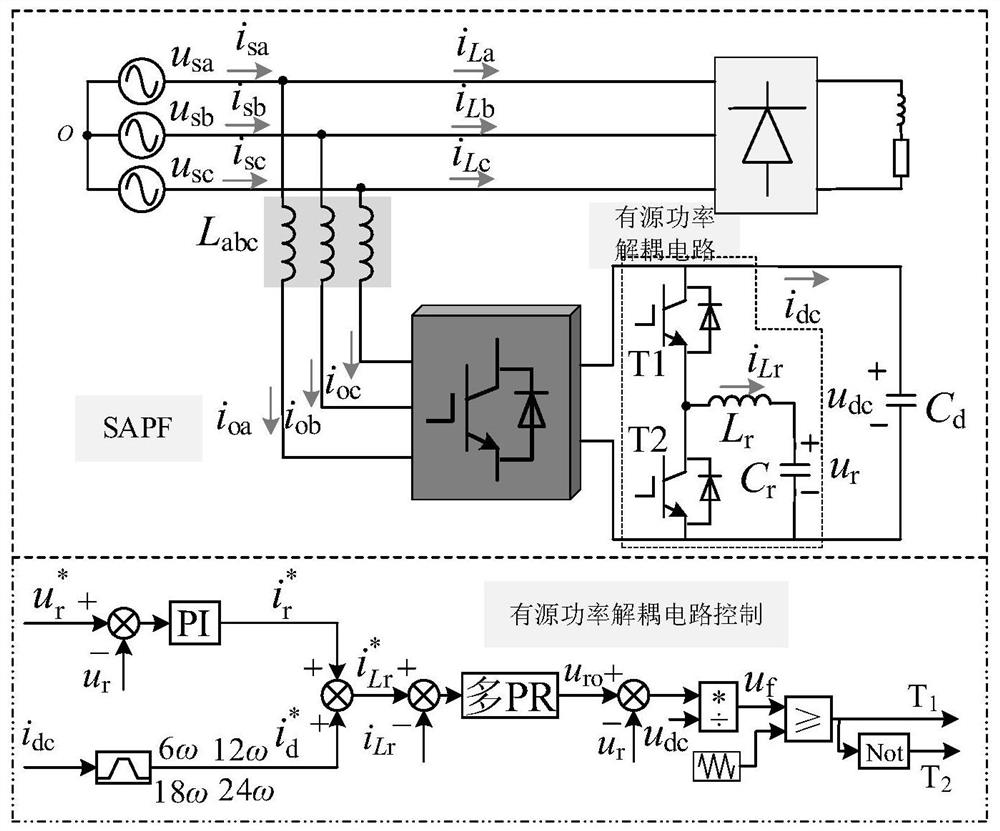
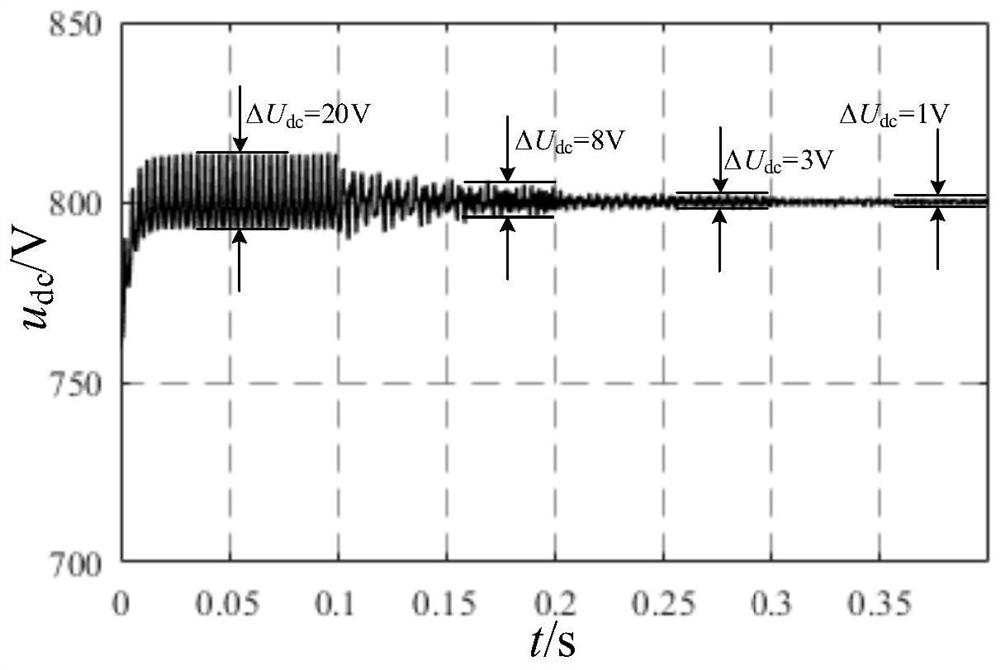
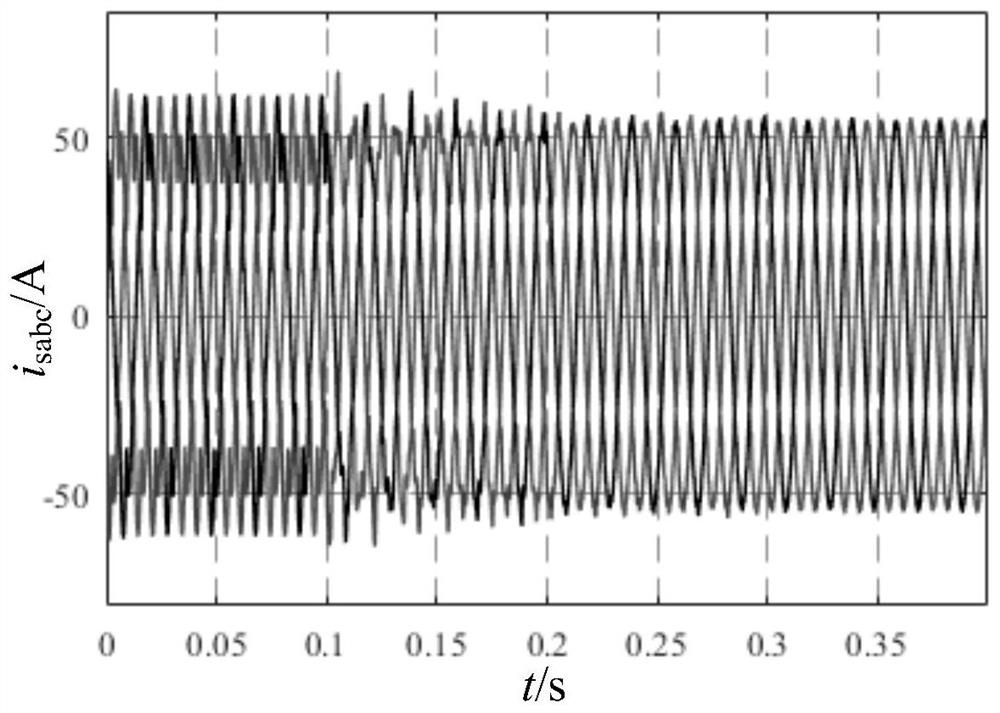
The invention discloses a parallel active power filter direct current side voltage low-frequency ripple suppression method, and belongs to the field of power electronic control. The method comprises the following steps: step 1, connecting a bidirectional Buck type active power decoupling circuit in parallel on the direct current side of a traditional parallel active power filter; and step 2, by controlling the bidirectional Buck circuit, transferring the low-frequency fluctuation power of the direct-current side of the active power filter to the auxiliary capacitor, thereby realizing low-frequency ripple suppression of the voltage of the direct-current side of the active power filter. Based on an active power decoupling technology, 6-frequency-multiplication, 12-frequency-multiplication, 18-frequency-multiplication and 24-frequency-multiplication fluctuations of the direct-current side voltage of the parallel active power filter are suppressed, so that a low-pass filter in a direct-current side voltage control link of the active power filter is omitted, and the corresponding speed of a system is increased. In addition, a thin film capacitor with a small capacitance value can be utilized to replace a traditional electrolytic capacitor under the condition of small fluctuation of the direct current side voltage, and the reliability of the system is improved.
Need to check novelty before this filing date? Find Prior Art

Description

technical field

[0001] The invention relates to the field of power electronic control, in particular to a method for suppressing low-frequency ripples of DC side voltage of a parallel active power filter. Background technique

[0002] With the development of power electronics technology, many nonlinear loads in power distribution systems such as rectifiers, inverters, uninterruptible power supplies, and electric arc furnaces are increasing, and harmonic pollution in power grids is becoming increasingly serious. Harmonics can cause problems such as transformer overheating, protection equipment failure, harmonic resonance and communication network interference. In addition, with the development of technology and industry, large-capacity reactive devices such as high-power motors and transformers appear in power systems. Make the grid power factor low. Low power factor will lead to increased line loss, lower grid efficiency, and even grid collapse. The shunt active power filt...

Examples

Embodiment Construction

[0031] The present invention will be further described below in conjunction with the accompanying drawings and specific embodiments. It should be understood, however, that the invention may be embodied in various forms, and some exemplary and non-limiting embodiments are shown in the drawings and described below, and are not intended to limit the invention to the specific embodiments described. .

[0032] figure 1 Shown is the SAPF system with DC side voltage low-frequency ripple suppression function and control principle diagram of the present invention, including three-phase power grid, harmonic load, three-phase filter inductor, three-phase inverter and bidirectional Buck type active power solution coupling circuit. The bidirectional Buck type active power decoupling circuit specifically includes two fully controlled devices T1 and T2, a decoupling inductor L r and a film capacitor C r , after T1 and T2 are connected in series, both ends are respectively connected to th...