Specific selective amplification and multiplex PCR method and application

A specific, multiple technology

CN114369649APending Publication Date: 2022-04-19山东见微生物科技有限公司
16 Cites 1 Cited by

Patent Information

Authority / Receiving Office
CN · China
Patent Type
Applications(China)
Current Assignee / Owner
Publication Date
2022-04-19

Smart Images

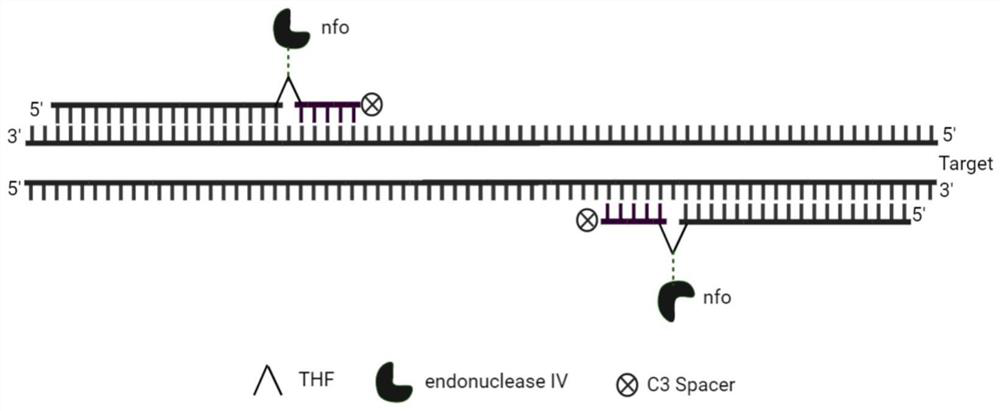
  • Figure 1
    Figure 1
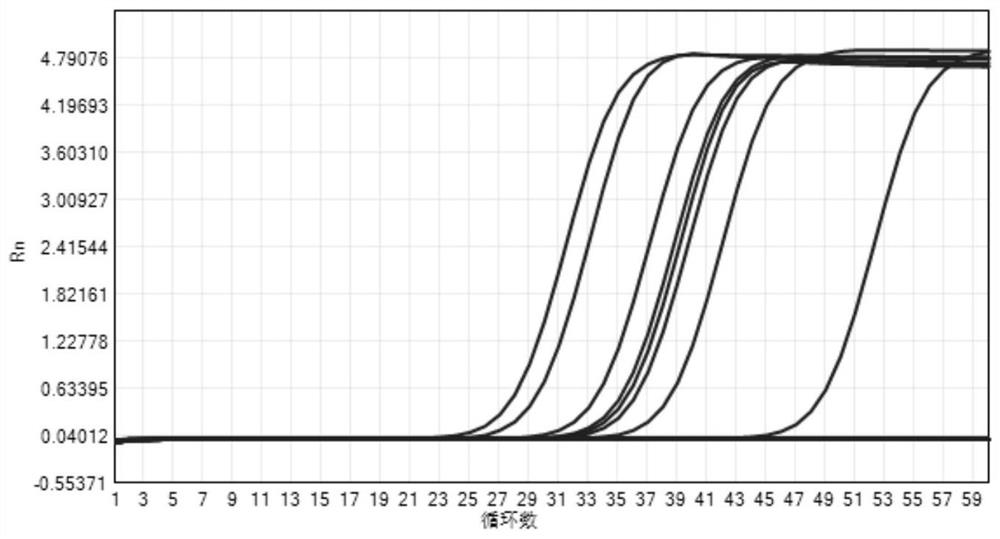
  • Figure 2
    Figure 2
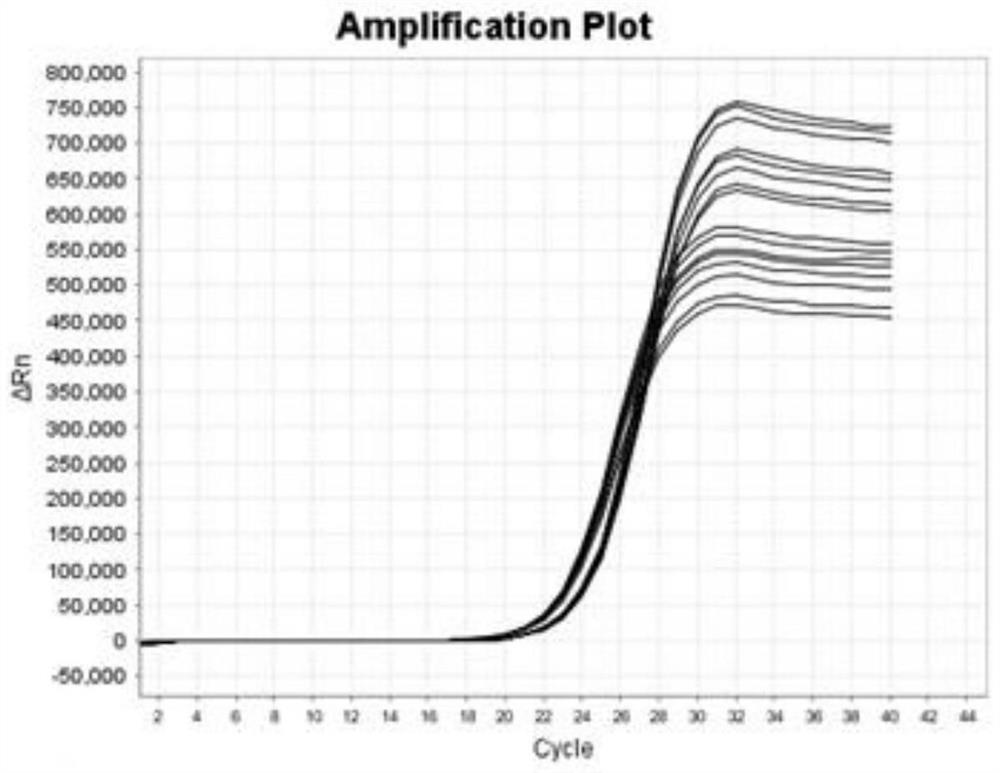
  • Figure 3
    Figure 3
Patent Text Reader

Abstract

The invention provides a specific selective amplification and multiplex PCR method and application, and relates to the technical field of biology. The specific selective amplification and multiplex PCR method comprises the following steps: by taking endonuclease IV as mediation, identifying a base removal site and cutting a specific primer to obtain an extendable primer, and applying the extendable primer to PCR amplification; tHF is introduced in the middle of the specific primer to serve as a base removal site, sequences on the two sides of THF are complementary with a template, the 3'end is closed, and the specific primer is free of free hydroxyl and cannot extend. The multiplex PCR method provided by the invention can be used for performing multiplex PCR amplification on a biological genome, performing multiplex target amplification of amplicon library establishment, simultaneously detecting multiple pathogens, preparing a kit for simultaneously detecting multiple pathogens, and the like. The key problems of interference, non-specific extension and the like among multiple PCR primers are well solved, multiple detection is realized, the sensitivity is high, rapidness and convenience are realized, and batch detection of samples can be realized.
Need to check novelty before this filing date? Find Prior Art

Description

Technical field:

[0001] The invention relates to the field of biotechnology, in particular to a specific selective amplification and multiplex PCR method and its application. Background technique:

[0002] Polymerase chain reaction (PCR) is a molecular biology technique in which two oligonucleotides are used as primers to catalyze the amplification of a DNA fragment located between the two primers by a DNA polymerase. Since the technology was established in 1983, it has become the main body and key method in the current life science research and related fields because of its high sensitivity, high efficiency and high specificity. At present, a series of related technologies have been developed, such as nested PCR, real-time quantitative PCR, immune PCR, multiplex PCR and so on. Among them, multiplex PCR has rapidly penetrated into various fields of life sciences due to its advantages of high specificity, high efficiency and low cost.

[0003] Multiplex PCR (multiplex PCR),...

Examples

Embodiment 1

[0029] Use the PCR dye method to compare the non-specific amplification and specific amplification of the present invention in conventional PCR

[0030] Conventional primer pairs RNaseP1(seq1), RNaseP2(seq2) and modified primer pairs RNaseP1M(seq3), RNaseP2M(seq4) were synthesized, and tested by conventional qPCR system and qPCR system with endonuclease IV, respectively.

[0031] The specific PCR reaction system is:

[0032] a) Conventional group: 10mM Tris-HCL (pH8.7), 50mM KCL, 1×EvaGreen (Biotium), 40U / mL Hotstart Taq DNA polymerase (Wethink), 2U / mL UDG (Roche), 0.2mM dATP, 0.2mM dCTP, 0.2 mM dGTP, 0.4 mM dUTP, 0.2 μM RNaseP1, 0.2 μM RNaseP2.

[0033] b) Modification group: 10mM Tris-HCL (pH8.7), 50mM KCL, 1×EvaGreen (Biotium), 40U / mL Hotstart Taq DNA polymerase (Wethink), 2U / mL UDG (Roche), 0.2mM dATP, 0.2mM dCTP, 0.2mMdGTP, 0.4mM dUTP, 0.2μM RNaseP1M, 0.2μM RNaseP2M, 20U / mL Tth nfo enzyme (NEB)

[0034] The primer sequences are as follows:

[0035] Seq1(RNaseP1): AGA ...

Embodiment 2

[0045] Blood Screening HBV / HCV / HIV-1 / HIV-2 / internal standard (IC) 5-color fluorescent 8-fold RT-PCR system

[0046] Specifically:

[0047] Two pairs of primers and two FAM probes for HBV, targeting S gene and C gene respectively, one pair of primers for HCV and one CY5 probe, two pairs of primers for HIV-1 and two ROX probes, targeting GAG gene and POL gene respectively, HIV-2 Two pairs of primers and two VIC probes are aimed at the GAG ​​gene and LTR region respectively. The internal standard adopts exogenous pseudovirus, and one pair of primers and one TAMRA probe. A total of 8 pairs of primers (merged bases in the primers) and 8 TaqMan probes (merged bases in the probes), a total of 24 oligonucleotides, the probes are modified at both ends, cannot be extended, and only have specificity Hybridization binding, after being cleaved by a thermostable polymerase, it causes a fluorescence change function. The probe remains unchanged, and the 8 pairs of primers are respectively u...