

Application of dental pulp stem cells in preparation of medicine for treating multiple sclerosis
A technology of multiple sclerosis and dental pulp stem cells, applied in the field of biomedicine, to achieve the effect of easy acquisition, inhibition of central inflammation, and reduction of spinal cord demyelination lesions
- Summary
- Abstract
- Description
- Claims
- Application Information
AI Technical Summary
Problems solved by technology
Method used
Image


Examples
Embodiment
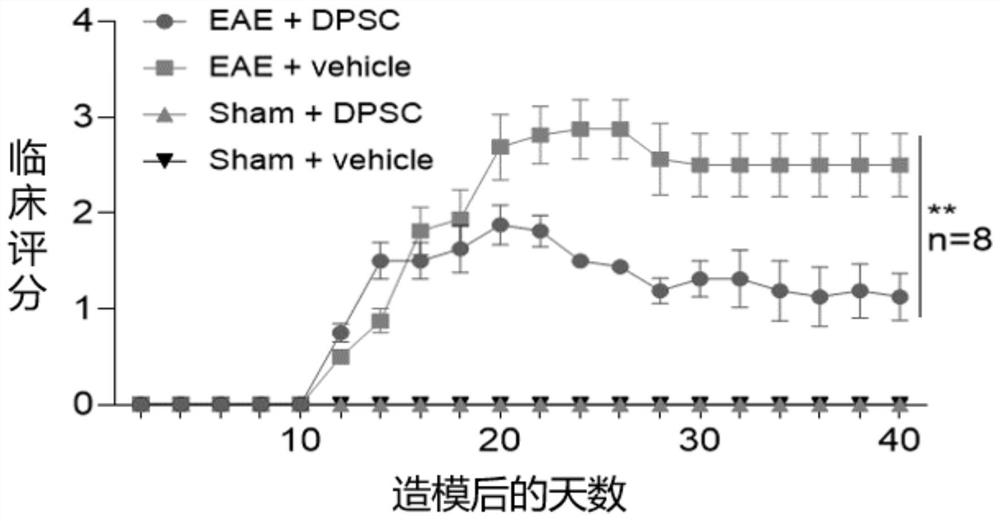
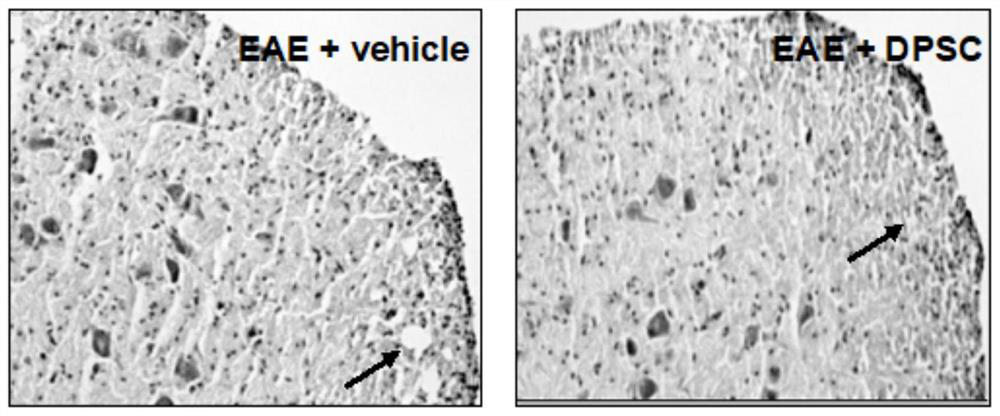
[0042] Example: Clinical symptoms and detection of demyelinating lesions and brain inflammation in EAE model mice
[0043] 1. Experimental animals: C57 / BL6 mice, 10 weeks old, female, were randomly divided into 4 groups of 10 mice, respectively:
[0044] Sham operation group Control group (Sham+Vehicle): Administer normal saline after sham operation:
[0045] Sham operation group and administration group (Sham+DPSC): dental pulp stem cell suspension was administered after sham operation;
[0046] Model group Control group (EAE+Vehicle): After modeling, normal saline was given:
[0047] Model group administration group (EAE+DPSC): dental pulp stem cell suspension was administered after modeling;
[0048] Preparation of dental pulp stem cell suspension: dental pulp stem cells were prepared at 1 × 10 6 The concentration per mL was dissolved in normal saline.
[0049] 2. Animal experiment method:
[0050] 2.1 Model establishment:
[0051] The mouse polypeptide antigen MOG35-...
PUM
 Login to View More
 Abstract
Description
Claims
Application Information
 Login to View More