Diamine, acid dianhydride, polyimide composition having reactive group obtained therefrom, and processes for producing these
What is AI technical title?
AI technical title is built by Patsnap AI team. It summarizes the technical point description of the patent document.
A technology of reactive groups and acid dianhydrides, applied in the field of new polyimide compositions, can solve problems such as unknown diamines
Inactive Publication Date: 2004-06-02
KANEKA CORP
View PDF3 Cites 10 Cited by
Summary
Abstract
Description
Claims
Application Information
AI Technical Summary
This helps you quickly interpret patents by identifying the three key elements:
Problems solved by technology
Method used
Benefits of technology
Problems solved by technology
In addition, diamines having reactive groups at the ends of the alkyl and fluoroalkyl groups are not known.
Method used
the structure of the environmentally friendly knitted fabric provided by the present invention; figure 2 Flow chart of the yarn wrapping machine for environmentally friendly knitted fabrics and storage devices; image 3 Is the parameter map of the yarn covering machine
View more
Image
Smart Image Click on the blue labels to locate them in the text.
Viewing Examples
Smart Image
Click on the blue label to locate the original text in one second.
Reading with bidirectional positioning of images and text.
Smart Image
Examples
Experimental program
Comparison scheme
Effect test
Embodiment 1
[0306] (1-1) Synthesis of 12-bromododecane-1-(4-fluorocinnamate)
[0307] Put 4.6g (25 mmol) of 4-fluorocinnamic acid chloride and 50 ml of methyl ethyl ketone into the reactor, then slowly add 5.0 g (18.9 mmol) of 12-bromododecanol, three A solution of 3.0 g (30 mmol) of ethylamine dissolved in 50 ml of methyl ethyl ketone was stirred under reflux under a nitrogenstream. The generated onium salt was filtered off, concentrated to dryness, and then recrystallized from methanol to obtain 7.4 g (17.9 mmol) of 12-bromododecane-1-(4-fluorocinnamate). Yield 95%.
[0309] (1-2) Synthesis of 12-(4-fluorocinnamic acid)-dodecane-1-(2,5-dihydroxybenzoate)
[0310] 7.33 g (17.5 mmol) of 12-bromododecane-1-(4-fluorocinnamate), 5.72 g (20 mmol) of cesium salt of 2,5-dihydroxybenzoic acid, dimethylformamide 50 ml was used as a r...
Embodiment 2~6
[0317] The following examples 2 to 6 are synthesis examples of diamines with reactive groups of the present invention
Embodiment 2
[0319] (2-1) Synthesis of 1-dodecanol-12-(4-fluorocinnamate)
[0320] Put 7.23g (25 mmol) of cesium salt of cinnamic acid, 5.0 g (18.9 mmol) of 12-bromododecanol, and 50 ml of dimethylformamide (hereinafter referred to as DMF) into the reactor, and carry out the process at 100 ° C. Heating was continued with stirring for 2 hours. (The reaction was carried out under nitrogen flow). After filtering the reaction solution, the filtrate was poured into water, and the precipitated white solid was filtered to obtain 6.26 g (18.3 mmol) of 1-dodecanol-12-(4-fluorocinnamate). (yield 97%)
[0322] (2-2) Synthesis of 12-(4-fluorocinnamic acid)-dodecane-1-(3,5-dinitrobenzoate)
[0323] Put 1-dodecanol-12-(4-fluorocinnamate) 6.15g (18 mmol), triethylamine 2.5g (25 mmol), methyl ethyl ketone 60ml into the reactor, ...
the structure of the environmentally friendly knitted fabric provided by the present invention; figure 2 Flow chart of the yarn wrapping machine for environmentally friendly knitted fabrics and storage devices; image 3 Is the parameter map of the yarn covering machine
Login to View More
PUM
Login to View More
Abstract
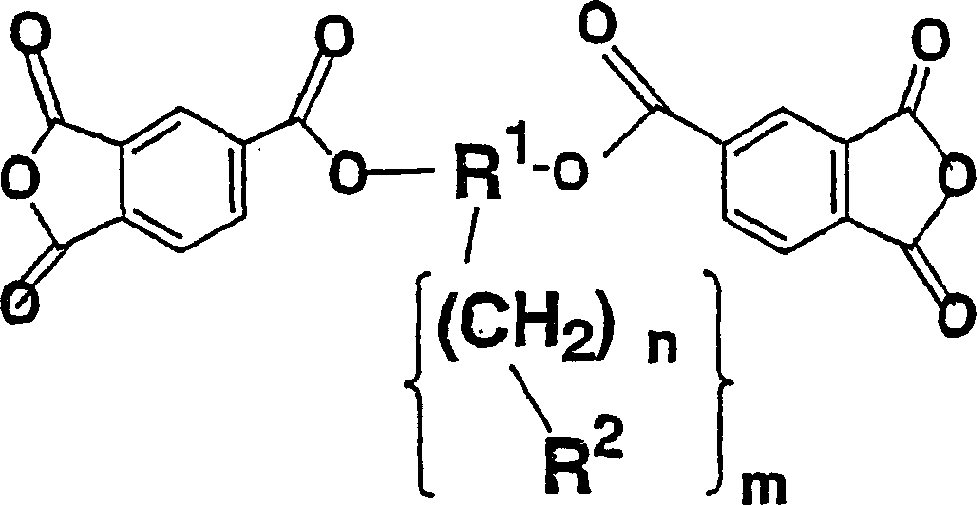
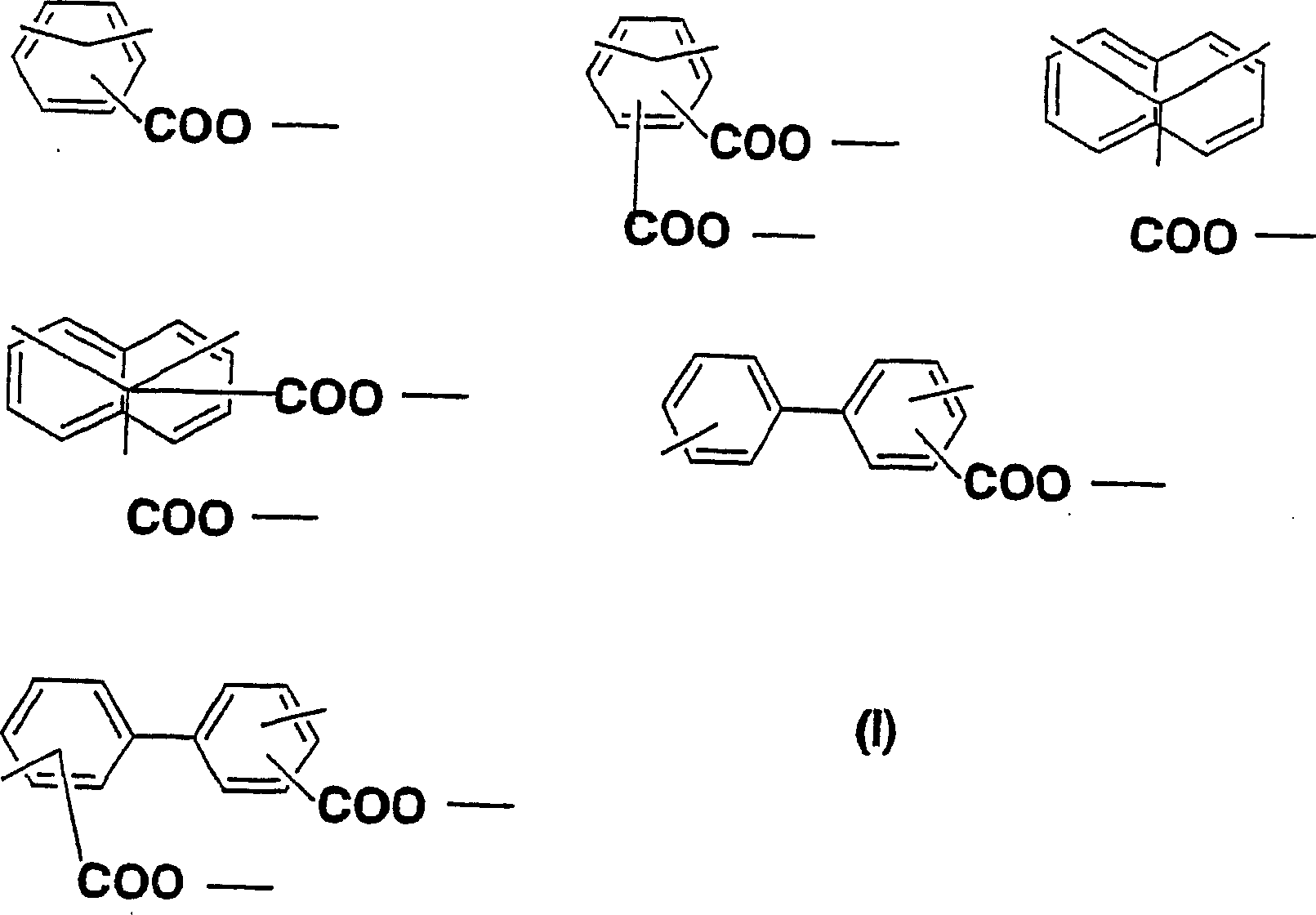
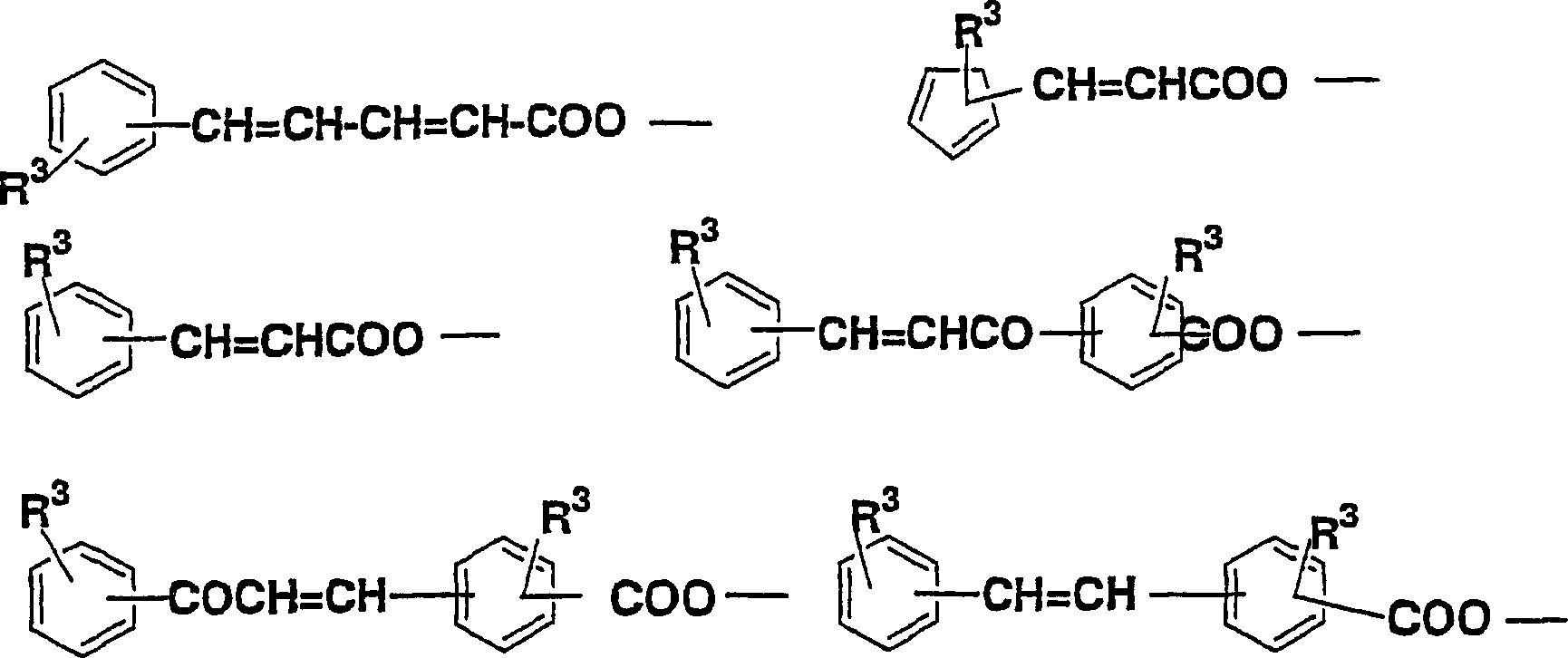
The present invention relates to a novel diamine, a novel acid dianhydride, and a novel composition containing a polyimide produced from such diamine and acid dianhydride. Specifically, the present invention relates to an acid dianhydride that has a photosensitive group bonded through the mediation of an alkylene group or a fluoroalkylene group, a diamine that has a reactive group bonded through the mediation of an alkylene group or a fluoroalkylene group, and a polyimide composition that contains a novel polyimide having at least one of such acid dianhydride residue and diamine residue in a molecule thereof. Particularly, an object of the present invention is to provide a novel polyimide that has both photoreactivity and thermoreactivity specific to the reactive group and whose reactive group is selected from the group consisting of: organic groups derived from cinnamic acid, chalcone, furylacryloyl, benzalacetophenone, stilbene, coumarin, and pyrone; allyl; propargyl; ethinyl; CH2=CH-; CH2=C(CH3)-; and skeletons derived therefrom, and it to provide a novel diamine and a novel acid dianhydride that may be contained in the polyimide composition.
Description
technical field [0001] The present invention relates to compositions using novel diamines, novel acid dianhydrides and novel polyimides produced therefrom. Specifically, it is a composition containing the following components: an acid dianhydride having a photosensitive group through an alkylene group, a diamine having a reactive group through an alkylene group, and one of these components in the molecule Or two new polyimides. In particular, the reactive group is a backbone derived from cinnamic acid, aryl acryloyl arene, furyl acryloyl, benzylidene acetophenone, stilbene, coumarin, pyroxone, allyl radical, propargyl, ethynyl, CH 2 = CH- and CH 2 =C(CH 3 )-organic groups or their derivative skeletons, a new type of polyimide composition that has both photoreactivity and thermal reactivity specific to these reactive groups, and a new type of diamine and a new type of acid diamine composed of this material anhydride. Background technique [0002] Polyimide, because of i...
Claims
the structure of the environmentally friendly knitted fabric provided by the present invention; figure 2 Flow chart of the yarn wrapping machine for environmentally friendly knitted fabrics and storage devices; image 3 Is the parameter map of the yarn covering machine
Login to View More
Application Information
Patent Timeline
Application Date:The date an application was filed.
Publication Date:The date a patent or application was officially published.
First Publication Date:The earliest publication date of a patent with the same application number.
Issue Date:Publication date of the patent grant document.
PCT Entry Date:The Entry date of PCT National Phase.
Estimated Expiry Date:The statutory expiry date of a patent right according to the Patent Law, and it is the longest term of protection that the patent right can achieve without the termination of the patent right due to other reasons(Term extension factor has been taken into account ).
Invalid Date:Actual expiry date is based on effective date or publication date of legal transaction data of invalid patent.



 Login to View More
  Login to View More