Printing and dyeing waste water disposal process

A technology for printing and dyeing wastewater and treatment process, which is used in flotation water/sewage treatment, neutralized water/sewage treatment, water/sewage multi-stage treatment, etc. problems, to achieve the effect of convenient operation, good adaptability and cost saving

CN1762861AInactive Publication Date: 2006-04-26上海望春花(集团)股份有限公司
0 Cites 10 Cited by

Patent Information

Authority / Receiving Office
CN · China
Patent Type
Applications(China)
Current Assignee / Owner
Publication Date
2006-04-26
Estimated Expiration
Not applicable · inactive patent

Smart Images

  • Figure 1
    Figure 1
  • Figure 2
    Figure 2
Patent Text Reader

Abstract

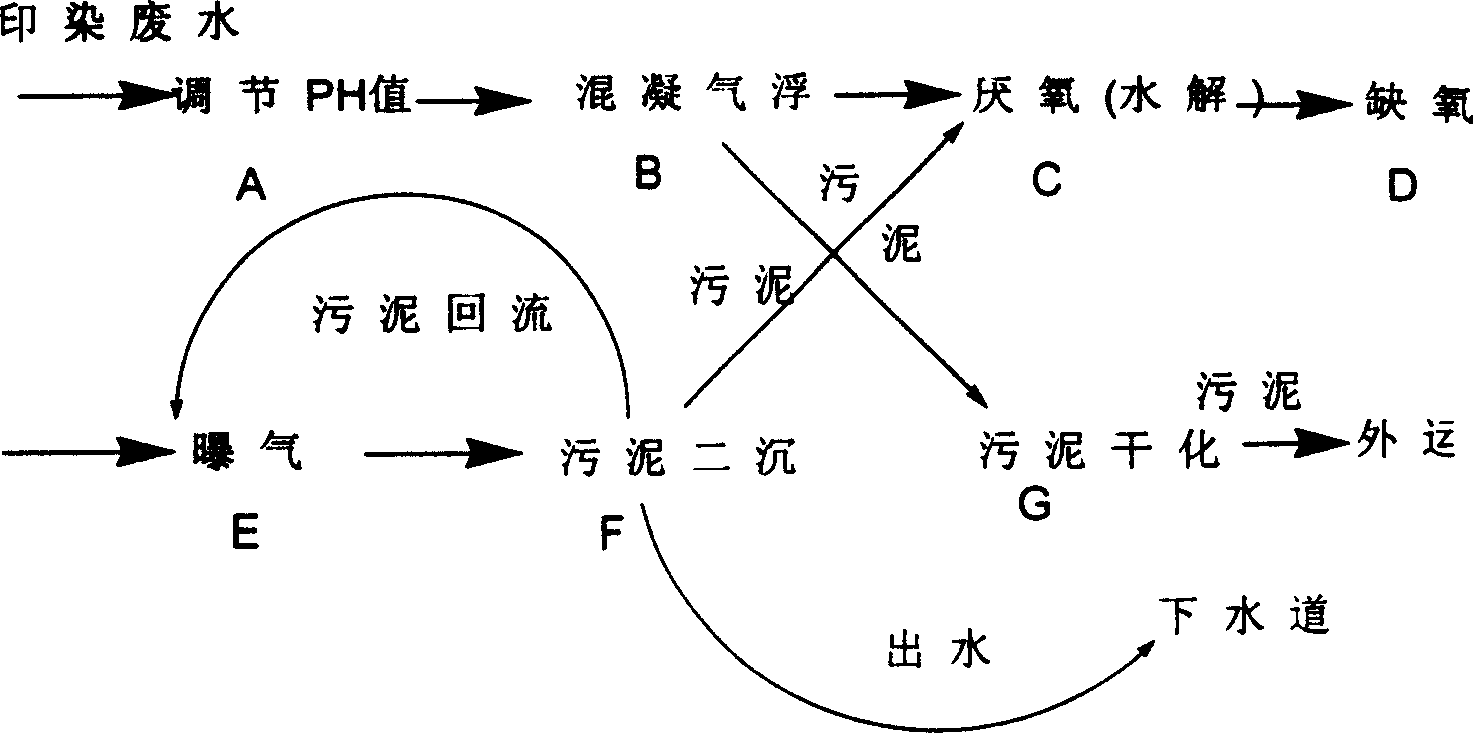
The present invention relates to printing and dyeing waste water treating process and features that the printing and dyeing waste water treating process includes the following successive steps: regulating pH value, coagulating air floatation, anaerobic hydrolysis, anoxic treatment, aeration, secondary sludge setting and drying sludge. During the process, the exhaust water after secondary sludge setting is drained to sewer, the sludge after coagulating air floatation is dried and externally transported, the sludge after secondary sludge setting is returned to the aeration step continuously, the excessive sludge is exhausted from the aeration tank to the anaerobic hydrolysis unit for self consumption, and the anaerobic hydrolysis at pH 6.5-8 generates anaerobic bacteria for hydrolysis at temperature from room temperature to 37 deg.c. The present invention has the features of fast propagation of hydrolysis bacteria, high adaptability, etc. and is suitable for treatment of various kinds of printing and dyeing waste water.
Need to check novelty before this filing date? Find Prior Art

Description

Technical field:

[0001] The invention relates to the field of environmental protection, in particular to a printing and dyeing wastewater treatment process. Background technique:

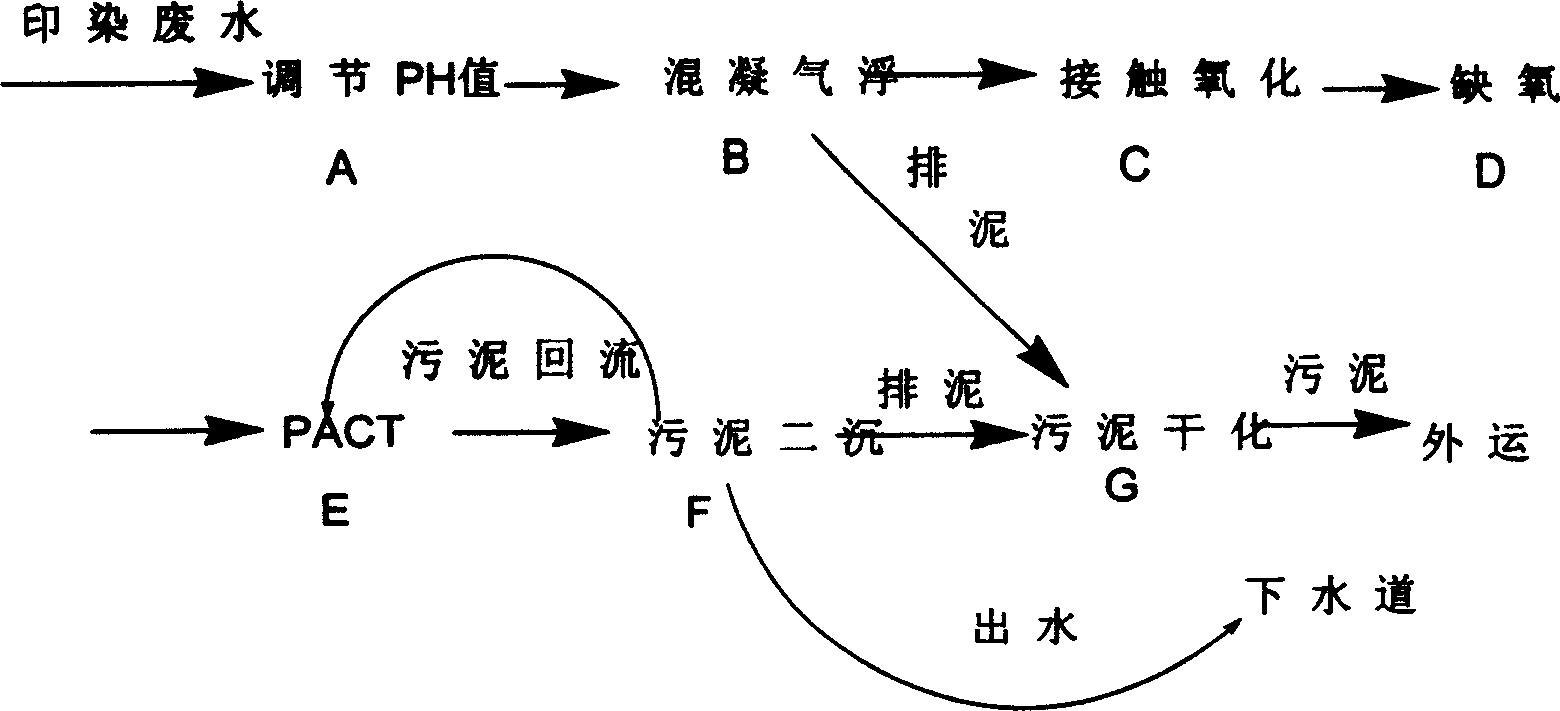
[0002] The printing and dyeing wastewater produced by assorted colors and printed velveteen is characterized by large water volume, high chroma, and high chemical oxygen demand (COD). Traditional aerobic biochemical processes are usually used to treat printing and dyeing wastewater. figure 1 Said: After the pH value of the printing and dyeing wastewater is adjusted, the processes of coagulation air flotation, contact oxidation, anoxic, PACT process, and sludge secondary sedimentation are sequentially adopted, and the effluent after sludge precipitation is discharged into the sewer, and the sludge is discharged into the sludge at the same time After drying, the sludge is shipped out. Among them, after the coagulation and air flotation process achieves the effect, the sludge can also be discharged...

Examples

Embodiment Construction

[0023] The following examples will help to understand the present invention, but do not limit the content of the present invention.

[0024] On the basis of the old technology, the following improvements are made:

[0025] 1. Stop the aeration of the contact oxidation tank (C), ie DO=0 mg / l.

[0026] 2. Stop adding activated carbon to the PACT (E) pool, and add some activated sludge.

[0027] 3. Stop the sludge from the secondary settling tank (F) from being discharged into the drying sludge facility.

[0028] 4. In the off-season, the amount of wastewater is small, and the process is converted. After two months, light green floating objects appear on the surface of the anaerobic pool (hydrolysis pool), which is the phenomenon of anaerobic bacteria production and growth. Synchronous monitoring and monitoring After four months of biological microscope inspection, all indicators improved, and after six months, COD and chroma were all up to the standard discharge (COD<100mg / l, ...