Plasma treatment apparatus and method

A plasma and equipment technology, applied in the field of fiber materials, which can solve problems such as economical infeasibility
CN1784519AInactive Publication Date: 2006-06-07COMMONWEALTH SCI & IND RES ORG +1

Patent Information

Authority / Receiving Office
CN · China
Current Assignee / Owner
COMMONWEALTH SCI & IND RES ORG
Publication Date
2006-06-07
Estimated Expiration
Not applicable · inactive patent

Smart Images

  • Figure 1
    Figure 1
  • Figure 2
    Figure 2
Patent Text Reader

Abstract

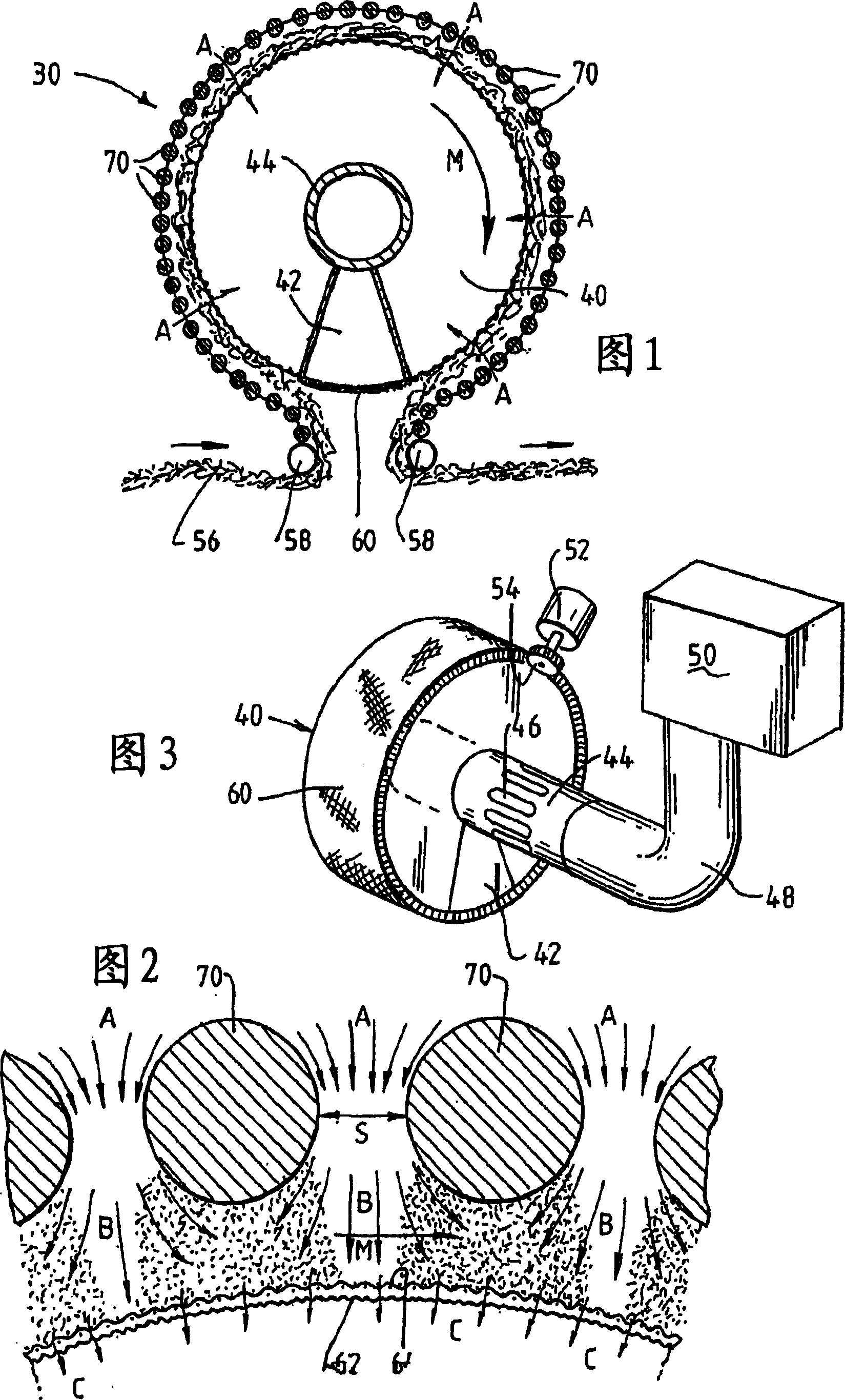
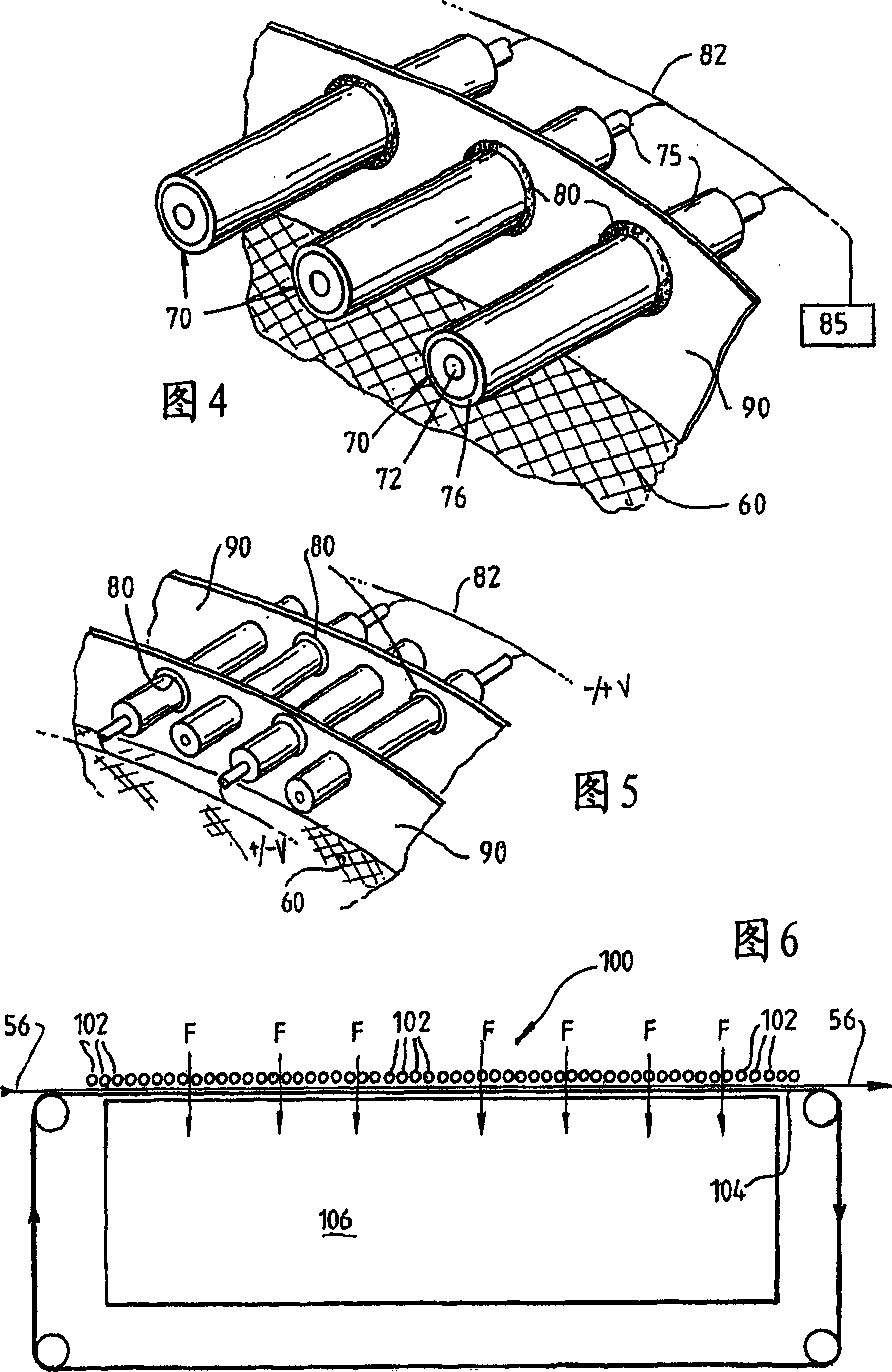
Plasma-treated gas-permeable material produced by applying an alternating voltage between spaced apart electrodes, at least one of which is coated with a dielectric barrier layer, at least one of which consists of a plurality of separate electrode segments , thereby generating plasma microelectrodes between the separated electrodes. A gas permeable material is passed between or adjacent to the spaced electrodes. Gas moves between the electrode segments into and through the spaces between the electrodes and through the gas permeable material. The gas flows across the plasma-generating surfaces of the corresponding electrode segments at a rate such that the gas flow between the electrodes thus separated is in a turbulent state and causes the plasma micro-emissions to randomize and disperse the plasma products, These products would otherwise cause combustion instabilities in the gas permeable material, so that the randomized plasma microdischarge can provide an overall uniform plasma treatment of the gas permeable material. At the same time, the equipment used for the design process is also disclosed.
Need to check novelty before this filing date? Find Prior Art

Description

technical field

[0001] The present invention relates to a method and apparatus for plasma treatment of gas-permeable materials, such as fibrous materials. The present invention is particularly useful when used to treat wool. Background technique

[0002] Plasma is widely used in material processing to change the surface properties of materials. Typically, this treatment is useful where the material surface is evenly distributed. When used on wool fibers, plasma treatment is used to oxidize the lipid layer on the fiber surface. Oxidation of the lipid layer can make wool fibers more receptive to subsequent surface treatments, such as anti-shrinkage treatments and anti-pilling treatments.

[0003] Removing the lipid layer can also increase friction between fibers. This will be more beneficial to the spinning process, as spinning requires as few windings as possible. A lower level of winding increases the output efficiency of the spinning yarn and thus enables the downstrea...

Claims

the structure of the environmentally friendly knitted fabric provided by the present invention; figure 2 Flow chart of the yarn wrapping machine for environmentally friendly knitted fabrics and storage devices; image 3 Is the parameter map of the yarn covering machine
Login to View More