As the name implies, ASICs are generally designed to perform only one specific application, resulting in a trade-off between flexibility and computational speed.
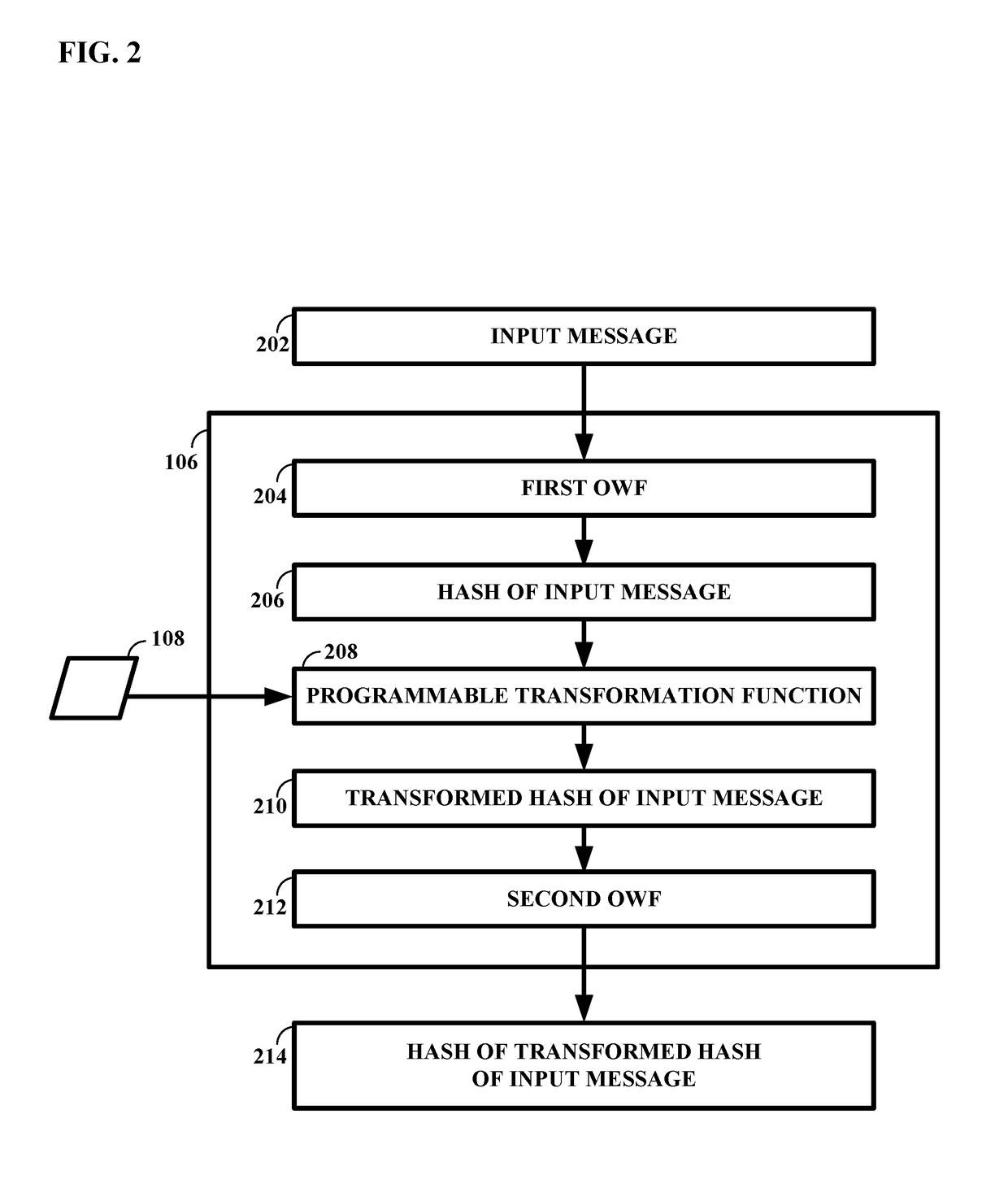
The transformation is not easily deciphered, not easily distinguishable from
noise, and not easily replicable by a party lacking full prior knowledge of the key or keys programmed into the transformation function.
Hashes are convenient for various cryptographic purposes as they may be easily computed from an input message, but are computationally difficult to invert for determination of the original input message.
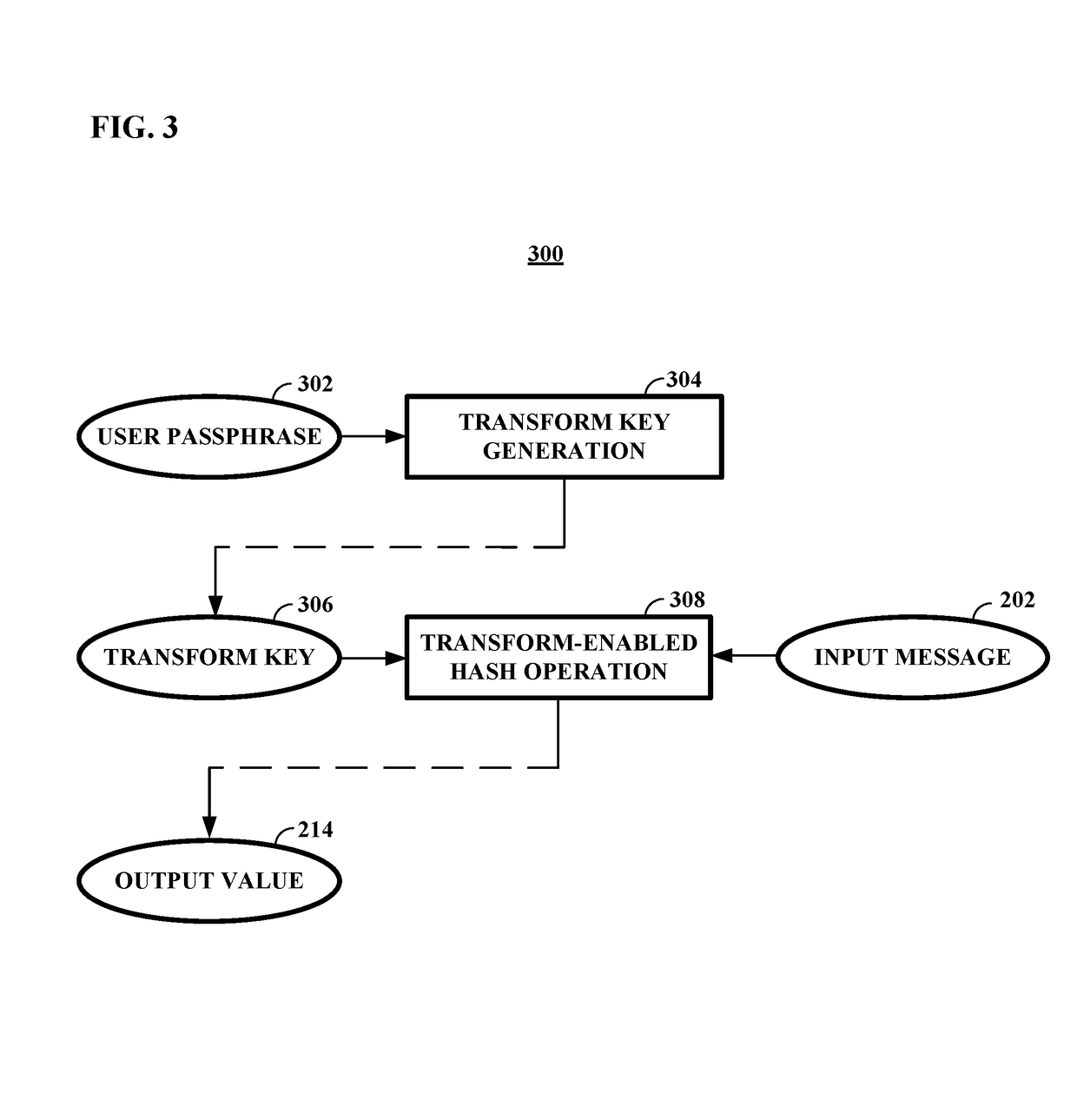
However, knowledge of the transform key 306 and of the process by which it is calculated on the basis of the user
passphrase 302 does not enable easy calculation of the user
passphrase 302.
But knowledge of the transform key does not enable the third parties to program additional copies of the
integrated circuit to calculate transform-modified proofs-of-work in the same manner as they are calculated by instances of the
integrated circuit that have been programmed using the user
passphrase.
In general, determination of the state of each element of such memories via external
physical examination is intentionally very difficult or infeasible.
However, hardware based implementations may be more immune to monitoring during operation.
Further, a
hacker may have to destroy a new copy of the programmed integrated circuit 102 with every hacking attempt, which would rapidly become expensive.
With current
semiconductor fabrication processes, the incorporation of
flash memory onto the same integrated circuit as
logic circuitry is not presently available for processes that produce logic devices of less than 28 nm feature size.
Both micro-fuses and anti-fuses may be placed in the
datapath circuitry within the integrated circuit in such a manner as to result in a very limited performance overhead, thus retaining the advantages ASICs have over other types of solutions in terms of speed and efficiency.
In cases where a user, versus a manufacturer or vendor, performs the programming of one-time programmable memory 502 elements, circuit failures that may actually be due to the user may instead be blamed on the manufacturer or vendor.
The
processing of such product returns may constitute a significant expense and may unnecessarily put the reputation of a manufacturer or vendor at risk.
Conversely, that data may indicate that unusual and probably-damaging events or conditions did occur after manufacture.
That possibility is very unlikely, since the one-way function always throws away some information and leaves only a noisy-appearing but verifiable residue behind.
A mismatch however indicates the stored
internal identifier value is invalid or has not yet been stored because the ASIC has not been programmed.
In either case, a mismatch indicates the ASIC will not process input messages properly, and available corrective steps are required.
When the last confirmed good copy of the stored
internal identifier is gone, the ASIC may return an error value at bootup, indicating the ASIC is hopelessly damaged, stopping the bootup process.


 Login to View More
  Login to View More