

Orthogonal arterial catheter
a catheter and orthogonal technology, applied in the field of catheters, can solve the problems of catheter cannula failure, loss of patient blood, kinking of the cannula, etc., and achieve the effects of increasing the ease of blood sample collection, increasing the life span of the catheter, and more secure attachment of the catheter to the patien
- Summary
- Abstract
- Description
- Claims
- Application Information
AI Technical Summary
Benefits of technology
Problems solved by technology
Method used
Image

Examples
Embodiment Construction
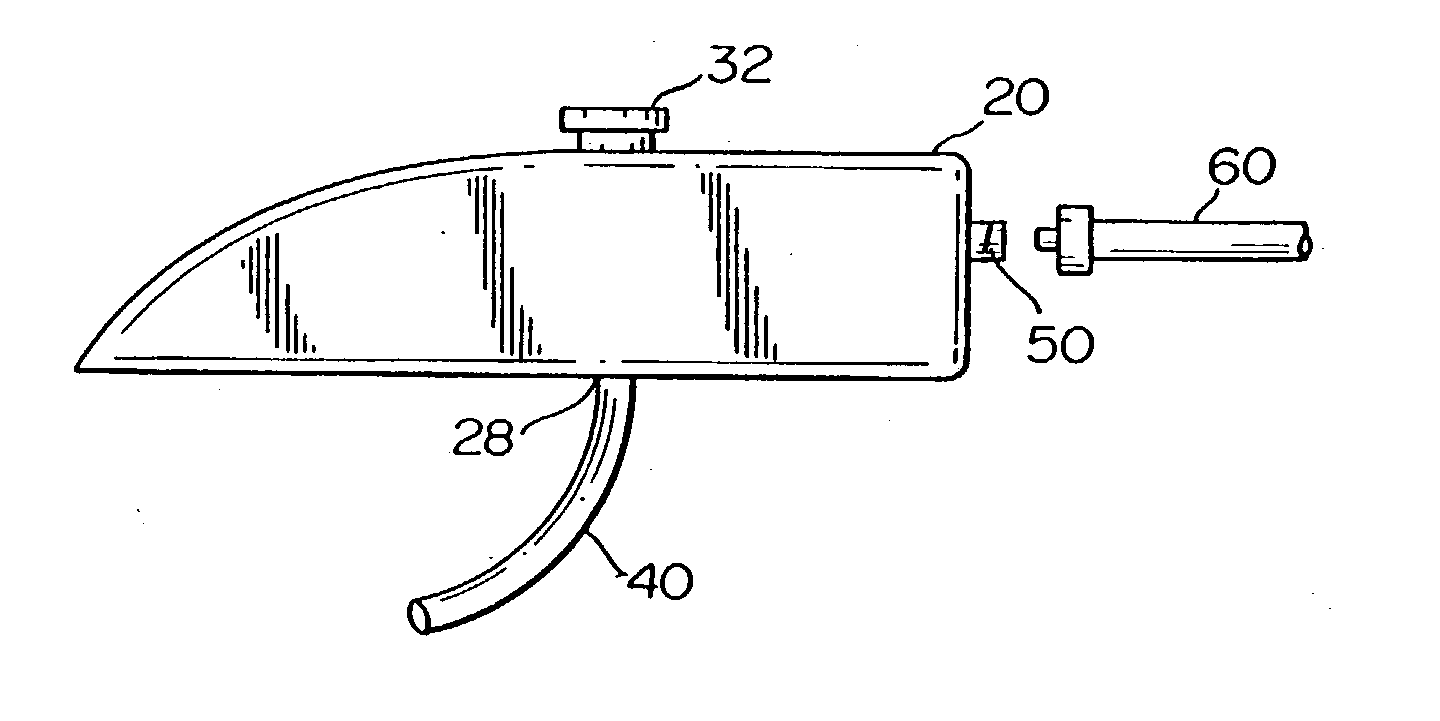
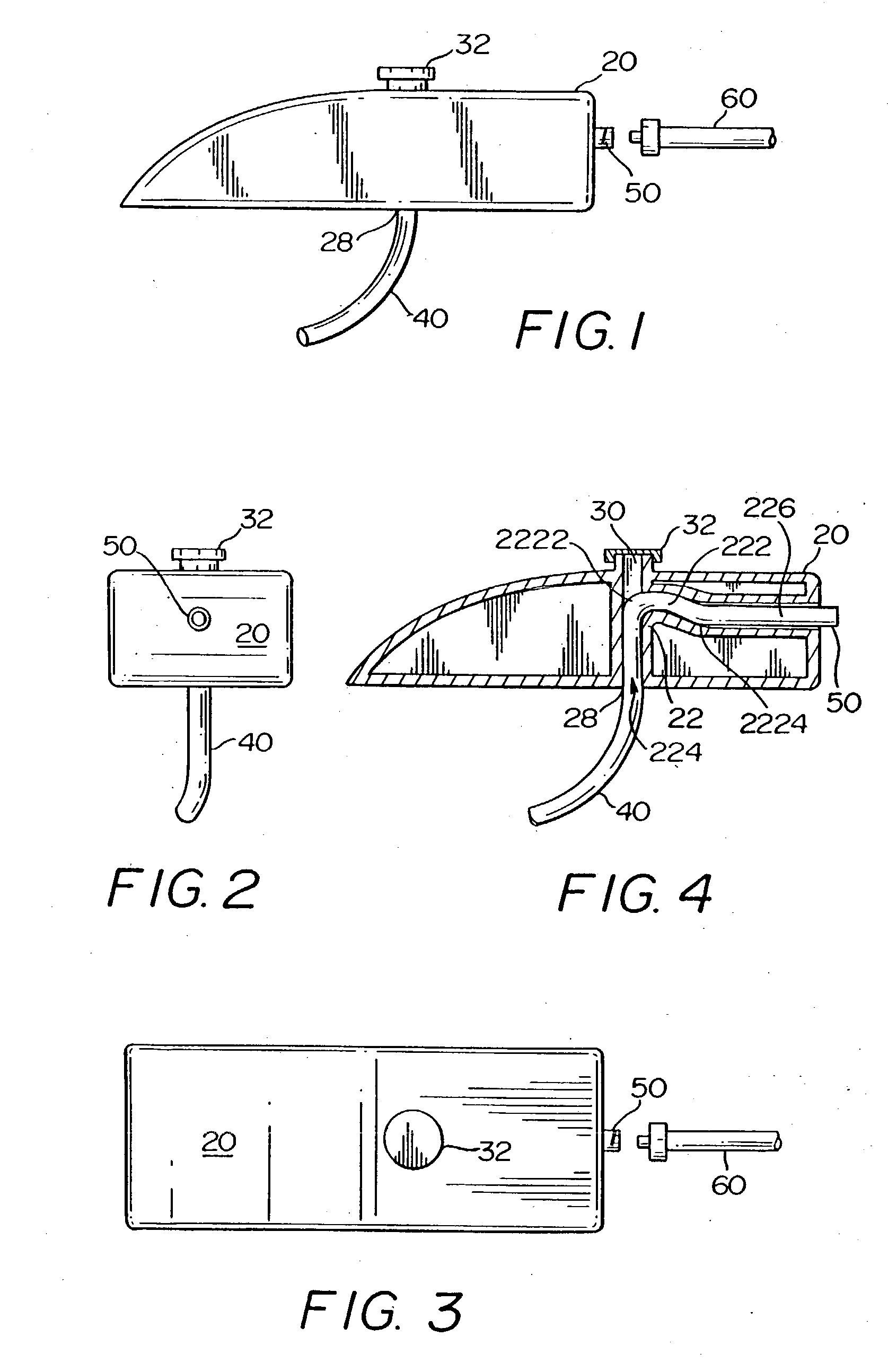
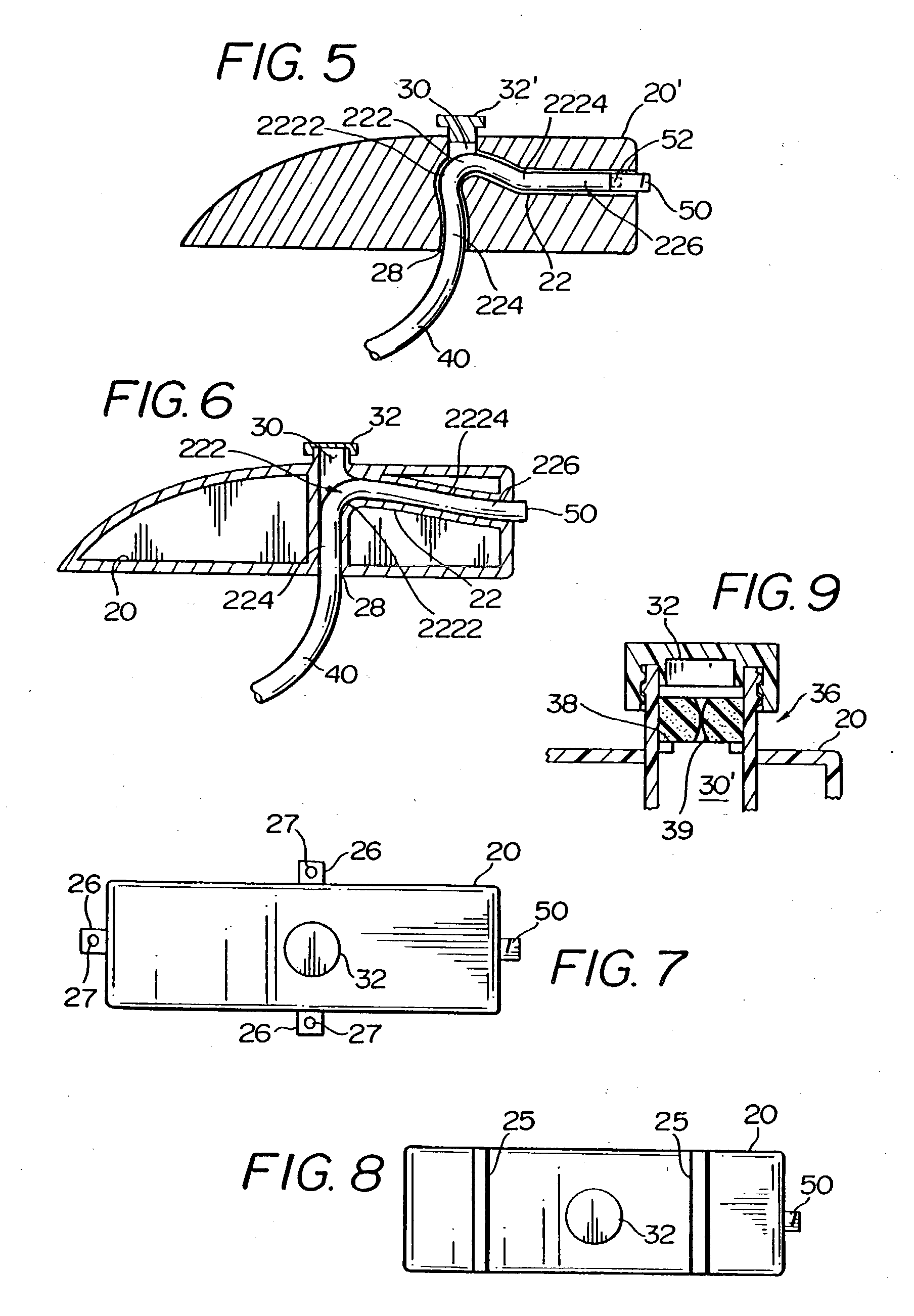
[0030] FIGS. 1-6 illustrate the preferred embodiment of the invention directed to an orthogonal arterial catheter. The catheter preferably includes a hub 20 and a cannula (or hose) 40. The hub 20 preferably provides the structure to prevent the cannula 40 from kinking on itself and / or shearing from a fluid line 60. The cannula 40 preferably provides the conduit in which blood from the patient resides.
[0031] Preferably, the cannula 40 extends sufficiently below the hub 20 such that it may be initially inserted into the patient at a shallow angle to the patient's skin prior to the hub 20 being attached to the patient. Although the length of the cannula 40 preferably will allow the medical professional the whole range of insertion angles. The hub preferably will act as an indicator as to when the cannula has been inserted sufficiently, i.e., when the hub abuts the patient's skin.
[0032] The hub 20 need not have any particular shape, but preferably it has a bottom surface shaped so it ca...
PUM
 Login to View More
 Abstract
Description
Claims
Application Information
 Login to View More