

Production of nanoparticles and microparticles
a technology applied in the field of nanoparticles and microparticles, can solve problems such as adverse effects on their characteristics
- Summary
- Abstract
- Description
- Claims
- Application Information
AI Technical Summary
Benefits of technology
Problems solved by technology
Method used
Image

Examples
examples
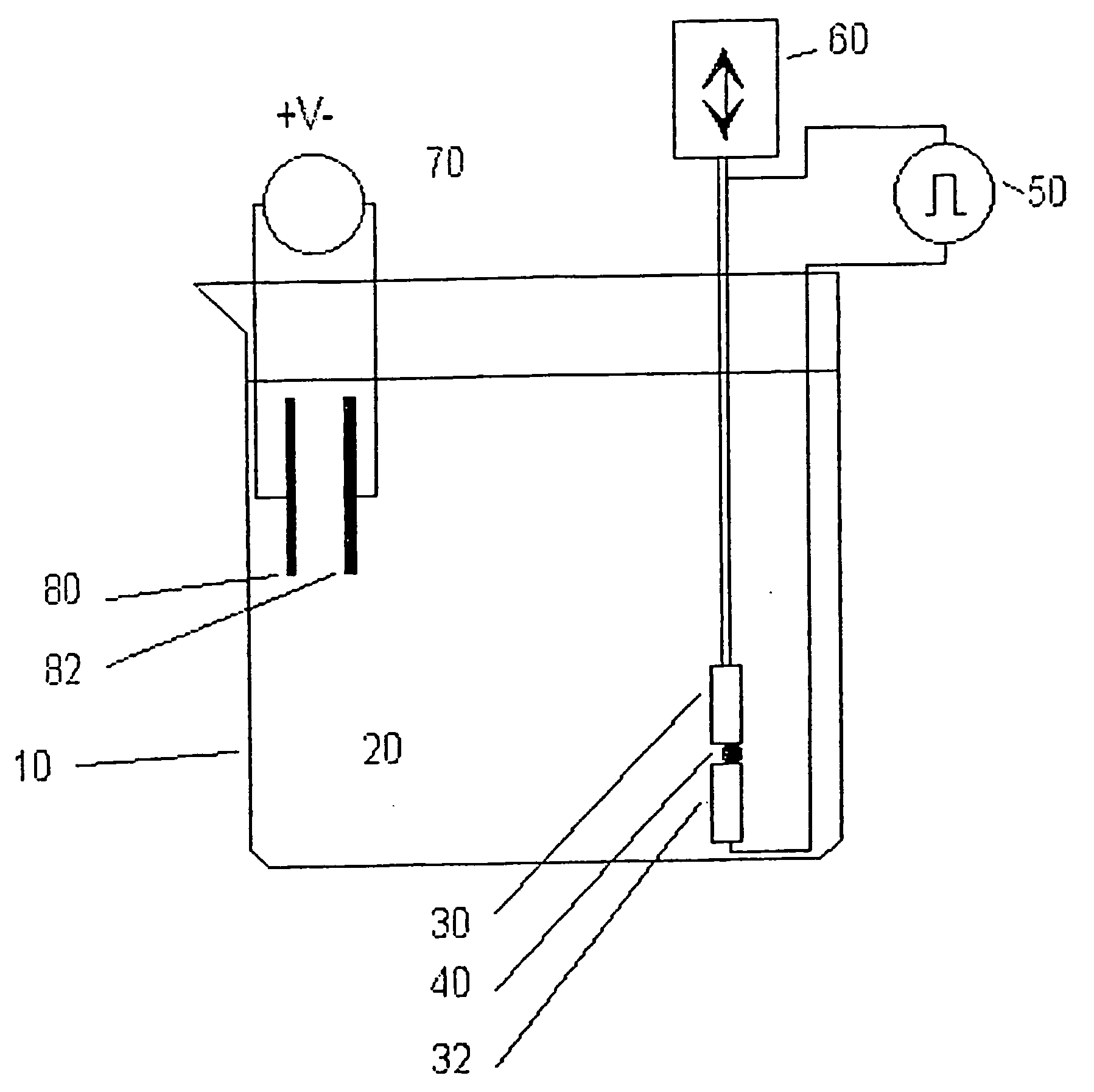
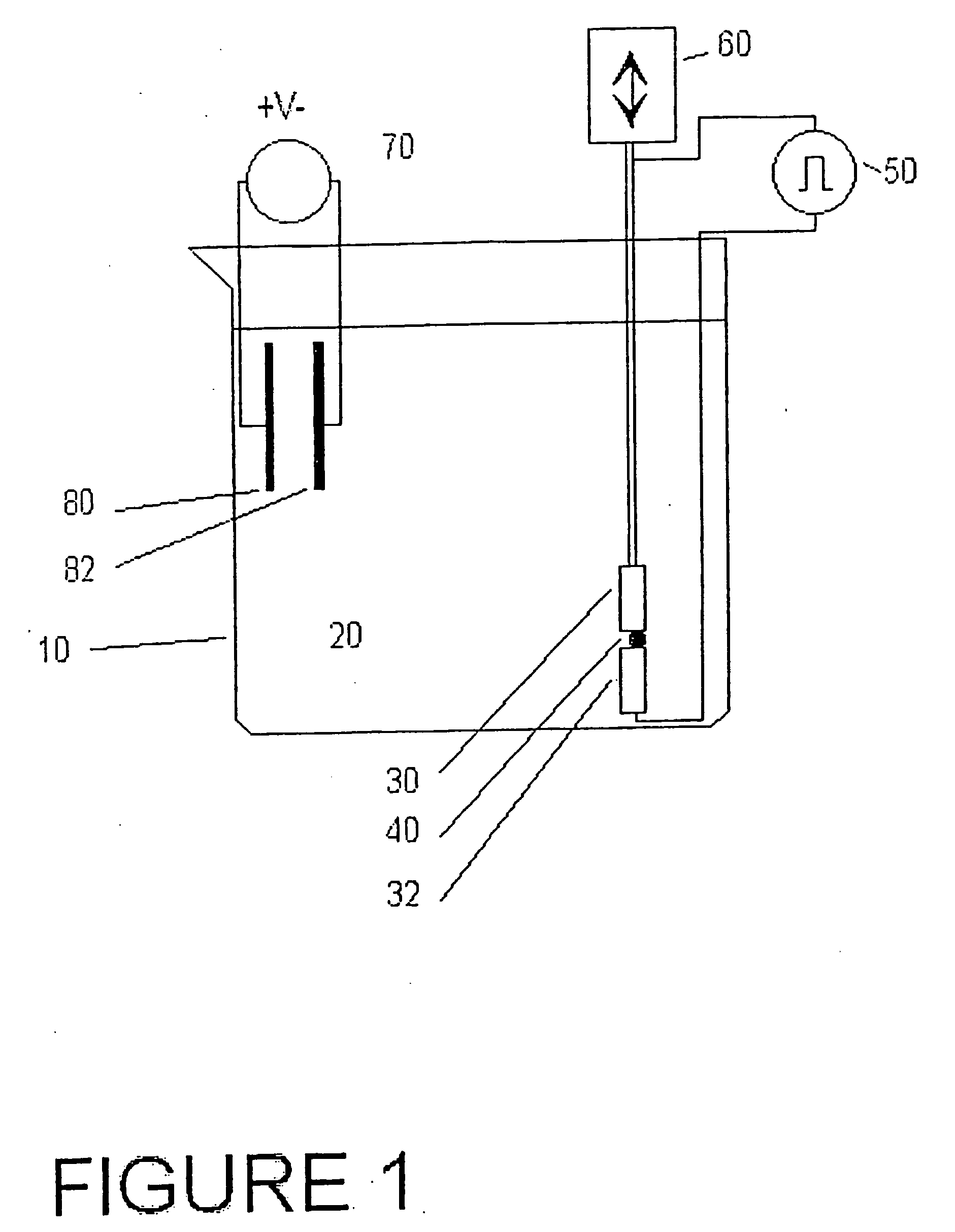
[0090] Reference is now made to the following examples, which together with the above descriptions, illustrate the invention in a non-limiting fashion. Exemplary particles were produced using the common features / parameters detailed in Table 1.
TABLE 1Common Features in the ExamplesParameter or FeatureValueVesselPlastic Cup, 60 ml volumeLiquidEthyl Alcohol (C2H5OH)ModeContact ModePeak Arc Current100APulse Duration20μsRepetition Rate100HzProcessing Time5min
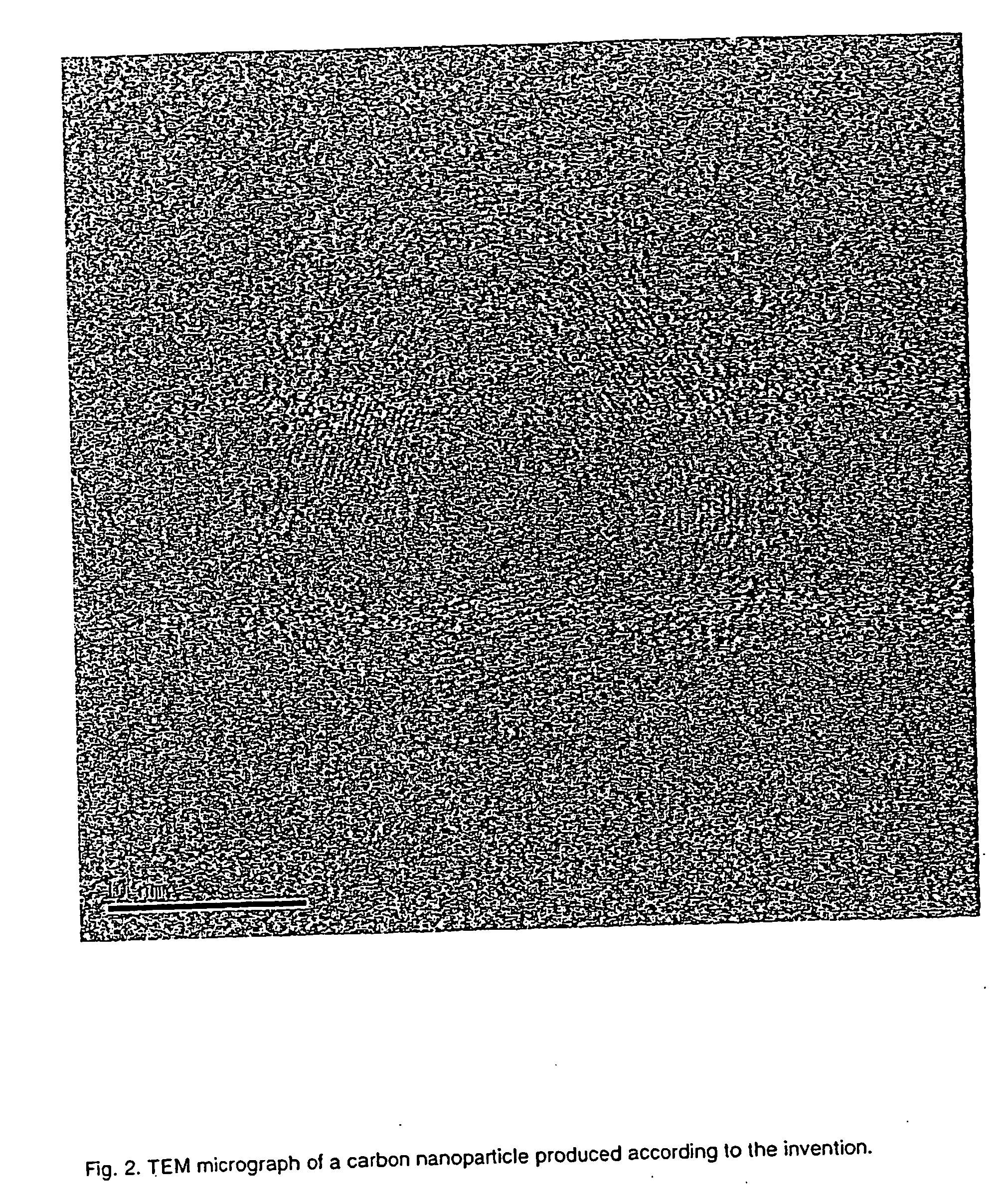
[0091] The results obtained for various examples of particle production, using the common features detailed in Table 1, are presented in Table 2. The results include a characterization of the particles, along with a brief description of the particulars of the production and collection thereof.
TABLE 2Examples of produced particlesElect. 1Elect.cross-Elect. 2ParticleParticleMicrographExMat.section, mmsize, mmCollectionDescriptionsizeFeature SizeFig.1C1 × 410 × 10TopC nano-particle˜20nmCavity-5 nm22Ni5 × 2.580 × 5PrecipitateBall wit...
PUM
| Property | Measurement | Unit |
|---|---|---|
| current amplitude | aaaaa | aaaaa |
| current amplitude | aaaaa | aaaaa |
| current amplitude | aaaaa | aaaaa |
Abstract
Description
Claims
Application Information
 Login to View More