
Cell sorter and culture system
Patent Information
- Authority / Receiving Office
- US · United States
- Current Assignee / Owner
- Publication Date
- 2007-10-11
- Estimated Expiration
- Not applicable · inactive patent
Smart Images
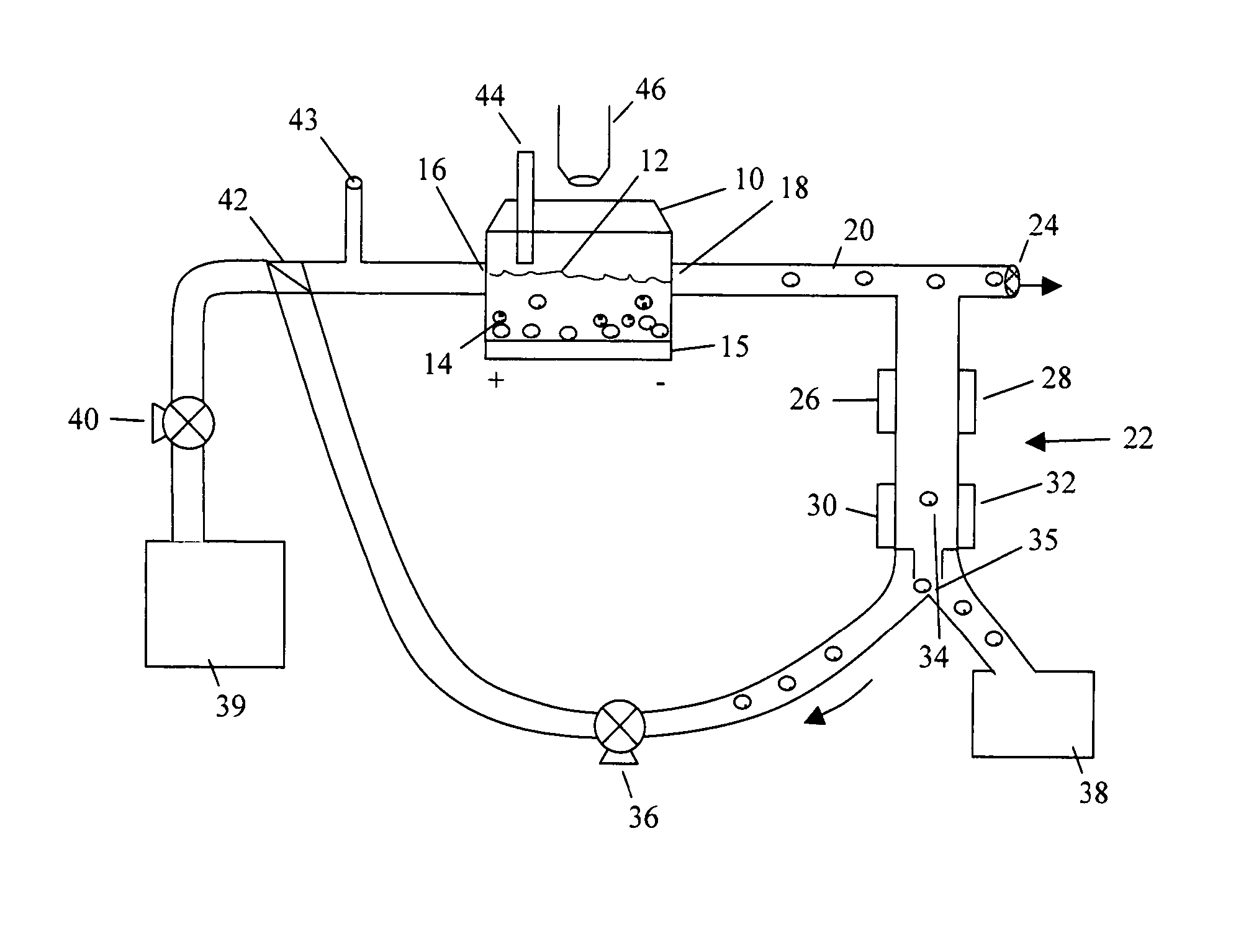
Figure 1 
Figure 2 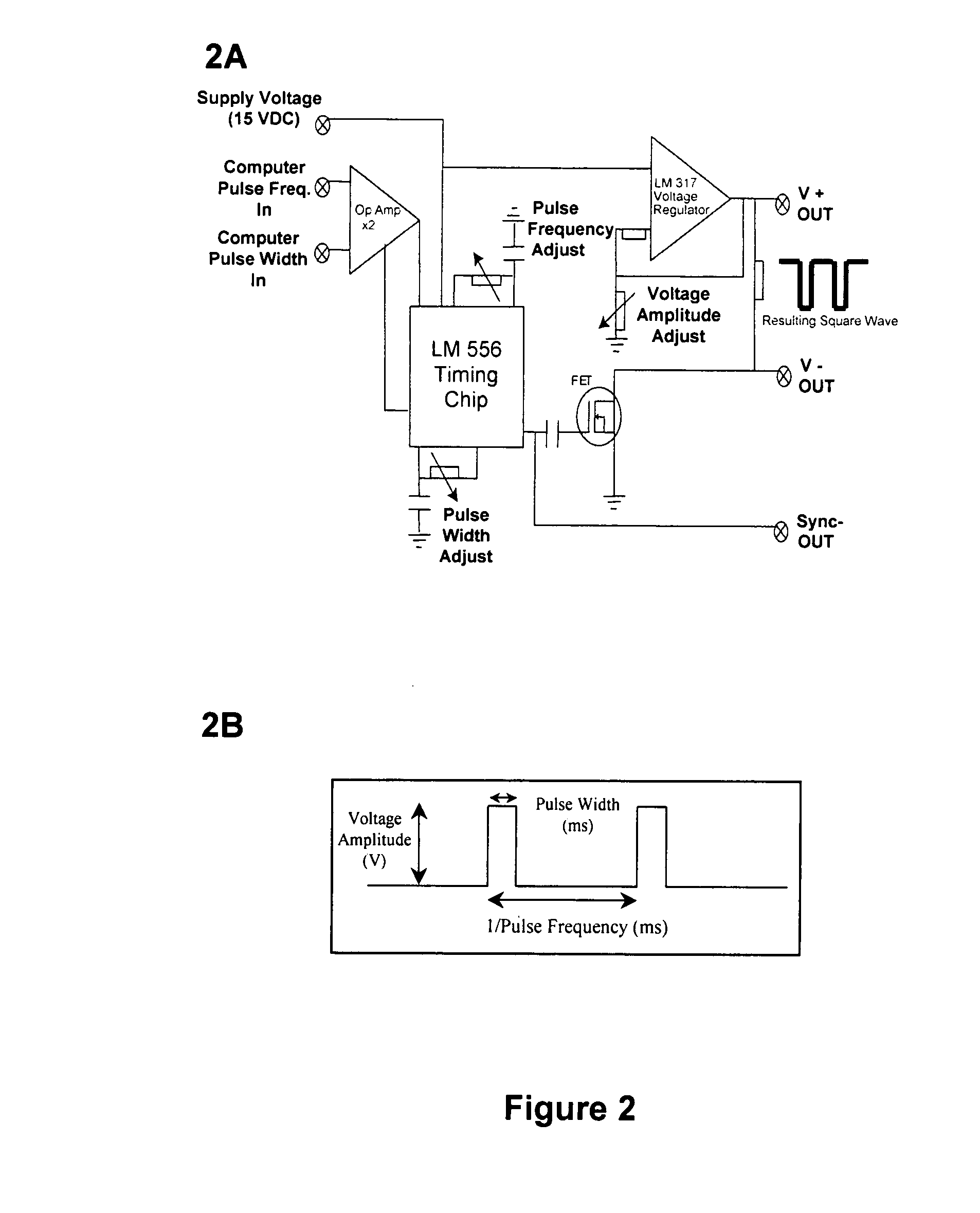
Figure 3
Abstract
Description
CROSS-REFERENCE TO RELATED APPLICATIONS
[0001] This application claims priority from U.S. Provisional Patent Application No. 60 / 791,026 filed on Apr. 11, 2006, which is hereby incorporated by reference in its entirety.STATEMENT OF GOVERNMENTAL SUPPORT
[0002] None. REFERENCE TO SEQUENCE LISTING
[0003] None. BACKGROUND OF THE INVENTION
[0004] 1. Field of the Invention
[0005] The present invention relates to the field of cell culture, cell differentiation, and cell separation.
[0006] 2. Related Art
[0007] In the United States in 2002, the prevalence of cardiovascular disease was approximately 70 million and the number of inpatient cardiovascular procedures was approximately 6.8 million.1 Approximately 1.4 million patients per year undergo procedures requiring arterial cardiovascular grafts.2,3 This represents approximately $2.1 billion per year for these procedures (based on the most recent data for average cost per procedure).
[0008] Cardiovascular grafts are currently used as bypass ...
Examples
example 1
Electric Cell Pulser and Bioreactor
[0099] A custom-made cell pulser was made to electrically stimulate the P 19 cells. The electric cell pulser, its output pulse characteristics, and its electronic design is shown in FIG. 2A.
[0100] The electric cell pulser was designed with four (4) channels to simultaneously stimulate cells in four (4) separate bioreactors. Each channel could deliver a square wave pulse of varying voltage amplitude (1-10 V), width (0.5-125 ms), and frequency (0.6-300 Hz). Due to technical limitations (which have since been addressed), the minimum frequency we could obtain for our experiments was 10 Hz. The electronic circuit design of the cell pulser is shown in FIG. 2A and the amplitude, pulse width and frequency parameters are shown in FIG. 2B. We implemented an LM 556 timing chip (Jameco Electronics, Belmont, Calif.) to coordinate the manual pulse width and frequency adjustment. This chip also allowed computer control of the pulse width and frequency via two (...
example 2
Complete Media for P19 Cell Culture
[0105] In order to perform cell culture, we prepared complete media as follows. The media consisted of alpha-MEM with ribonucleosides and deoxynucleosides (α-MEM) (Invitrogen # 12571-063, Carlsbad, Calif.) supplemented with 7.5% Calf Bovine Serum (CBS) (American Type Culture Collection, ATCC #30-2030, Manassas, Va.) and 2.5% Fetal Bovine Serum (FBS) (GIBCO #26140-079, Carlsbad, Calif.). Next, to the above mixture, penicillin-streptomycin (PS) (GIBCO #15140-122, Carlsbad, Calif.) was added (diluted from a 100× concentration of stock solution to a final concentration of 1× in the complete media). Finally, beta-mercaptoethanol (β-ME) was added to a final concentration of 0.1 mM.
[0106] The formulations may be summarized as follows:
TABLE 1AmountVendorReagentP19 Cells1 mL VialATCCα-MEM (w / riboNS & deoxyNS)BalanceGibco / BiostoresCalf Bovine Serum7.5%ATCCFetal Bovine Serum, US Qual2.5%Gibco / BiostoresPenicillin / Streptomycin (100×)1×Gibco / BiostoresSodium ...
example 3
P19 Cell Culture
[0107] In order to perform cell culture, we first obtained a 1 mL vial of frozen P19 mouse embryonal carcinoma stem cells (P19 cells) (ATCC # CRL-1825, Manassas, Va.). The vial of cells was thawed in a 37° C. water bath and the cells were then re-suspended in 9 mL of new complete media in a 15 mL tube. The tube was then spun down in a VWR Clinical 200 centrifuge (VWR #82013-812, West Chester, Pa.) at 300×g (corresponding to 1750 revolutions per minute (rpm) based on the size of the centrifuge rotor) for 3 minutes. The media was then aspirated while the pellet of cells was left in the tube. Next, 5 mL of new fresh complete media was added to the tube. The clump of cells was then dissociated by pipetting up and down. The dissociated cells and new media were then transferred into a T-25 tissue-culture grade flask (Becton Dickinson Biosciences # 353108, Bedford, Mass.). The flask containing the cells was then placed in a 37° C., 5% CO2 incubator (Fisher Scientific Isote...