

Accoustic profiler for wind, temperature, and turbulence
a profiler and wind technology, applied in the field of atmospheric modeling and prediction, can solve the problems of large gaps in global weather monitoring, inability to estimate wind, and inability to work
- Summary
- Abstract
- Description
- Claims
- Application Information
AI Technical Summary
Benefits of technology
Problems solved by technology
Method used
Image

Examples
Embodiment Construction
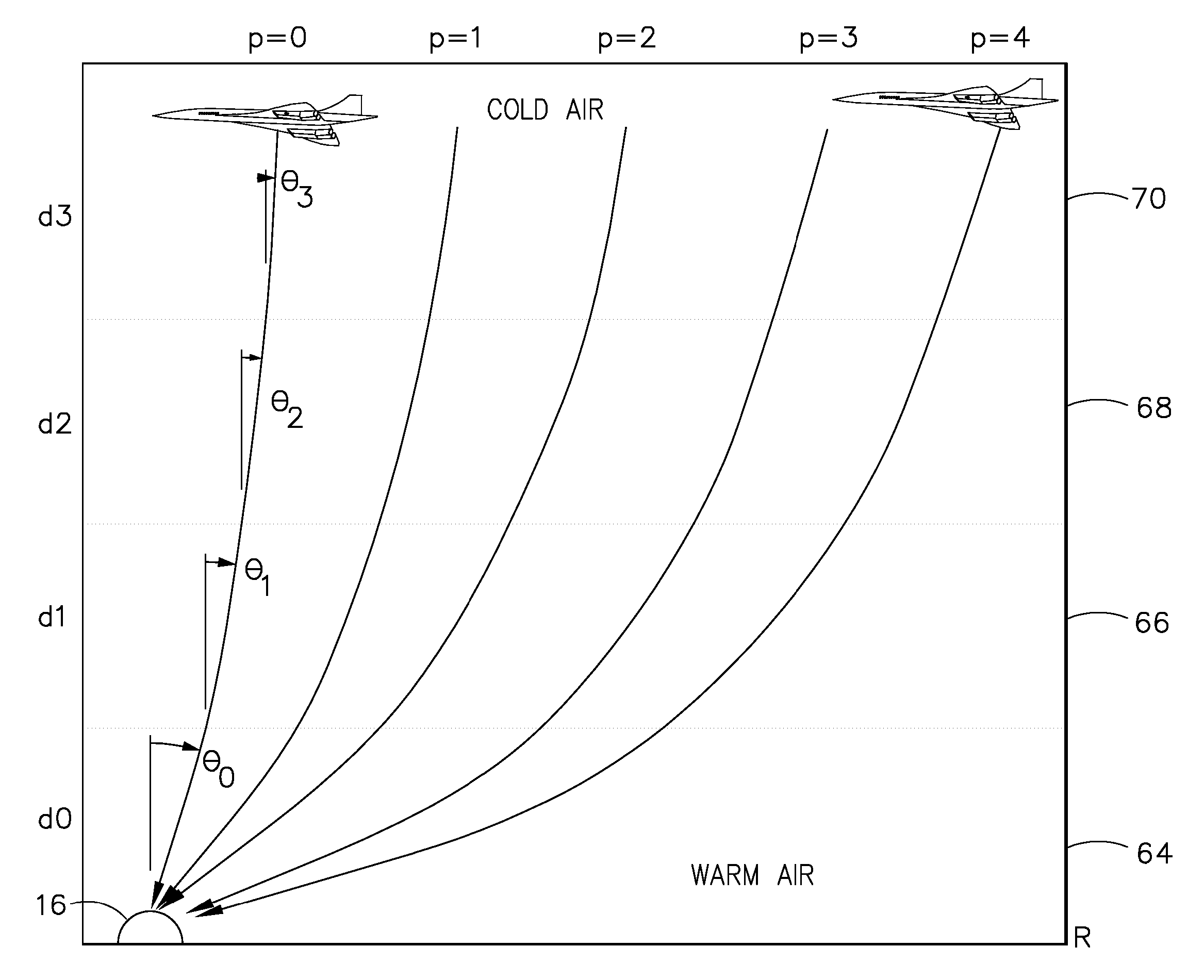
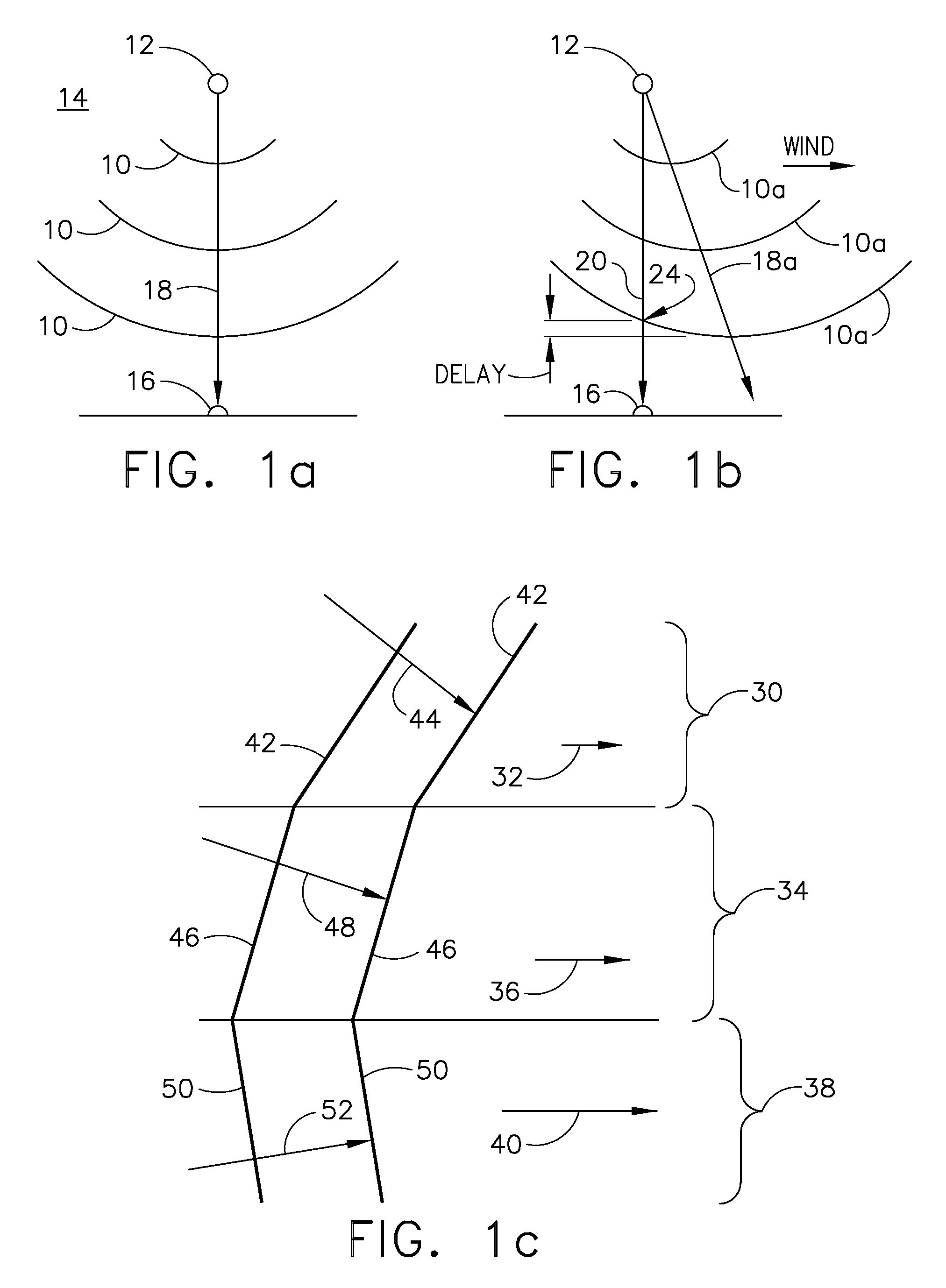
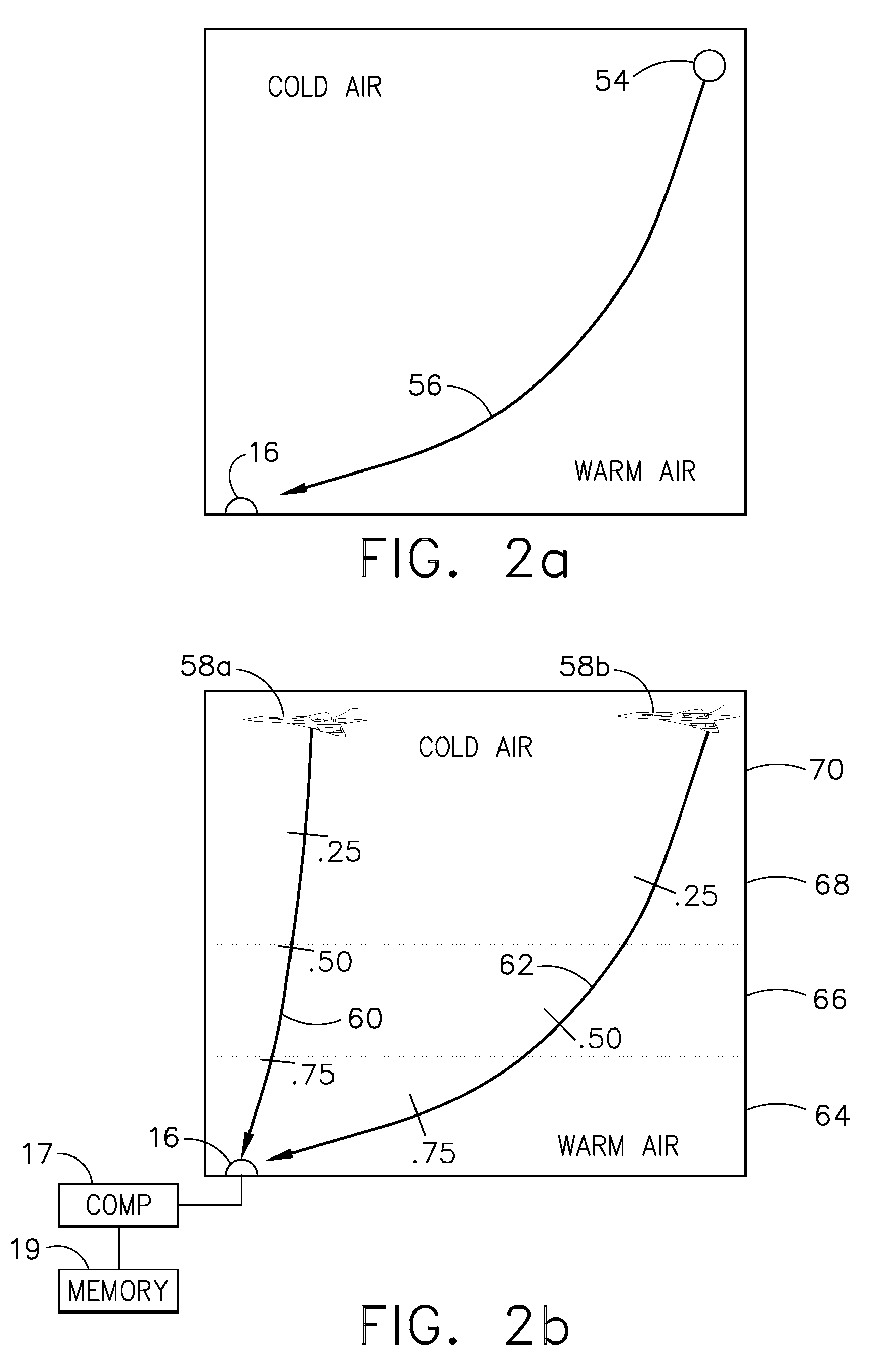
[0040] The invention exploits the relationship between sound waves, wind shear, and temperature. In still air, sound emitted directly above a surface-based microphone will travel in a straight line from the sound source to the microphone. FIG. 1a demonstrates physical phenomenon with sound waves 10 emitted from a source 12 traveling through atmosphere 14 to a receiver (microphone) 16. The straight path of the sound waves is represented by vector 18. The time for the sound to arrive at the ground is determined by the emitter's altitude and by the temperature at each altitude between the emitter and the ground. The relationship between temperature and sound velocity will be discussed in greater detail subsequently.
[0041] When wind blows, the sound waves are carried along with the air. As shown in FIG. 1b, in the case of sound traveling straight down along a vector 20 through a horizontal wind, which displaces the waves along vector 18a the part of the wavefront that reaches the micro...
PUM
 Login to View More
 Abstract
Description
Claims
Application Information
 Login to View More