
Apparatus for the prevention of metal tarnish
a technology for preventing metal tarnish and apparatus, which is applied in the direction of chemistry apparatus and processes, separation processes, dispersed particle separation, etc., can solve the problems of premature failure of electronic equipment, difficult to place a value on what might be considered an average or typical range of hydrogen sulfide, and dull or black finish, so as to prevent or reduce the formation of tarnish
- Summary
- Abstract
- Description
- Claims
- Application Information
AI Technical Summary
Benefits of technology
Problems solved by technology
Method used
Image

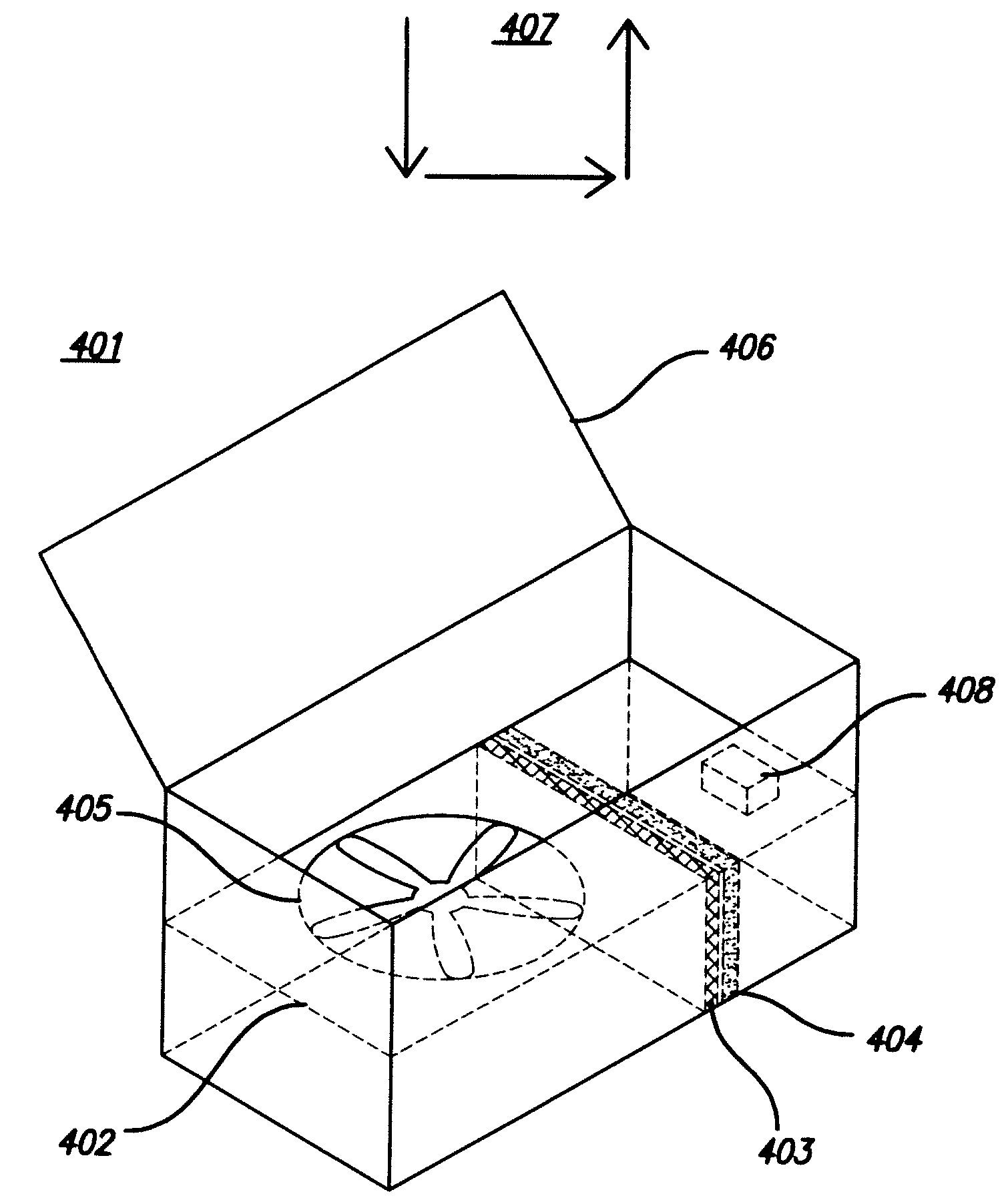
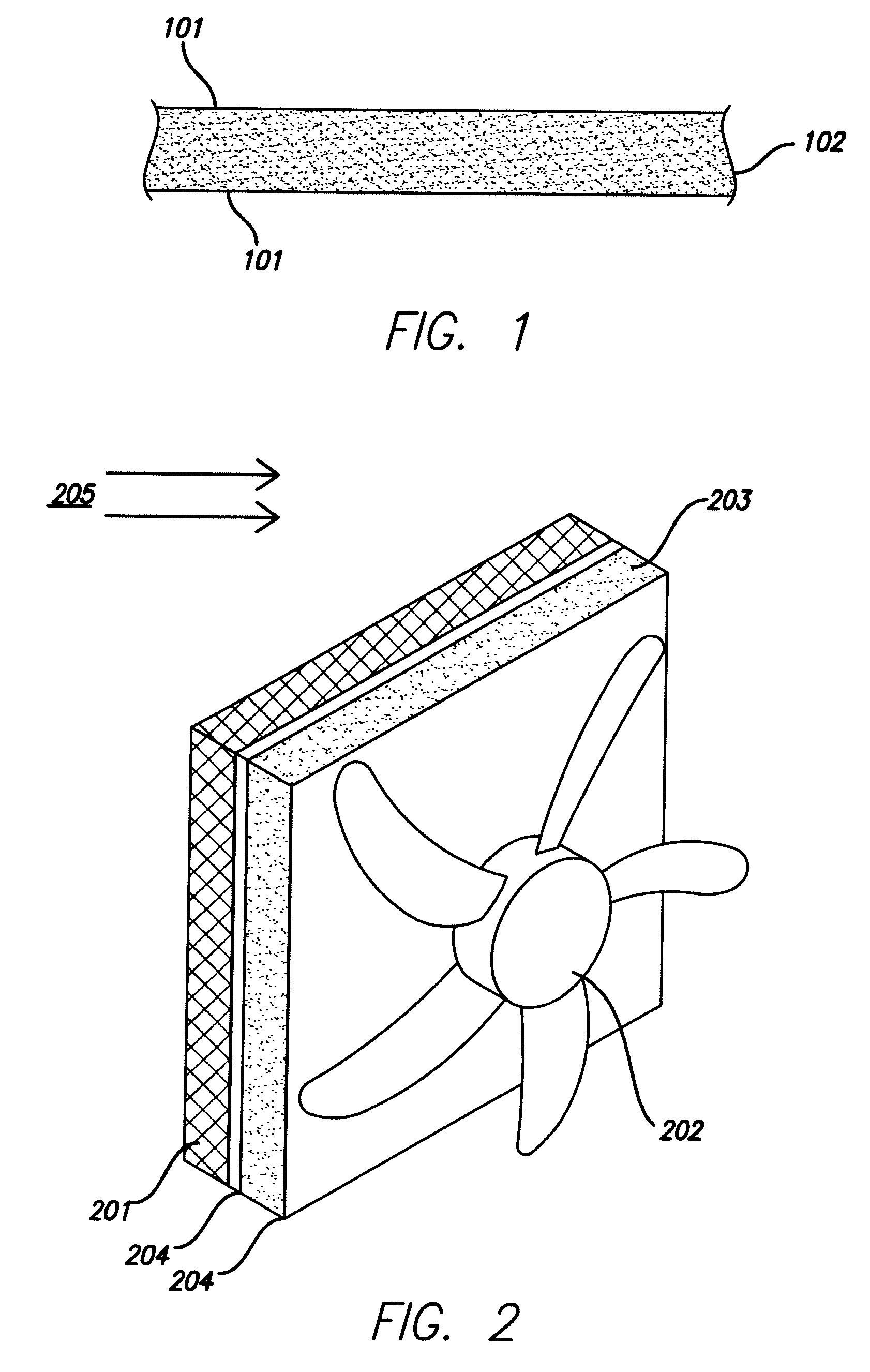
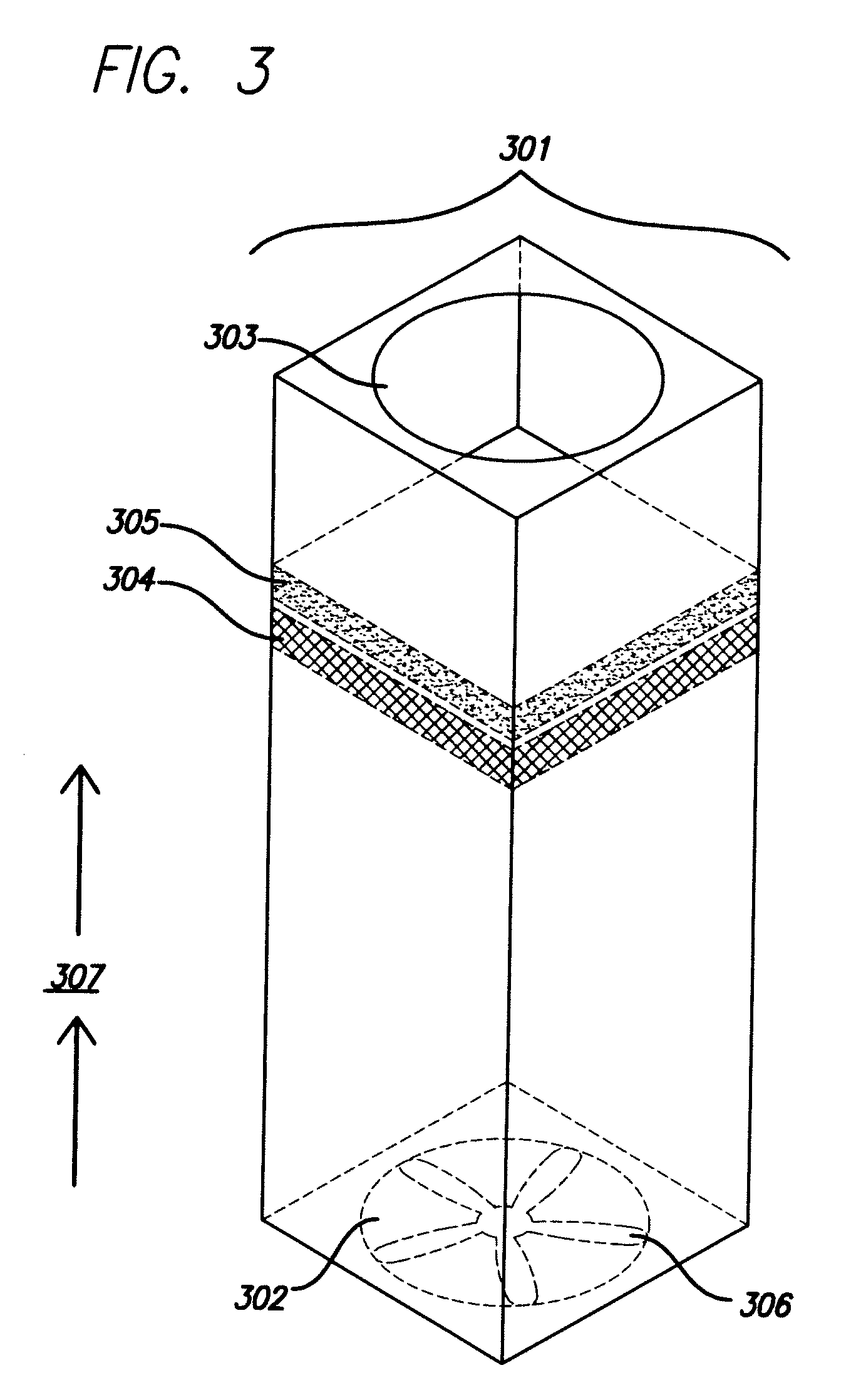
Examples
Embodiment Construction
[0030]All references cited herein are incorporated by reference in their entirety as though fully set forth. Unless defined otherwise, technical and scientific terms used herein have the same meaning as commonly understood by one of ordinary skill in the art to which this invention belongs.
[0031]One skilled in the art will recognize many methods and materials similar or equivalent to those described herein, which could be used in the practice of the present invention. Indeed, the present invention is in no way limited to the methods and materials described. For purposes of the present invention, the following term is defined below.
[0032]“Tarnishing agent” as used herein refers to an agent capable of reacting with a metal to corrode the metal. This reaction may be through, but is not limited to, an oxidative process. Examples of tarnishing agents include but are not limited to hydrogen sulfide, sulfur oxides, carbonyl sulfide, carbon disulfide, nitrogen oxides, ozone, halogen gases, ...
PUM
 Login to View More
 Abstract
Description
Claims
Application Information
 Login to View More