[0033]Recently, laser speckle effect had been vastly used in the studies relating to
surface roughness, imaging system adjustment and
imaging quality evaluation, and so forth. With respect to the aforesaid basic characteristics of speckle, representing by its
light intensity distribution, contrast, and characteristic size, the present invention is intended to provide a method of speckle size and
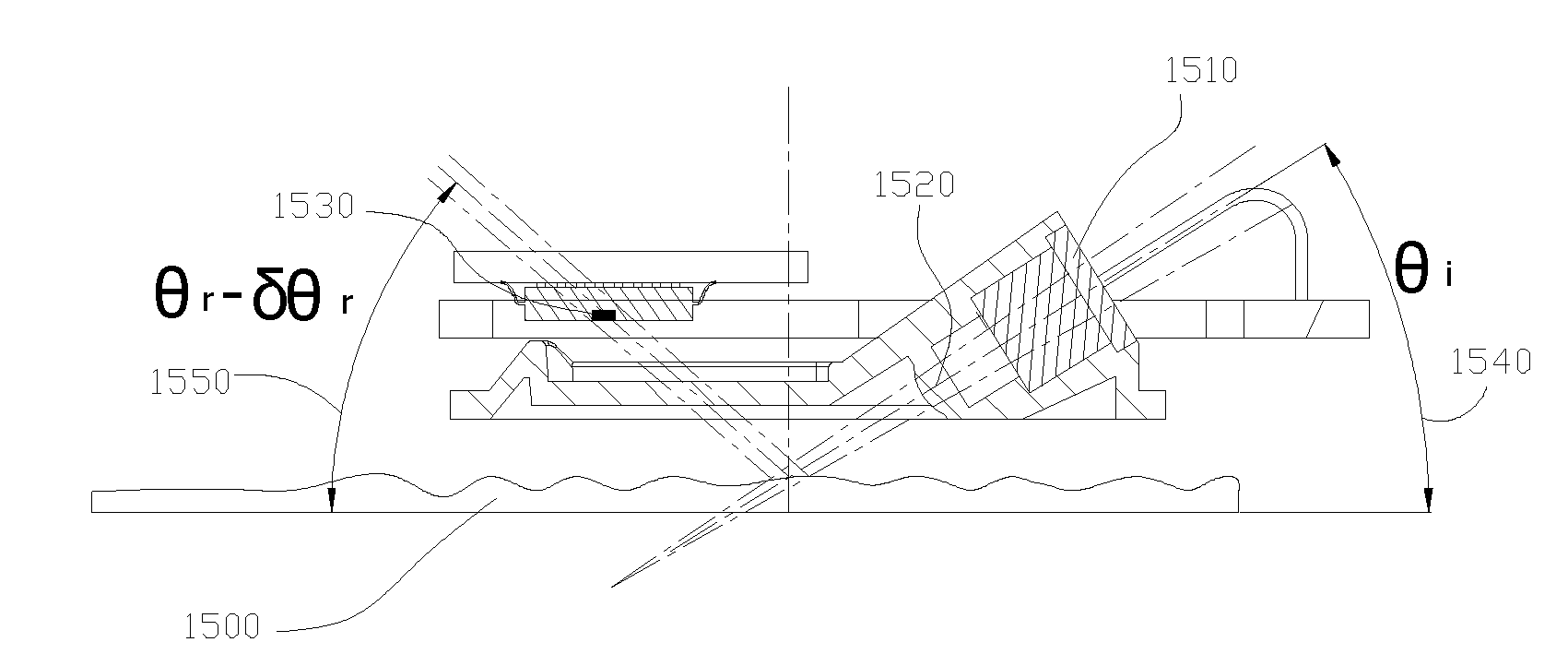
distribution control and the optical system using the same. Preferably, the optical system is arranged inside a housing of a
computer mouse that is primarily composed of a laser unit, a lens set, an image sensing unit and a
digital signal processing unit. A laser mouse is an advanced
optical mouse, which is capable of emitting a coherent light so as to detect more
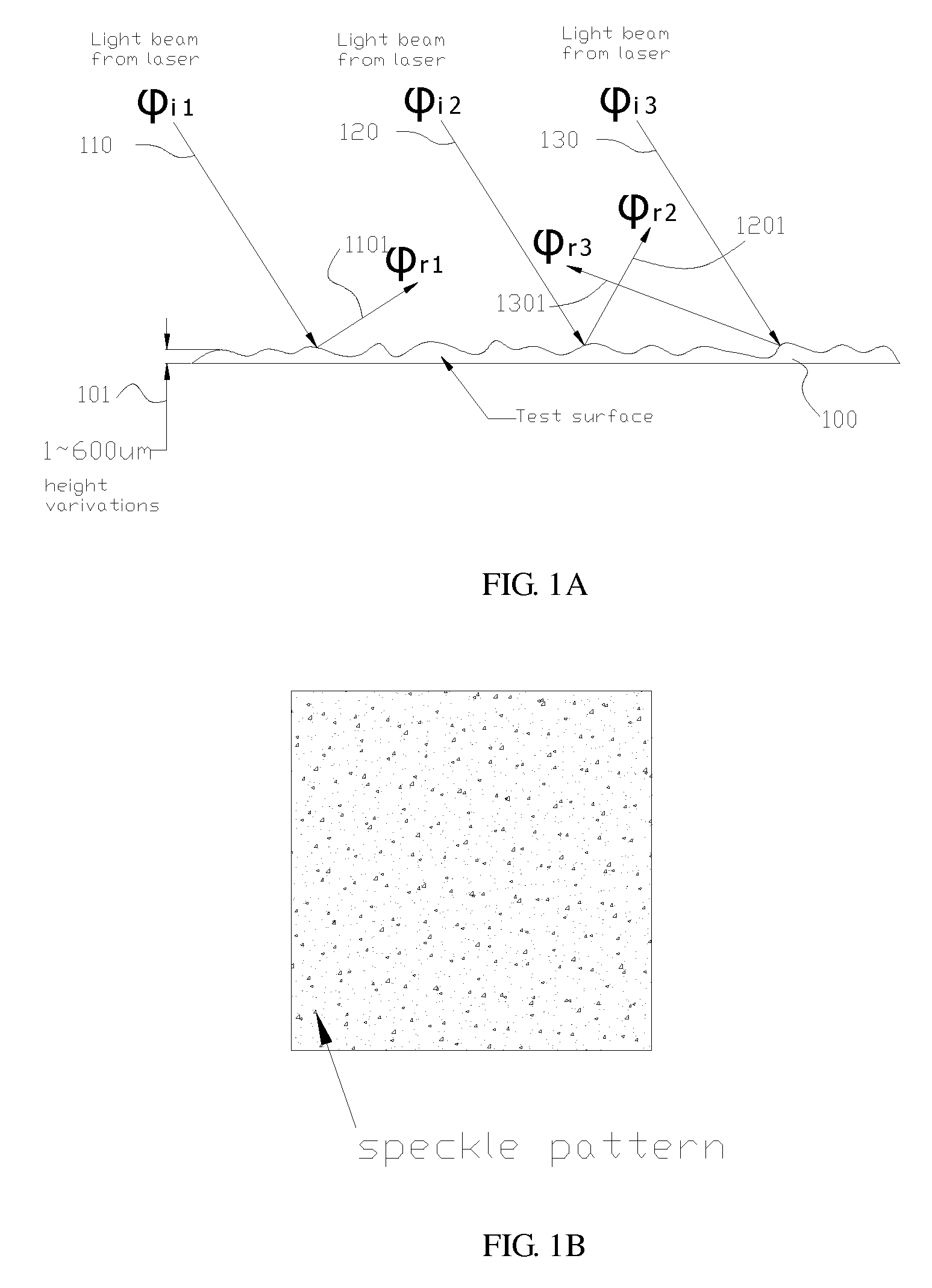
surface pattern variation than the standard LED based optical mice. However, by projecting a laser beam onto a surface with sufficient roughness, i.e. the average height variations of the surface is larger than the
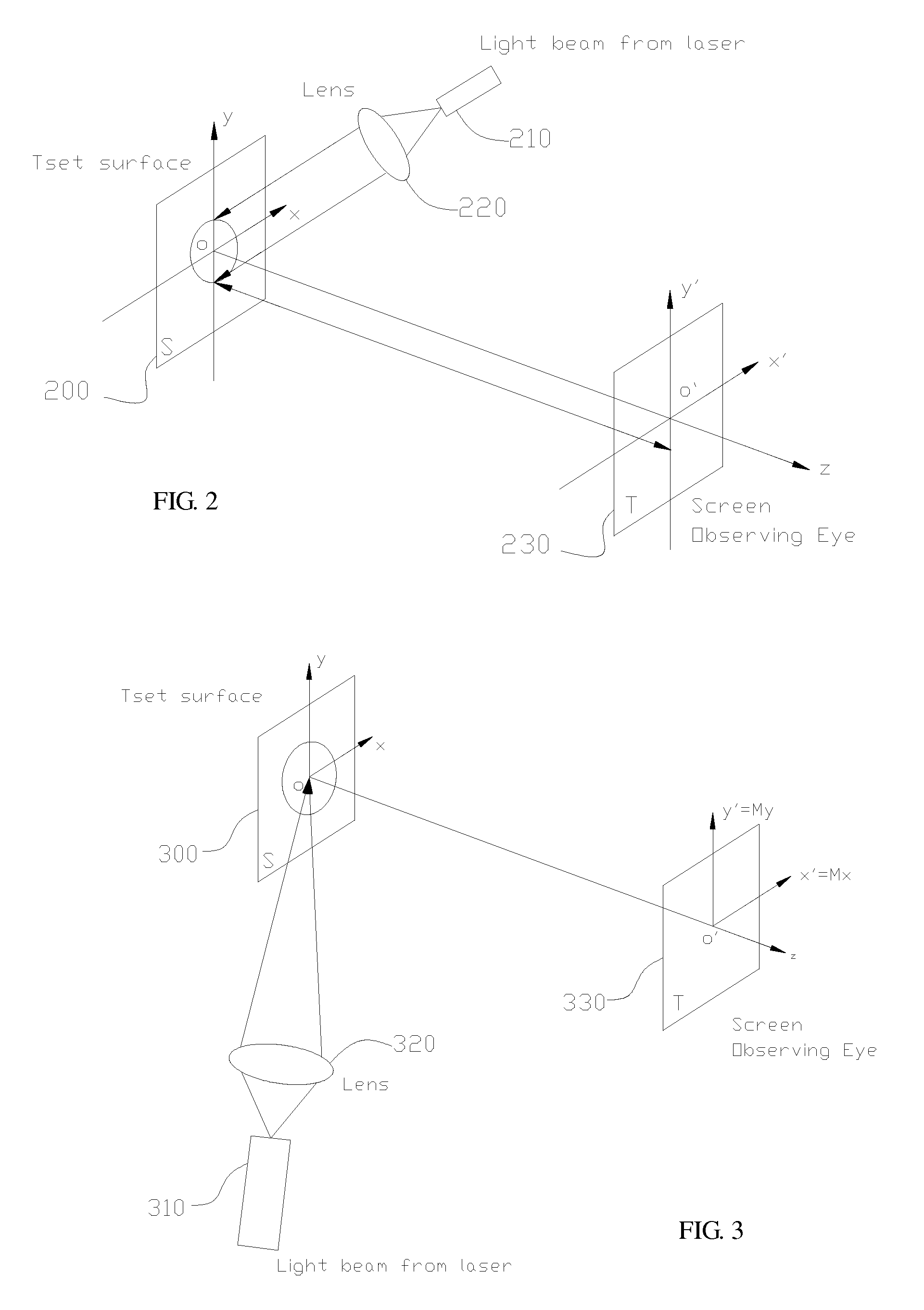
wavelength of that laser beam, the surface will exhibits a speckled appearance which is not observed when the surface is illuminated with ordinary light, such as the LED light of a standard LED mouse, as the speckle pattern is a random intensity pattern produced by the mutual interference of coherent laser beam that are subject to phase differences and / or intensity fluctuations. The method and the optical system of the invention controls the speckle sizes and the speckle pattern distribution by adjusting the bandwidth of a coherent laser beam being emitted out of the
laser light source of the optical system as well as by adjusting the distance between an
image plane of the
digital signal processing unit and the
rough surface being illuminated by the coherent laser beam, so that the distribution of the resulting speckle pattern and the size of each speckle thereof can match with the effective pixel size of different image sensing units used in the optical system. The method and optical system is advantageous in its simple
optical path, by which the mechanical structure accuracy is minimized that facilitates and enhances manufacturers of different image sensing units to use different speckle techniques for determining how far the optical system has moved and in which direction it is moved, not to mention that the detection sensitivity of the optical system is adjustable within a predefined range. It is known that if the working surface of a conventional LED
optical mouse is a
smooth surface made of marble, tile, or
metal, etc., the
image processing unit used in such LED mouse might not be able to detect patterns of shadows generated by the roughness of the surface and operate without a hitch so as to accurately calculate how far and in what direction the LED mouse has moved. Hence, the method of speckle size and distribution control and the optical system using the same are provided not only for overcoming the inaccuracy of the conventional LED mouse, but also with enhanced convenience of usage by enabling the optical system to be operable on
smooth surface as well as with improved operation sensitivity.


 Login to View More
  Login to View More