[0011]These and other objectives are achieved in the present invention, which is a microvoided film comprising a
structural material and a microvoid forming additive. The composition may also include one or more other additives including, but not limited to, materials suitable for making the film of a specific color, printable, glossy and / or to have certain desirable structural attributes. The
structural material is preferably a
polyolefin, such as
polyethylene,
polypropylene, homopolymers and / or co-polymers thereof, and / or a combination thereof. The
structural material may be formulated and processed to exhibit relatively high tensile strength with minimal shrinkage. The microvoid forming additive is one that provides for substantially uniform
disbursement throughout the structural material. The microvoid forming additive may be a β-nucleating agent. As an example, a product identified as BNX BETAPP-LN Beta Nucleated
Polypropylene available from Mayzo, Incorporated of Norcross, Ga., has been found to be suitable as such an additive. Specifically,
processing of a composition including this additive in accordance with the steps described herein appears to cause an increase in β
crystallization of the
polypropylene. This, in turn, results in the creation of microvoids in the composition including the structural layer. The creation of microvoids in the
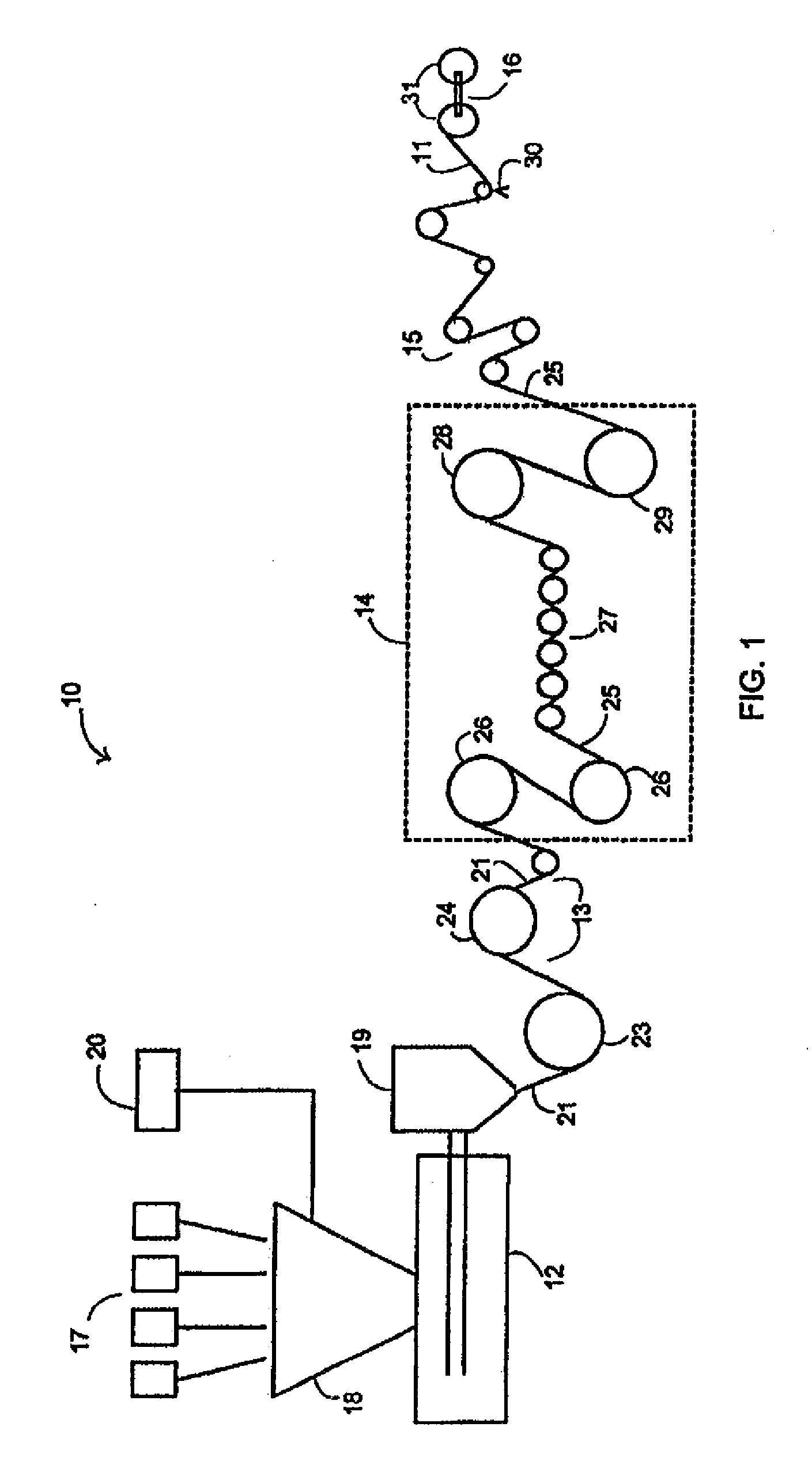
resultant film is of lower or reduced density in comparison to the density of the film without such microvoid creation, while maintaining sufficient structural characteristics.
[0012]The process of the present invention used to take
advantage of the noted characteristics of the microvoid forming additive includes the step of “cold drawing” the film during the stretching process to ensure that the β
crystallization transition occurs. This cold drawing generates microvoiding in the structural material and the formation of the microvoids causes the film to turn white. As a result, it is possible to reduce the amount of color
pigment additive, such as
titanium oxide or
calcium carbonate, which would otherwise be required to make the end product film suitably white. In some applications, the whitening generated is sufficient to eliminate the
pigment additive altogether. The ability to reduce the amount of such additives, which are ordinarily more dense than the structural material, aids in reducing the film product's final density.
[0013]The combination of use of the noted microvoid forming additive and the
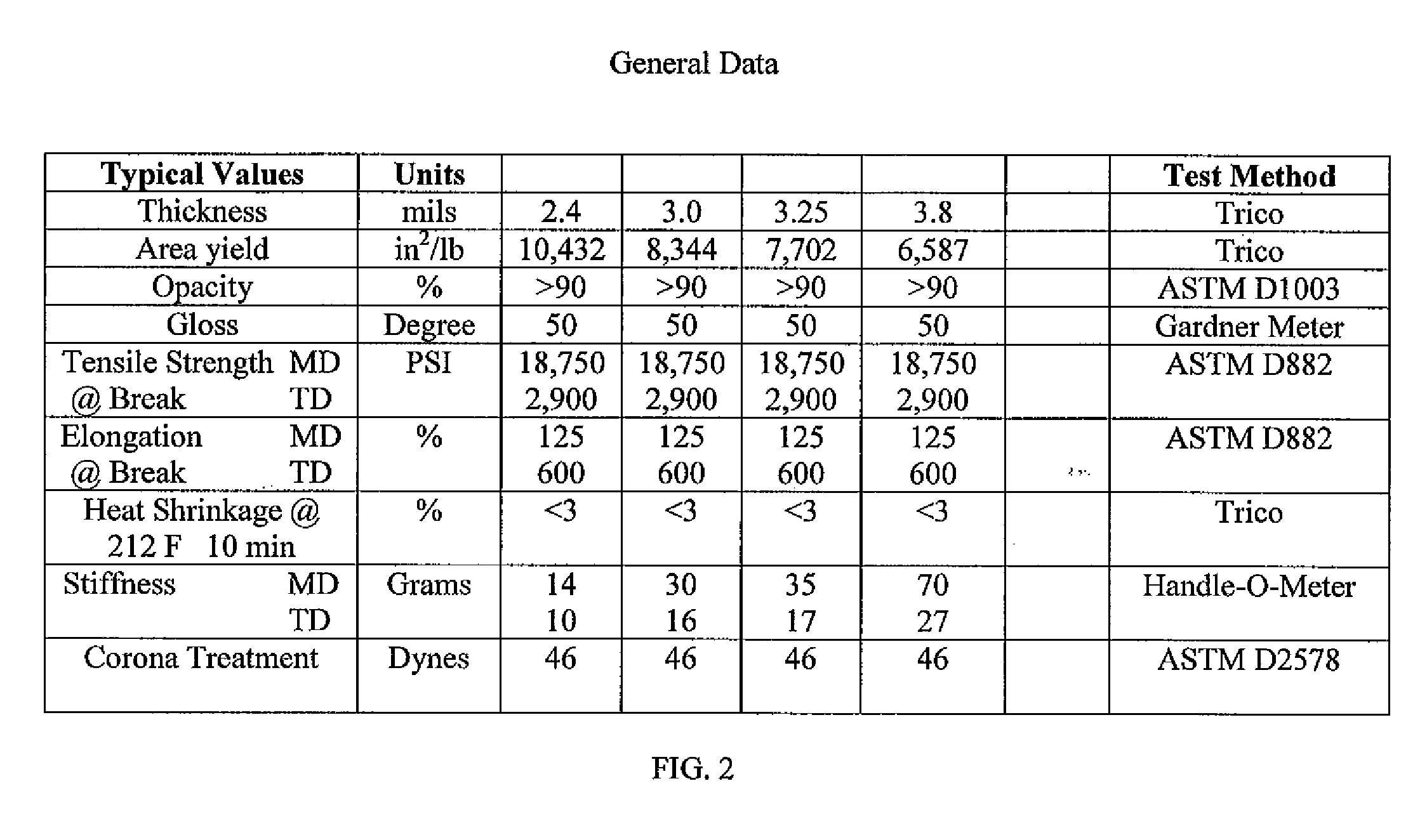
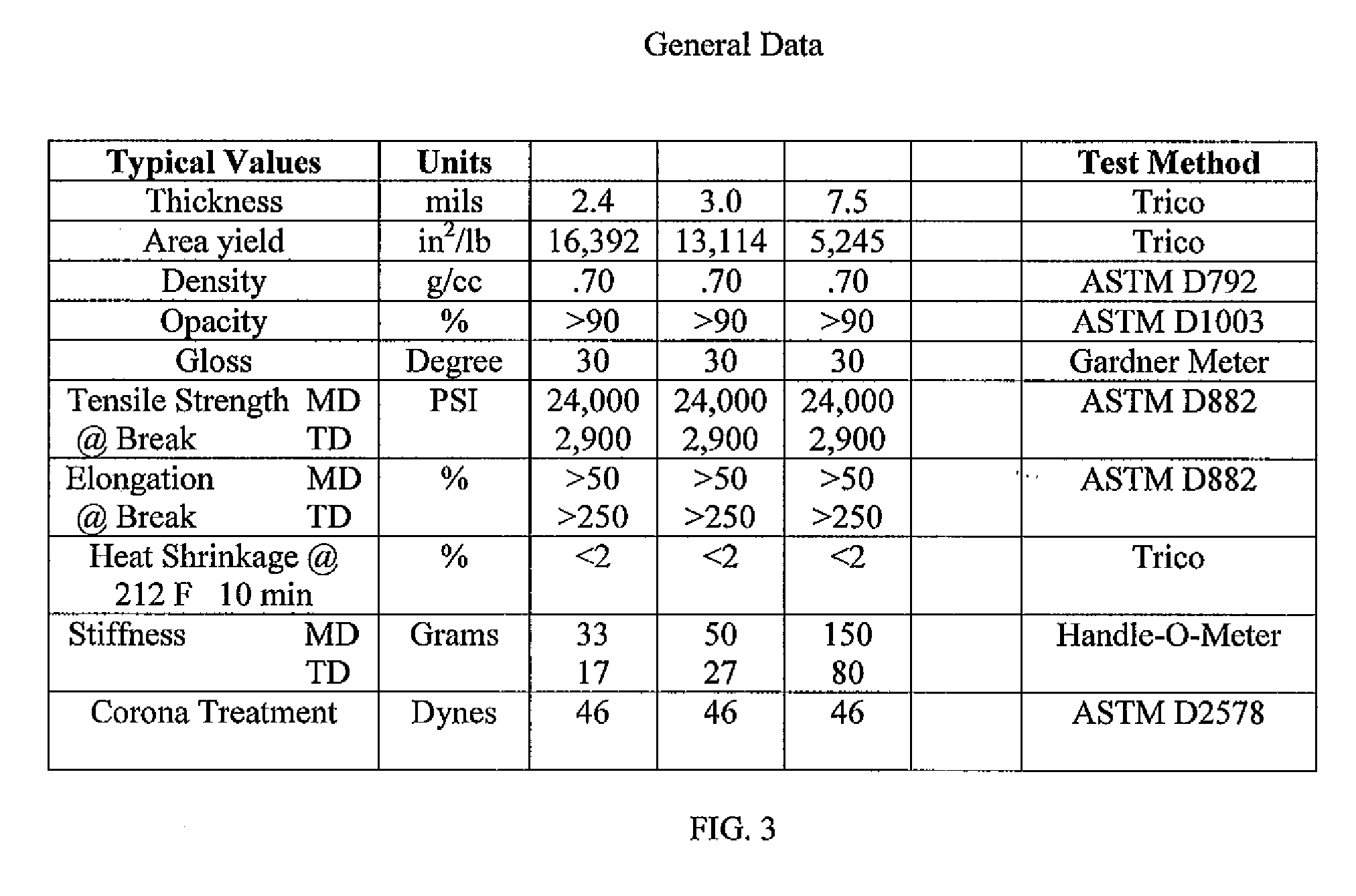
processing steps described herein result in a microvoided or reduced density film product of substantially reduced density without a substantial loss of structural properties. Further, the combination reduces or eliminates the need to add coloring pigment. These two advantages yield a product that is less expensive to make and therefore less expensive to consumers. Since there is minimal loss of structural properties, including tensile strength and transverse strength, and even some improvement in stiffness, the new film may be employed for any application that prior heavier films were used including, but not limited to, printable labels, tapes,
coaxial cable films, tags and the like. Moreover, it has been observed in samples of the film that the surface has little to no pock marking, which is a substantial
advantage over the prior foamed and cavitated film products. These features are available in the film of the present invention with little adjustment required to existing
product processing equipment and steps. These advantages of the film with microvoid forming additive were surprising and unexpected based on prior experiences with void creating techniques. Moreover, the ability to use the composition in a wide range of applications as a
monolayer film was also surprising and unexpected. Further, it was unexpected to discover that combining the microvoid forming additive and a printability additive with the base component of the structural material would produce a single layer that maintained
structural integrity, desired
opacity, reduced density and effective printability. Initial contemplation of such a combination resulted in a concern that at least one component would have an adverse
impact on a desired characteristic produced by another component. Samples films described herein including that combination of microvoid forming additive and printability additive with the structural material exhibited a contrary finding. Moreover, the combination was synergistic in that desired printability was achieved using lesser amounts of printability additive than was originally thought to be required.


 Login to View More