It has been published that some 80,000 patients die annually due to infections contracted in the U.S. hospitals and many more suffer serious complications due to infections resulting in an estimated cost around $36 billion dollars to the health insurance companies and hospitals.
Propagation of germs by the health workers from one patient to another is a primary cause of raging infection problems in the hospitals.
Unfortunately, even under strict monitoring, it is estimated that only 60% of the healthcare workers adhere to an appropriate
hand washing procedure and frequency, under monitored conditions, while less than 44% will comply if only education / training without monitoring is instituted.
One of the
key issues of non-compliance is inconvenience due to the location of wash basins as well as pressing workloads.
Furthermore, many of the hand washing processes performed are ineffective due to inefficient
antibacterial soap, incomplete hand scrubbing and rinsing or even touching the
contaminated water faucet,
soap,
soap dispenser, sink or hand dryer to render the hand washing effort null.
In the
food industry, the statistics are even worse with many of the workers only casually rinsing their hands after using the rest rooms or handling the raw meats.
Not only personal loss and suffering are the results, but also economic loss due to sharp decline of business and long term brand reputation damage.
While monitoring the frequency of hand washing, via human observers, may be relatively easy, recording the vigorous hand scrubbing required for
verification purposes, is next to impossible.
Consequently, at the present, there is no
effective method of ensuring the effectiveness of hand washing for hospitals or
food processing facilities to utilize.
The recorded data is unreliable at best since the time one spends in front of a wash basin does not automatically translate to thorough hand scrubbing, thus effective hand washing.
This approach only provides a measure of the total number of hand washings done during a period of time, but there is no gage of the effectiveness of each hand washing event.
These systems can only provide a time indication that the soap or
disinfectant has been dispensed onto the hands rather than a specific measurement of the amount of hand scrubbing to remove the contaminants and killing off the germs.
This approach also does not provide a measure of the effectiveness of any scrubbing action during the hand washing process.
However, none of these systems actually monitor the hand scrubbing phase after the soap
disinfectant has been dispensed, nor do any of these prior art references determine whether the scrubbing complies with a
proper hand hygiene procedure.


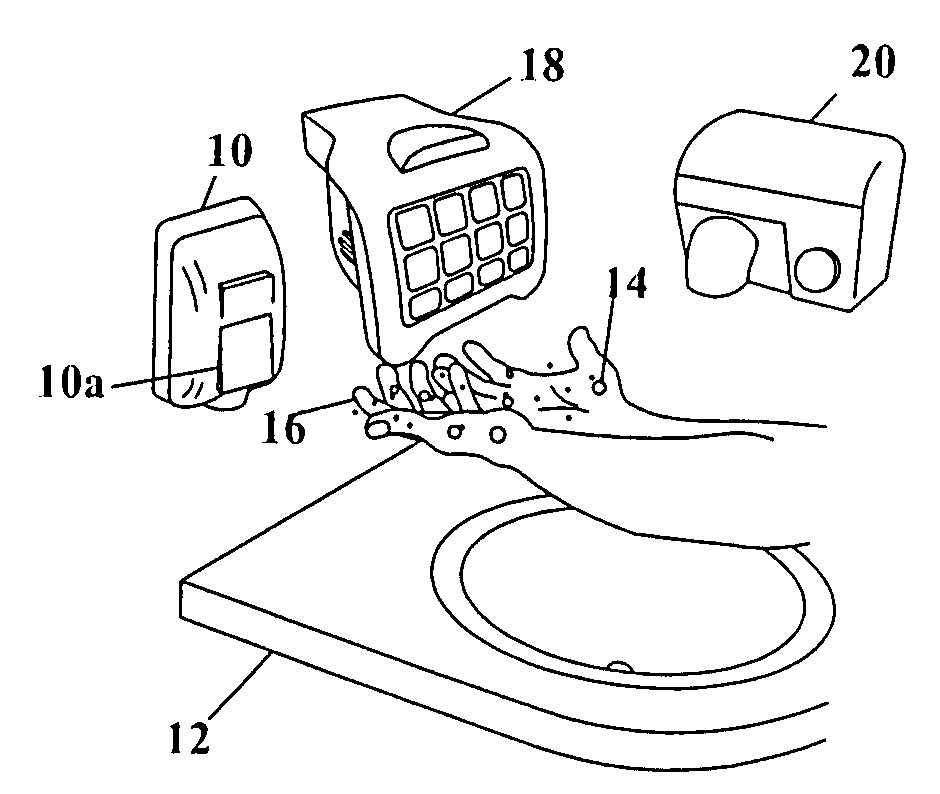
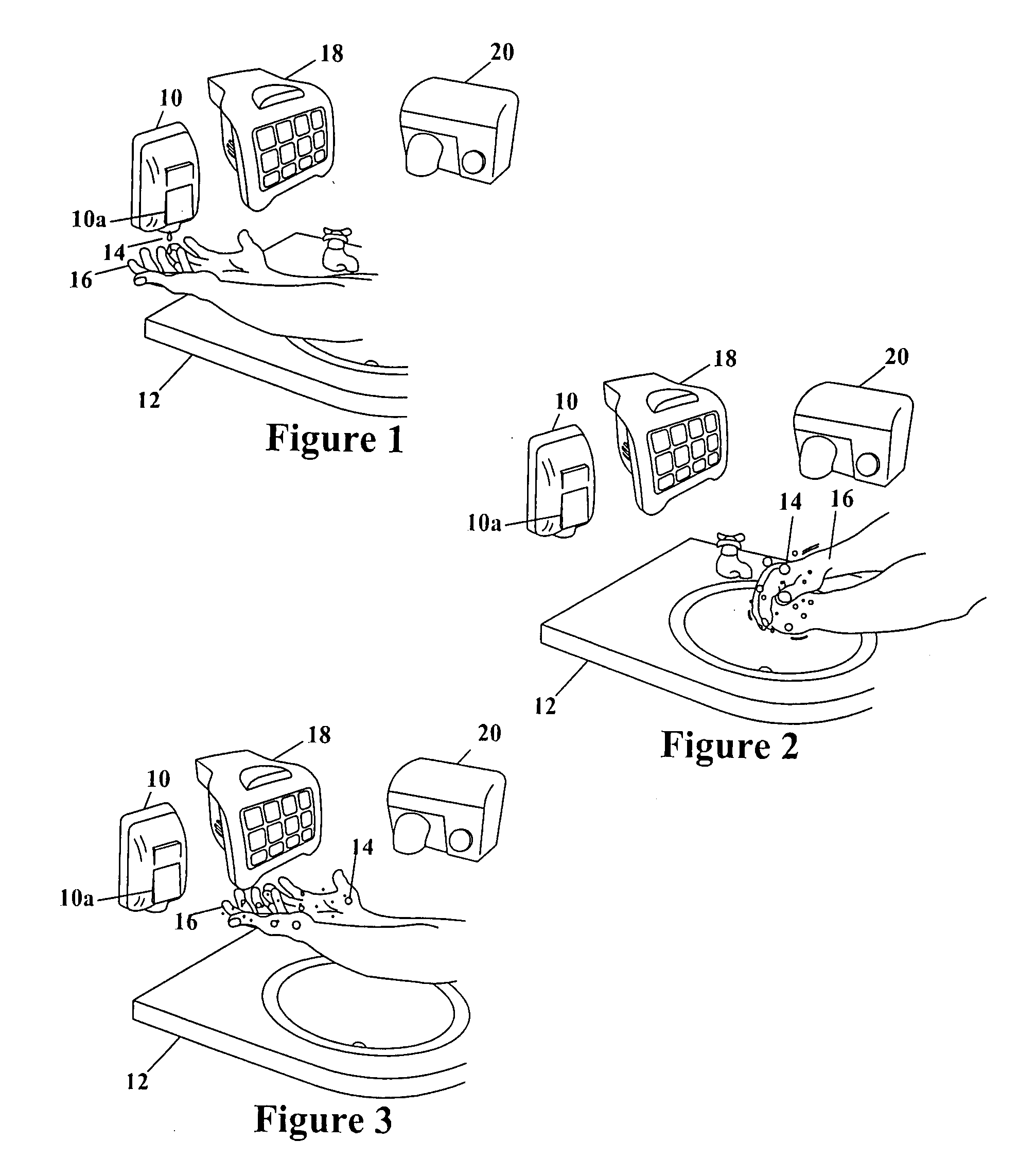
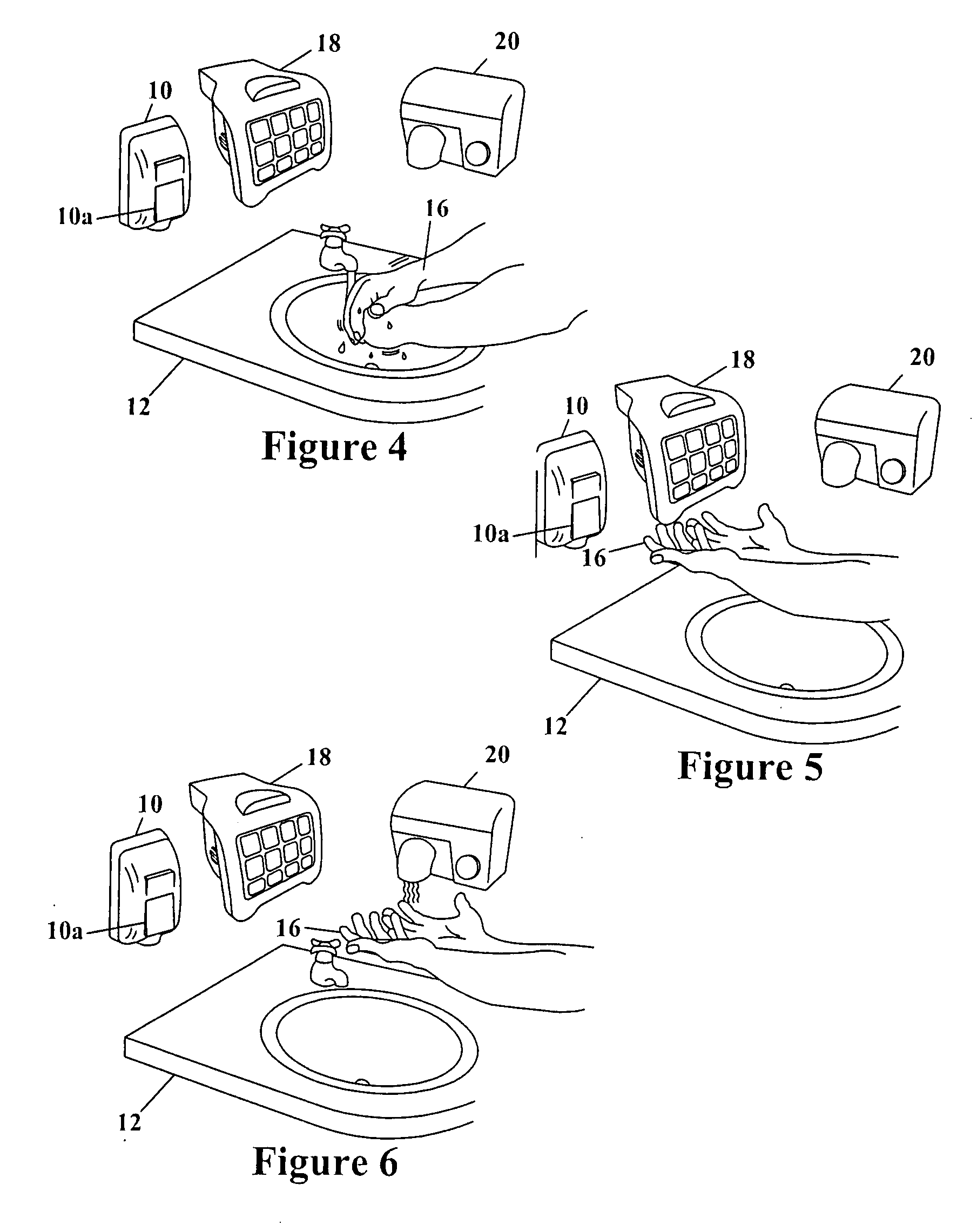
 Login to View More
  Login to View More