

Compositions and methods for regulating polysaccharides of a plant cell
a technology of plant cells and polysaccharides, applied in the field of plant cell polysaccharides, can solve the problems of reducing digestibility, increasing cell wall strength, and difficulty in determining the genes responsible for phenotypic determination, and achieves the effects of increasing amylose, reducing the number of fatty acids in carrots, and reducing the number of fatty acids
- Summary
- Abstract
- Description
- Claims
- Application Information
AI Technical Summary
Benefits of technology
Problems solved by technology
Method used
Image

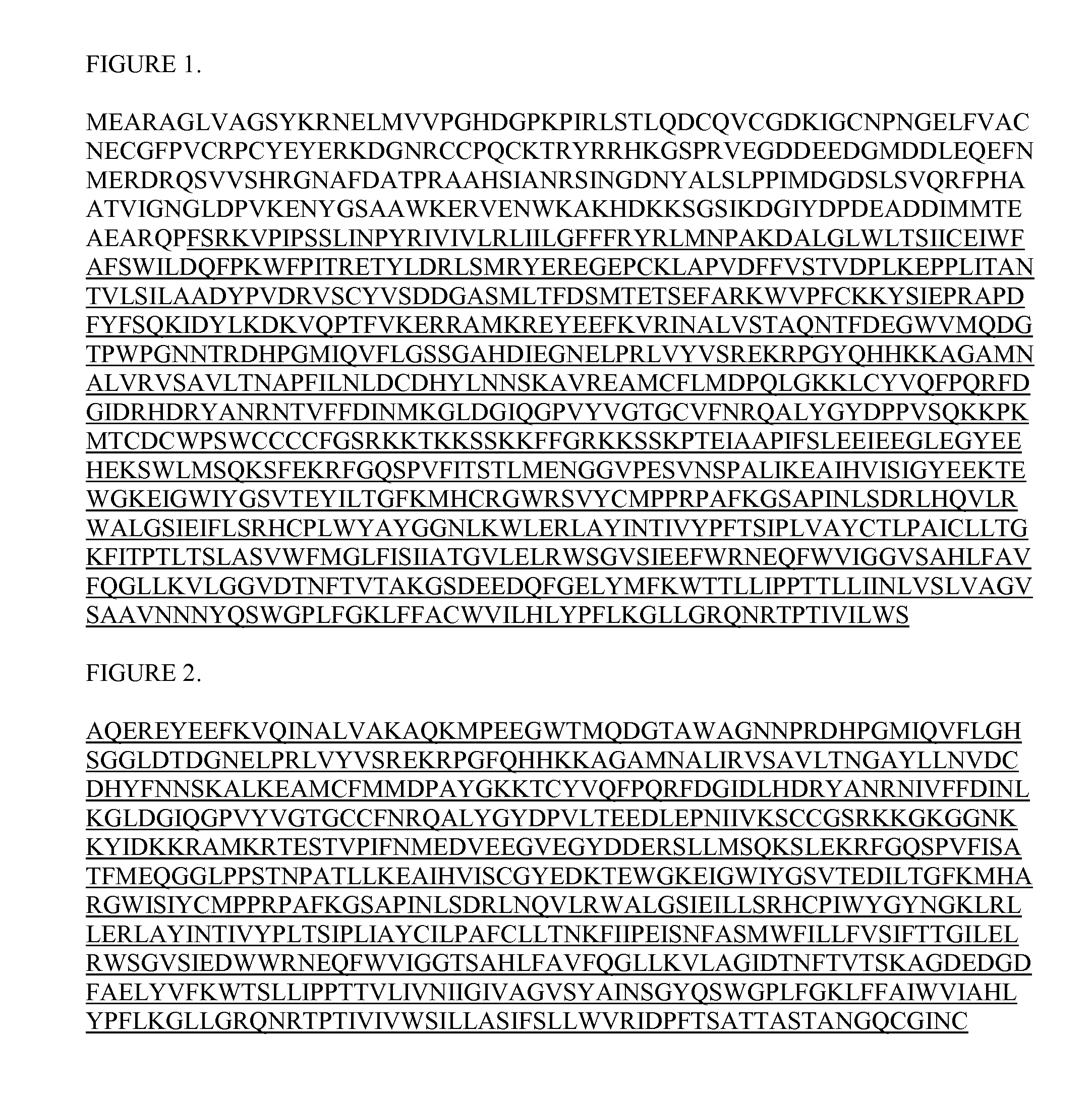
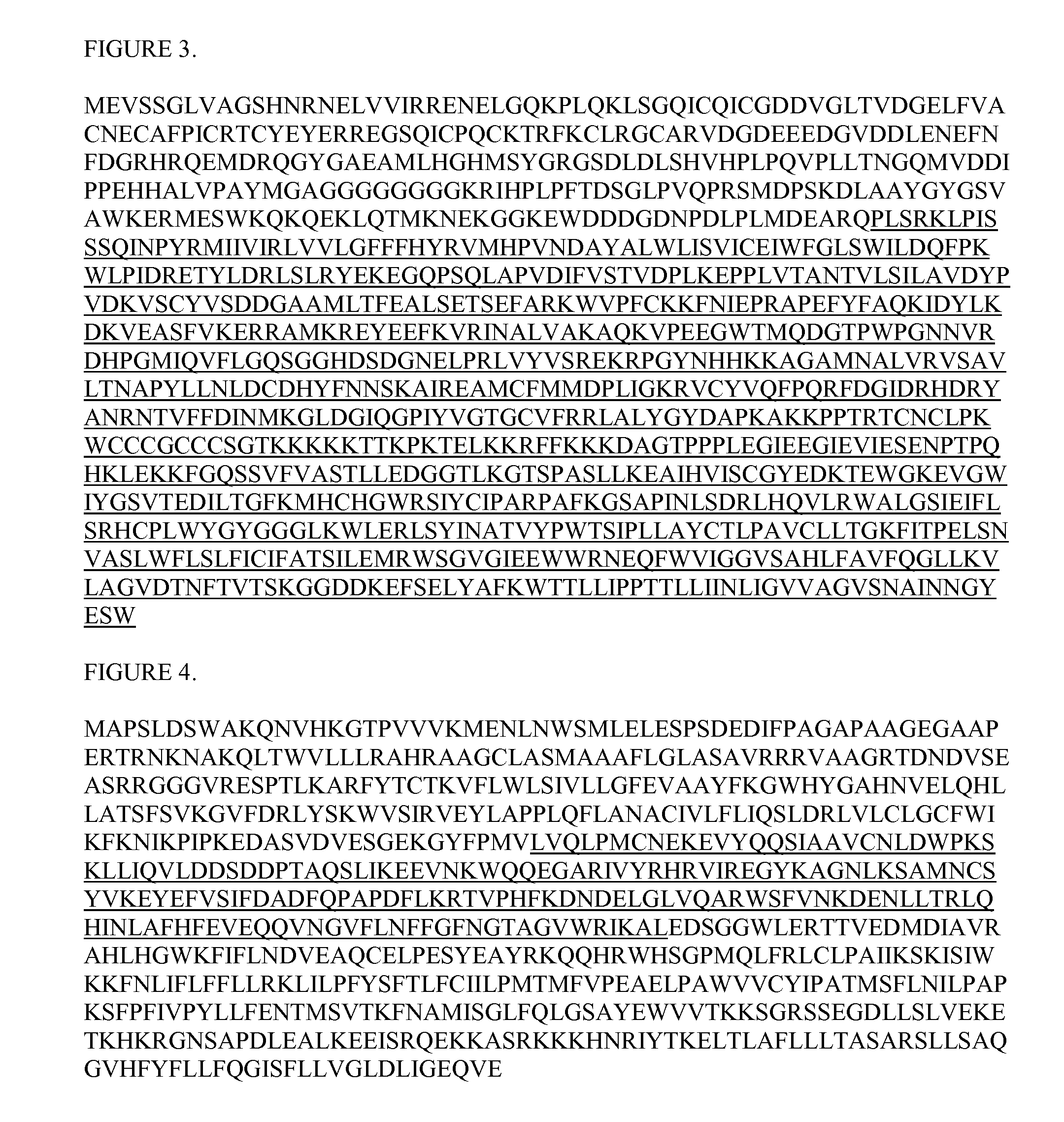
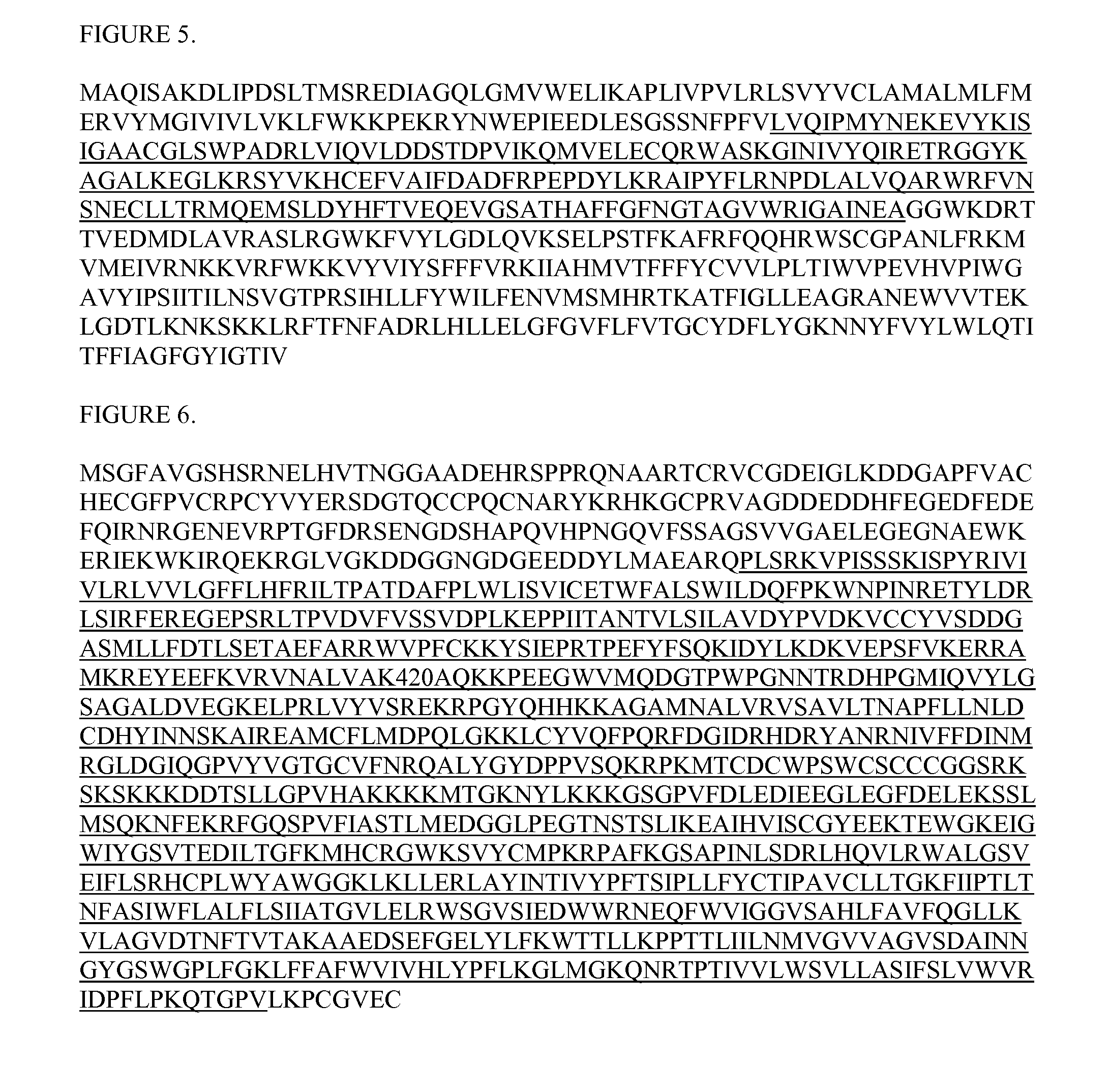
Examples
example 1
[0223]Example 1 demonstrates how cellulose synthase and cellulose synthase-like genes are isolated and characterized in E. grandis and P. radiata.
[0224]Total RNA was extracted from plant tissue (using the protocol of Chang et al., Plant Mol. Biol. Rep. 11:113-116 (1993). Plant tissue samples were obtained from phloem (P), cambium (C), expanding xylem (X1), and differentiating and lignifying xylem (X2).
[0225]mRNA was isolated from the total RNA preparation using either a Poly(A) Quik mRNA Isolation Kit (Stratagene, La Jolla, Calif.) or Dynal Beads Oligo (dT)25 (Dynal, Skogen, Norway). cDNA expression libraries were constructed from the purified mRNA by reverse transcriptase synthesis followed by insertion of the resulting cDNA clones in Lambda ZAP using a ZAP Express cDNA Synthesis Kit (Stratagene), according to the using the manufacturer's protocol. The resulting cDNAs were packaged using a Gigapack II Packaging Extract (Stratagene) using an aliquot (1-5 μL) from the 5 μL ligation ...
example 2
[0233]To identify additional sequence 5′ or 3′ of a partial cDNA sequence in a cDNA library, 5′ and 3′ rapid amplification of cDNA ends (RACE) was performed. using the SMART RACE cDNA amplification kit (Clontech Laboratories, Palo Alto, Calif.). Generally, the method entailed first isolating poly(A) mRNA, performing first and second strand cDNA synthesis to generate double stranded cDNA, blunting cDNA ends, and then ligating of the SMART RACE. Adaptor to the cDNA to form a library of adaptor-ligated ds cDNA. Gene-specific primers were designed to be used along with adaptor specific primers for both 5′ and 3′ RACE reactions. Using 5′ and 3′ RACE reactions, 5′ and 3′ RACE fragments were obtained, sequenced, and cloned. The process may be repeated until 5′ and 3′ ends of the full-length gene were identified. A full-length cDNA may generated by PCR using primers specific to 5′ and 3′ ends of the gene by end-to-end PCR.
[0234]For example, to amplify the missing 5′ region of a gene from fi...
example 3
[0250]Example 3 illustrates a procedure for RNA extraction and purification, which is particularly useful for RNA obtained from conifer needle, xylem, cambium, and phloem.
[0251]Tissue is obtained from conifer needle, xylem, cambium or phloem. The tissue is frozen in liquid nitrogen and ground. The total RNA is extracted using Concert Plant RNA reagent (Invitrogen). The resulting RNA sample is extracted into phenol:chloroform and treated with DNase. The RNA is then incubated at 65° C. for 2 minutes followed by centrifugation at 4° C. for 30 minutes. Following centrifugation, the RNA is extracted into phenol at least 10 times to remove contaminants.
[0252]The RNA is further cleaned using RNeasy columns (Qiagen). The purified RNA is quantified using RiboGreen reagent (Molecular Probes) and purity assessed by gel electrophoresis.
[0253]RNA is then amplified using MessageAmp (Ambion). Aminoallyl-UTP and free UTP are added to the in vitro transcription of the purified RNA at a ratio of 4:1 ...
PUM
 Login to View More
 Abstract
Description
Claims
Application Information
 Login to View More