
Pharmacokinetics of s-adenosylmethionine formulations
a technology of s-adenosylmethionine and pharmacokinetics, which is applied in the direction of antinoxious agents, drug compositions, immunological disorders, etc., can solve the problems of inability to achieve improved ineffective differentiation of these improved pk formulations from others, and slow drug release. achieve significant improvement of pk profiles of exogenous same, improve in vivo pk profiles of same,
- Summary
- Abstract
- Description
- Claims
- Application Information
AI Technical Summary
Benefits of technology
Problems solved by technology
Method used
Image

Examples
example 1
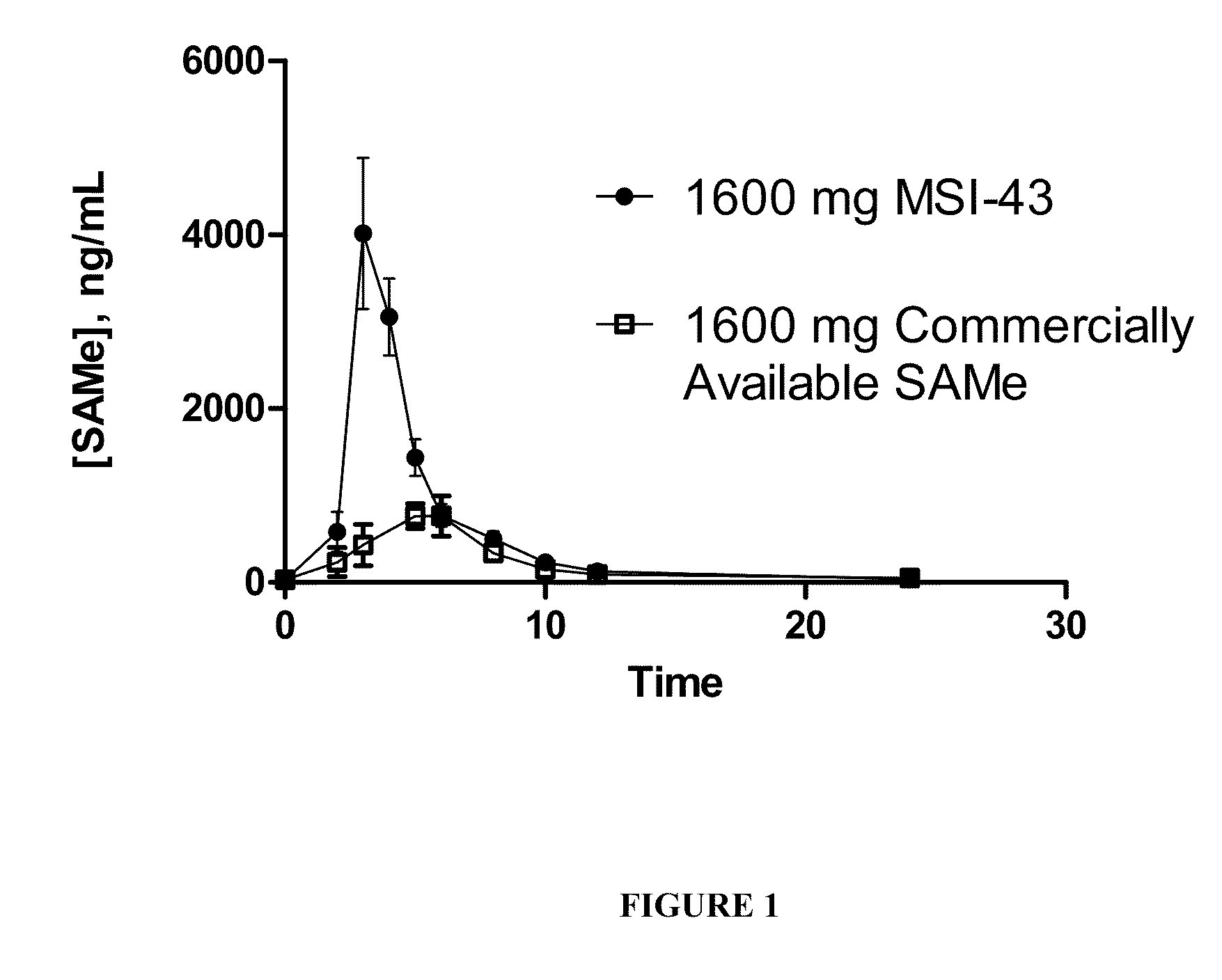
SAMe Formulations of the Invention Generate Cmax Values Significantly Greater than those from Commercially Available SAMe
[0123]In order to identify and optimize processing components, methods and parameters that impart product characteristics which result in improved pharmacokinetic profiles, SAMe formulations comprising various excipients and prepared with certain final dosage form characteristics were compared with a commercially available SAMe formulation. In this example, a commercially available S-adenosyl methionine tosylate disulfate formulation was utilized as the control SAMe dosage form.
[0124]SAMe formulations of the invention were generated using standard procedures for making tablets and comprise the following:
Ingredient (MSI-43)% (w / w)SAMe Disulfate Tosylate76.8Microcrystalline Cellulose 1137.6Microcrystalline Cellulose 1129.1Disintegrant5Colloidal Silicon Dioxide0.5Magnesium Stearate1.0
[0125]In order to improve the compressibility of SAMe, a dry granulation procedure (...
example 2
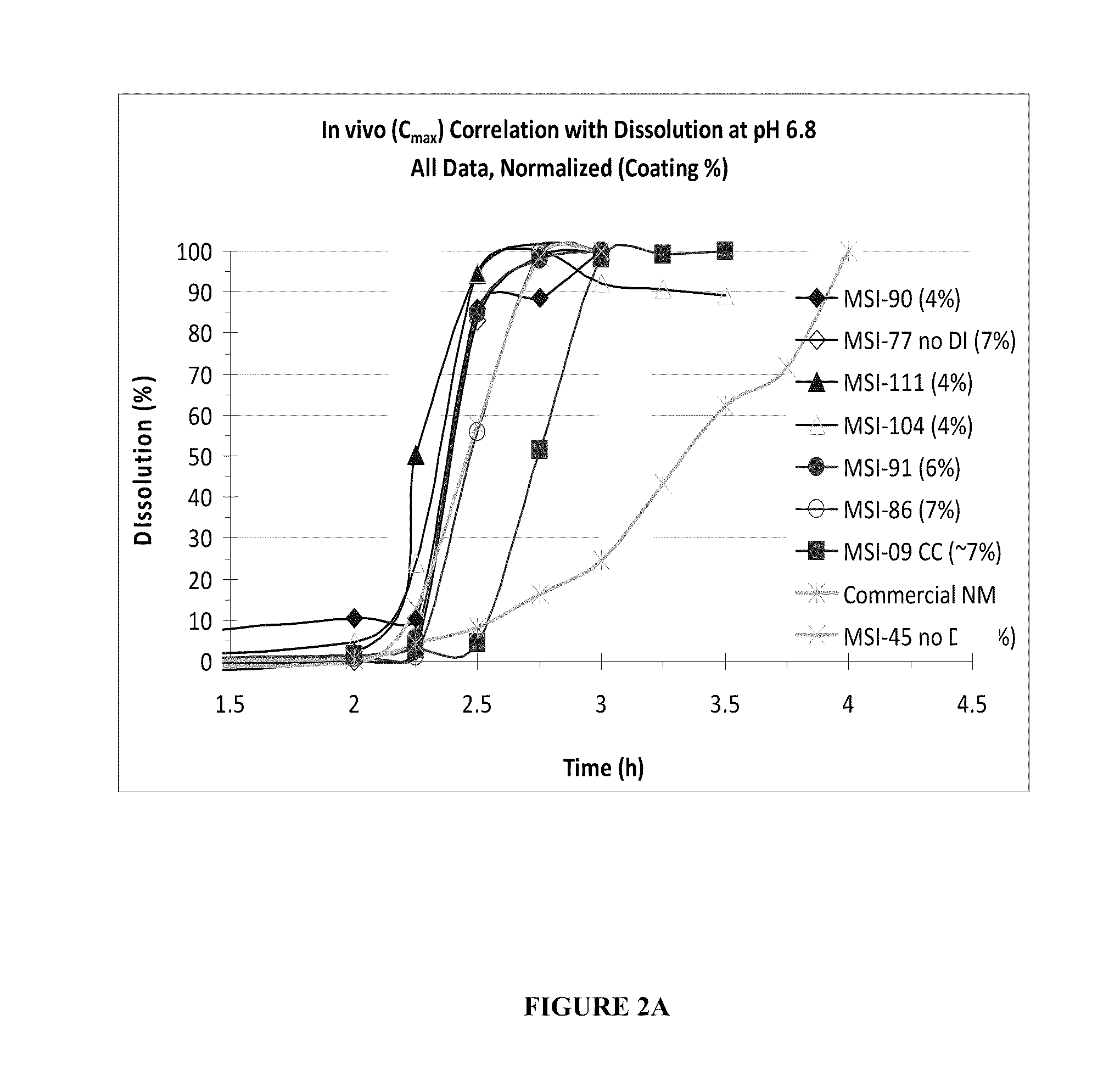
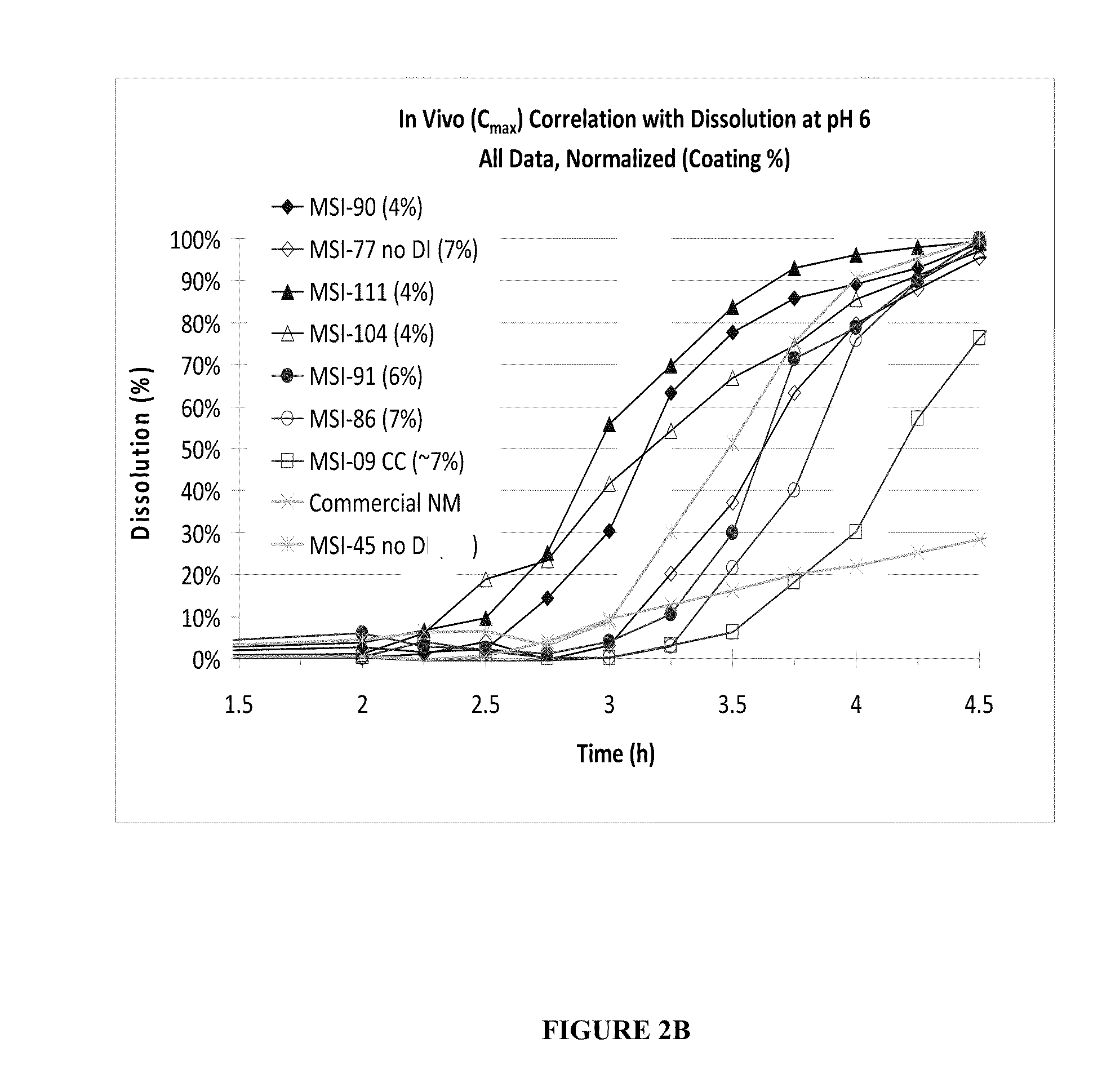
Targeted Dissolution “Window” Results in Superior Pharmacokinetic Profiles In Vivo
[0132]In this example, additional SAMe formulations were made, which had differing amounts of disintegrants, coating thickness, and were generated under various processing parameters in order to compare their in vivo performance and in vitro dissolution profiles. Each formulation comprised:
Ingredient% (w / w)SAMe Disulfate Tosylate76.8Microcrystalline Cellulose 1137.5-9 Microcrystalline Cellulose 112 11-13.5Disintegrant0-10Colloidal Silicon Dioxide0.5Magnesium Stearate1.0
The disintegrants used were sodium starch glycolate, croscarmellose or crosprovidone. The percent of microcrystalline cellulose may vary according to the amount of disintegrant, such that the final % (w / w) of the formulation totals 100%. The tablets were manufactured according to the processes as described in Example 1. The in vitro attributes described in Examples 1 were also measured. In vivo human tests were conducted as per describe...
example 2a
Targeted Dissolution with Different Excipients
[0133]In this example, additional SAMe formulations are made, which have differing amounts of disintegrants and coating thickness, and different lubricants. The formulations are generated under various processing parameters in order to compare their in vivo performance and in vitro dissolution profiles. Each formulation comprised:
Ingredient% (w / w)SAMe Disulfate Tosylate 60-80%Microcrystalline Cellulose 113 7-10Microcrystalline Cellulose 11210-15Disintegrant 0-10Colloidal Silicon Dioxide0-1Lubricant0.1-2
The disintegrants used may be sodium starch glycolate, croscarmellose, crospovidone or some other suitable disintegrant. The percent of microcrystalline cellulose may vary according to the amount of disintegrant, such that the final % (w / w) of the formulation totals 100%.
[0134]The tablets are manufactured according to the processes as described in Examples 1 and 2. The in vitro attributes described in Examples 1 are also measured. In v...
PUM
| Property | Measurement | Unit |
|---|---|---|
| concentration | aaaaa | aaaaa |
| concentration | aaaaa | aaaaa |
| concentration | aaaaa | aaaaa |
Abstract
Description
Claims
Application Information
 Login to View More